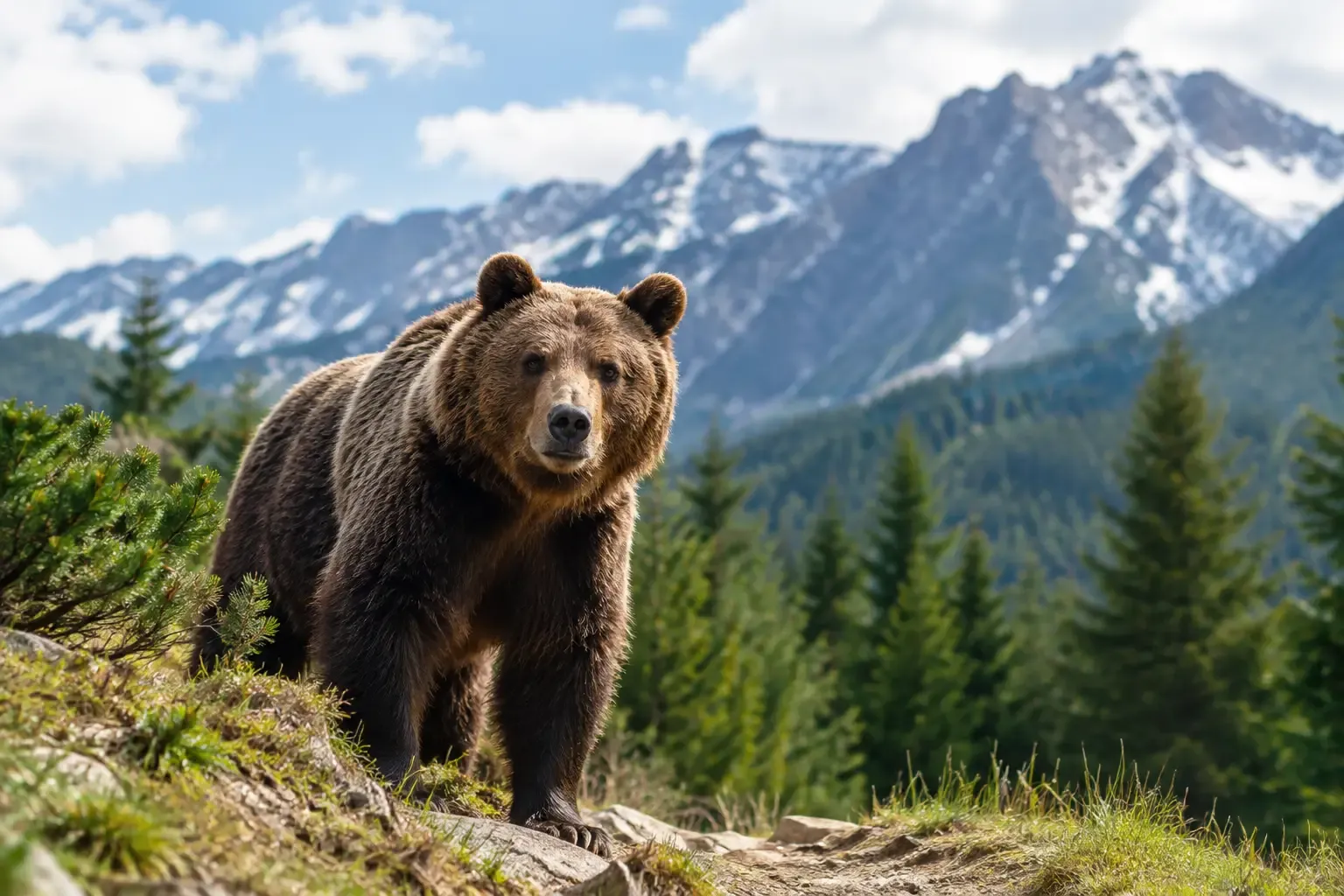
The words “bears in Zakopane” can spin the imagination faster than a July storm forecast. Some people ask whether a walk under the Regle is something to fear. Others are hoping for a photo of a bear from a safe distance. The truth is less cinematic, but it does call for sense: the brown bear lives in the Tatras and on the foothills, and a meeting is possible. It is not an attraction you should go looking for.
The biggest problem is not the mere fact that bears are there. The problem starts when a person closes the distance, leaves food, walks in the dark without paying attention, or panics. In the mountains, calm and a few simple rules do more than a display of courage.
Are bears in Zakopane a real danger?
Yes, bears live around Zakopane, especially in the forests, the valleys and the quieter parts of the Tatras. They can also turn up closer to buildings when easy leftovers, unsecured bins, feeders or compost heaps draw them in. That does not mean every evening stroll along Krupówki calls for a helmet and a whistle. It means the mountains do not end where the car park begins.
For most visitors the chance of a direct encounter is small. A bear usually hears and smells far better than we do, so it often leaves the path before you ever know it was nearby. Extra care is still worth it at dawn and in the evening, in dense forest, near streams that drown out your footsteps, and on days when the trails are quieter.
You cannot honestly say “there are no bears on this route”. The Tatras do not work like a zoo with a published timetable of residents. Animals move. They react to the weather, to food, and to how many people are around. Treat every walk into the forest as a visit to their home, not as a stroll through a city park.
Where should you stay more alert?
Caution makes the most sense on forested sections of the trails, along the edges of the valleys, and in places where people leave a mess behind. In practice this is not only about the high parts of the Tatras. A bear does not need dwarf pine and a view of Rysy in order to move around. It can use wooded slopes, valleys, and the corridors between the buildings and the forest.
Turn the alertness up at dawn and before dusk. Many animals are more active then, and it is easier to miss movement around a bend. If you are planning a long day in the mountains, start early, but do not walk alone through a dark forest with headphones on. That is a poor idea for reasons that go well beyond bears.
Look at the ground as well. Fresh, large tracks, droppings, dug-up earth, torn logs, or a strong smell of carrion are not a cue to play tracker. Turn back calmly, or take another way, if the situation allows it. A bear feeding on a carcass will be much less willing to give up the spot.
A female with cubs is a different situation
The most awkward version is finding yourself, by accident, between a female and her young. Cubs can look like plush balls, but their mother has no sense of humour about a tourist with a phone. If you see cubs, do not approach, do not photograph them, and do not try to work out where the adult is. Assume she is close.
Move away slowly along the same path you came in on. Do not cut the cubs off, and do not try to walk around them. Giving up the route at that moment is not a failure. It is a normal, sensible decision.
What should you do if you meet a bear on the trail?
First: stop, and get the urge to run under control. Running can trigger a chase, and you will not win a sprint against a large predator on wet rock. Do not scream, do not wave your poles over your head, and do not try to be the hero of a live stream.
If the bear has noticed you, speak in a calm, low voice. Give it time to recognise that you are neither a threat nor something to chase. Stand sideways, do not stare it down, and start backing away slowly. Leave it space, and an obvious way out.
If you are in a group, stay together. Do not scatter to the sides, and do not send one person ahead “to have a look”. Keep children close, ideally between the adults. A dog should be under full control, and outside the areas where dogs are banned it should always be on a lead. A dog that runs up to a bear and then bolts back to its owner can bring the trouble right to your feet.
If the animal comes closer, rears up, or snorts, do not read that automatically as an attack. It may be trying to make sense of the situation, warning you, or defending its space. Still do not run. Speak calmly, back away without sudden movements, and do not try to take a photo. A frame with a bear in it is not worth finding out whether your legs are fast enough.
In the extreme case of a physical defensive attack, protect your neck and head, lie on your stomach or curl onto your side, and keep still. A backpack can give your back some extra cover. This is not a scenario to build a hiking plan around, but the rule is worth knowing. Once the animal has moved away, do not jump up at once, and do not follow it with your eyes.
How to make a meeting less likely
This is not about making as much noise as a school group in a metal canteen. It is about the bear knowing that people are coming. Talk normally, especially on bends, in tall vegetation, and beside a loud stream. A solo hiker can call out a little louder from time to time. A Bluetooth speaker turned up across the whole forest does not make anyone safer. It does spoil the day for everyone else.
Pack food tightly and take all your rubbish with you. A banana peel, an apple core, or the remains of a sandwich are not “natural food for the animals”. An animal that learns to link people with an easy meal becomes a problem for the next visitors, and for itself.
Stay on the trail, especially after dark and in the forest. On top of the chance of meeting wild animals, leaving the path adds injuries, losing the way, and a hard walk back. Tatra shortcuts have a special talent for turning ten saved minutes into a long, nervous night.
Seen a bear near the buildings? React sensibly
If a bear shows up near a house, a guesthouse, a road or a car park, do not approach it and do not gather a crowd. Get into a building or a car, and bring children and pets in from the open. Do not try to drive it off with stones, firecrackers or a stick. That kind of “intervention” can end badly, and it also teaches the animal dangerous habits.
Report it to the relevant services or to the people who manage the area. Give as exact a place, time and direction of travel as you can. The emergency number 112 is for an immediate threat to life or health, not for the news that someone saw a shape far off in the forest. A solid report helps people judge the situation. A video posted online with no place and no time mostly helps the algorithm.
Before you head into the Tatras, check the notices for that area, stay on trails that are open, and do not plan a hike with no time to spare after sunset. A bear in Zakopane is not a reason to give up the mountains. It is a good reason to remember that we are not the most important presence up there.

 2026-10-08
 2026-10-06
 2026-10-05
 2026-10-04
 2026-10-03
 2026-10-02
 2026-10-01
 2026-09-30
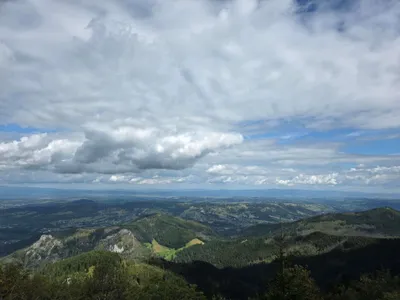 Distance: 15.4 kmDuration: 7 h 56 min
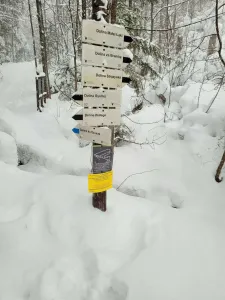 Distance: 5.1 kmDuration: 2 h 10 min
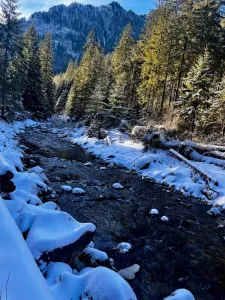 Distance: 11.1 kmDuration: 2 h 59 min
 Distance: 11.8 kmDuration: 5 h 57 min