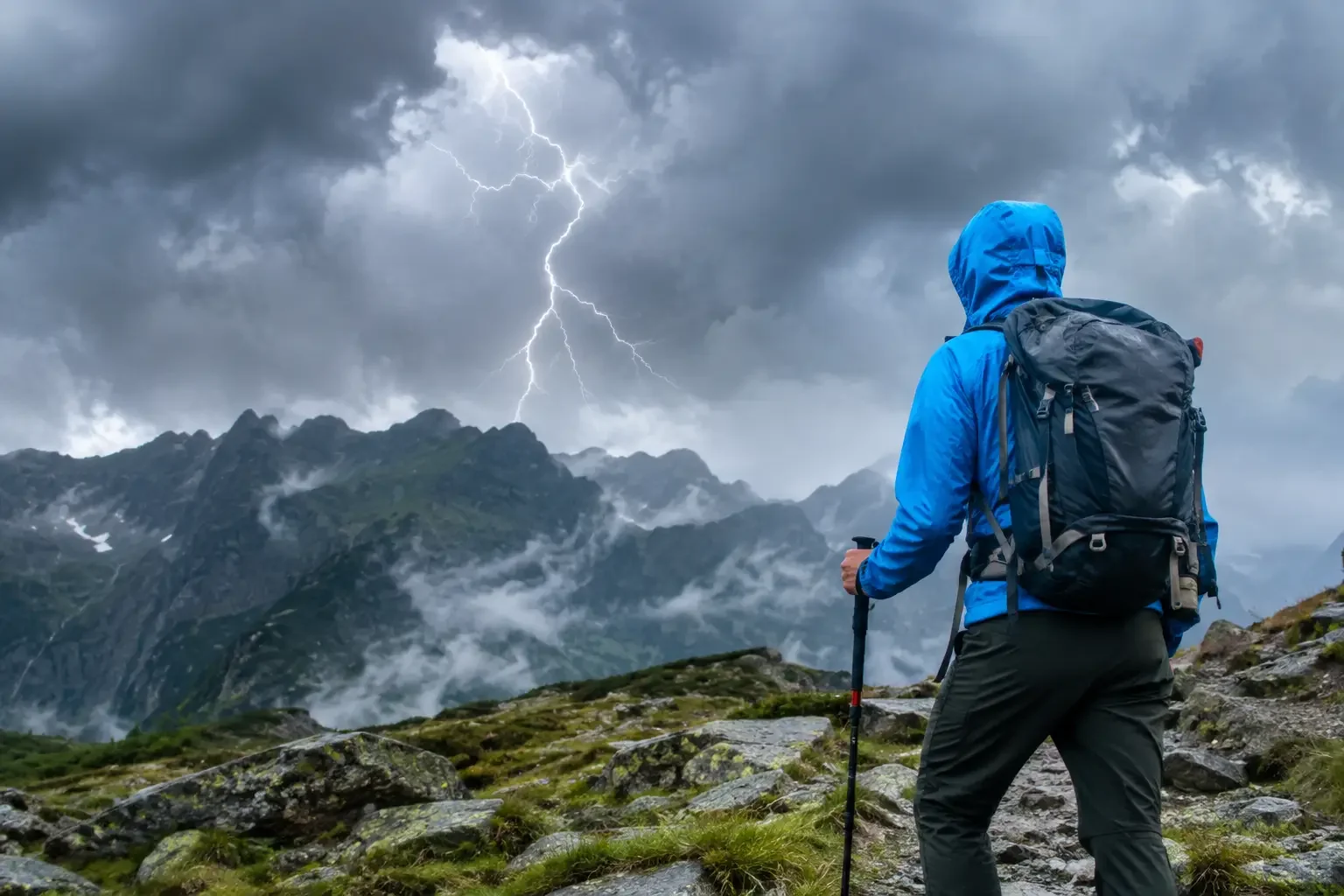
When you hear the first thunder on Orla Perć, Czerwone Wierchy or on the way to Morskie Oko, there is no time to debate whether it “might pass to the side”. A storm in the Tatras - what to do? First of all, stop following the plan and start descending into safer terrain. Will the summit, the pass and the ridge wait? They will. Lightning also does not ask whether today is your only free day of holiday.
The Tatras are small on the map, but the weather can rewrite the rules here in a dozen minutes. Especially in summer the morning can be almost cloudless, and in the afternoon storm clouds grow over the ridges. Add wet chains, slippery slabs, gusty wind and visibility cut to a few steps. The problem is not only a direct lightning strike. A slip, panic, hypothermia and going down the wrong way are just as real.
A storm in the Tatras - what to do before you hear thunder
The best response to a storm starts at breakfast. In the Tatras plan ambitious goals for the morning, not “after lunch, because then it will be quieter”. If the route runs along a ridge, through exposed ground, chains or high passes, set yourself a turnaround time. Not a rough one. A hard one.
Example: you set off for Rysy and according to the plan you should be on the summit at 11:00. If at that hour you are still below the harder section or you see building cumulus, you turn back. You do not force the pace, you do not count on “just one more hour”. Pace in a storm and on wet rock usually drops, it does not rise.
Check the forecast, but do not treat a little cloud icon as a verdict. Look at the hourly development of rain, the probability of storms, the wind and a rain radar. In the morning watch the sky too. Fast-growing, vertical clouds with a dark base, muggy air, sudden gusts of wind and distant rumbles are a clear message: time to shorten the outing.
On the trail take a charged phone, an offline map, a light rain layer, a warm sweatshirt and an emergency blanket. This is not kit for people who “panic about the weather”. It is the minimum for people who do not want to sit soaked under a rock pretending they control the situation. It is also worth telling someone where you are going and which route you plan to return on.
The first thunder means turn around
If you hear thunder, the storm is already close enough to take seriously. Do not wait for rain. Lightning can strike outside the main rain zone, and a sunny break above your head is no certificate of safety.
Estimate the storm distance with the flash-to-thunder method. After you see the lightning, count the seconds to the thunder and divide by three — you get the approximate distance in kilometres. When less than 30 seconds pass between the flash and the thunder, you are in a zone of real danger. From high ground you have to descend immediately.
The worst decision is to keep climbing because the hut, the summit or the car park are “already close”. In a storm how close the goal is does not matter. What matters is whether you are getting off the ridge, an open pass, a summit and open scree or grass. Sometimes the right move is to go back to the last junction, a gully or a lower stretch of trail, even if psychologically it hurts more than marching on.
Do not run on wet stones. A fast but controlled walk is wiser than a spectacular slide on your back. On protected stretches be especially careful: metal chains and staples do not “attract” lightning like a magic magnet, but during discharges you do not want to be clipped to a wet, exposed wall or touch conductive elements unless you have to.
Where to shelter during a storm in the Tatras
The safest place is a solid building, for example a mountain hut, a cable-car station or a closed car. A car protects not because of rubber tyres, as the popular myth says, but because of the metal body, which can act as a Faraday cage. Of course that does not mean you should race a car through a storm — it is about a situation when you are already at a road or a car park.
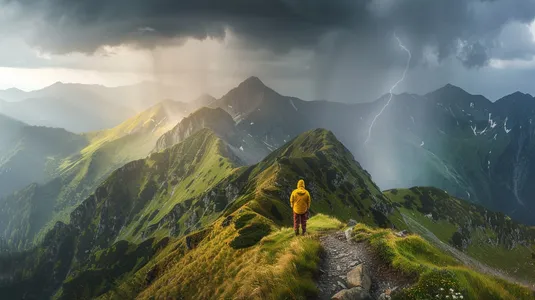
In the mountains you often do not have that comfort. Then the goal is to get as low as possible and avoid places that stick up above the surroundings. Leave the ridge, the summit, the pass, open meadows and isolated rock towers. Do not hide under a lone tree. A tree at the edge of a clearing looks like rescue only until it becomes the highest point around.
Shallow rock niches, small overhangs and cave entrances are also a poor idea. If they do not give full isolation from the walls and the ground, they can expose you to current flowing over the rock. A large, deep cave would be a different situation, but on marked Tatra trails do not build your safety plan on finding the perfect grotto.
When there is no building and no chance of a quick descent, move away from metal protections, watercourses and wet hollows. You can put the backpack a few metres away, especially if it has a metal frame or poles. Merely having poles does not make the lightning choose you, but there is no reason to hold a long metal object in your hand.
How to behave in a group
In a group two mistakes are easy: crowding into one spot and splitting so far that after a moment no one knows where the others are. Spread out by a few to a dozen metres, but keep visual or voice contact. If someone is struck, you do not want the whole team in the same strike point. At the same time a person alone in a white wall of rain is another problem, not a solution.
Do not lie on the ground. If you feel tingling skin, hear crackling, your hair stands on end or metal elements start to buzz, the danger may be extremely close. Crouch low with your feet together, limit contact with the ground and do not rest your hands on the rock. That is an emergency position, not a method for waiting out the whole storm in comfort. The best move is still an earlier descent from the endangered terrain.
Do not sit in a tight pile on backpacks either, do not take photos of lightning from an open ridge and do not calm yourselves with “it always thunders like this here”. The Tatras do not award points for toughness. They award them for common sense, usually without fanfare.
After a lightning strike: act, do not be afraid to touch the injured person
A person struck by lightning is not “charged” and you can safely give them help. If they do not respond or are not breathing properly, call for help on 112 or 985 and start resuscitation if you can. The dispatcher will guide you step by step. In the Tatras give as precise a location as you can: the trail name, a landmark, the altitude from the phone or coordinates.
Do not assume that if the injured person is talking, nothing is wrong. A strike can cause heart-rhythm problems, burns, injuries from a fall and disorientation. Protect them from hypothermia, watch their breathing and do not leave them alone if conditions allow.
After the main cell has passed, do not leave shelter at once just because it has stopped raining. Wait at least 30 minutes from the last thunder you heard. That can be irritating, especially when you see the clouds drifting over Slovakia. Better to lose half an hour than take a lightning strike from the tail of the storm.
In the Tatras a good decision often looks unspectacular: you turn back before the summit, get wet on the descent, drink tea in the hut and go back on the trail the next day. That is not a lost outing. It is an outing after which you can still plan the next one.

 2026-08-02
 2026-09-22
 2026-09-18
 2026-09-27
 2026-09-26
 2026-09-25
 2026-09-24
 2026-09-23
 2026-09-21
 Distance: 18.5 kmDuration: 8 h 09 min
 Distance: 24.7 kmDuration: 7 h 38 min
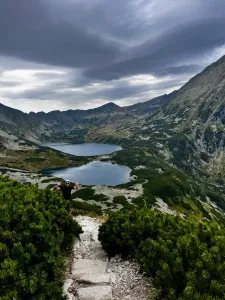 Distance: 16.5 kmDuration: 5 h 45 min
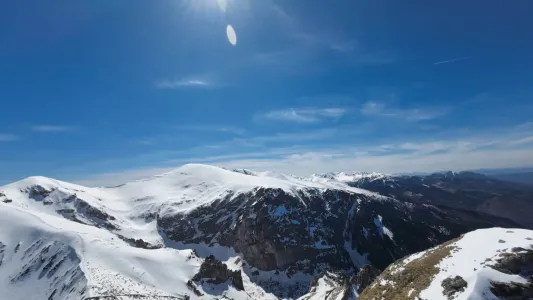 Distance: 6 kmDuration: 3 h 15 min
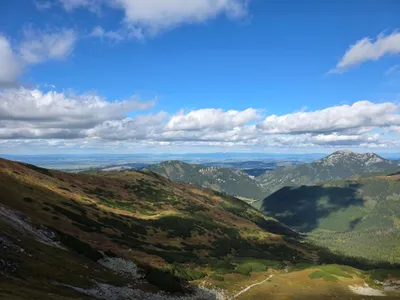 Distance: 18.1 kmDuration: 6 h 50 min