planning
Wielka Świstówka is not an easy shortcut
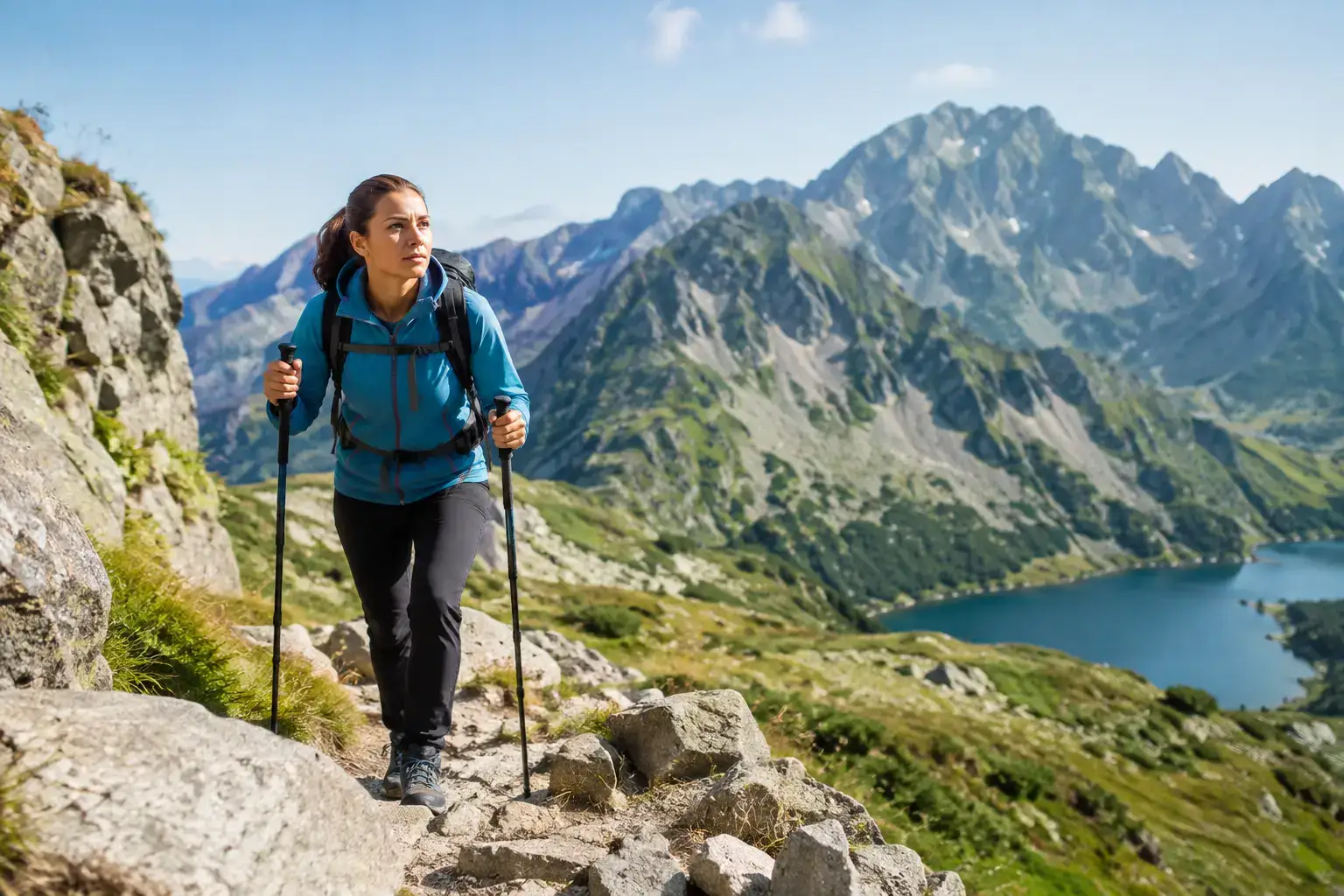
Wielka Świstówka on the route through Kobylarzowy Żleb: the difficulty, the chains, the weather and sensible preparation before heading for Czerwone Wierchy.
How to plan a pre-dawn start in the Tatras: the wake-up, the car park, the forecast, the kit and a plan B, so an ambitious route starts without chaos or needless risk.
Author: Konrad Leśniak8 min read
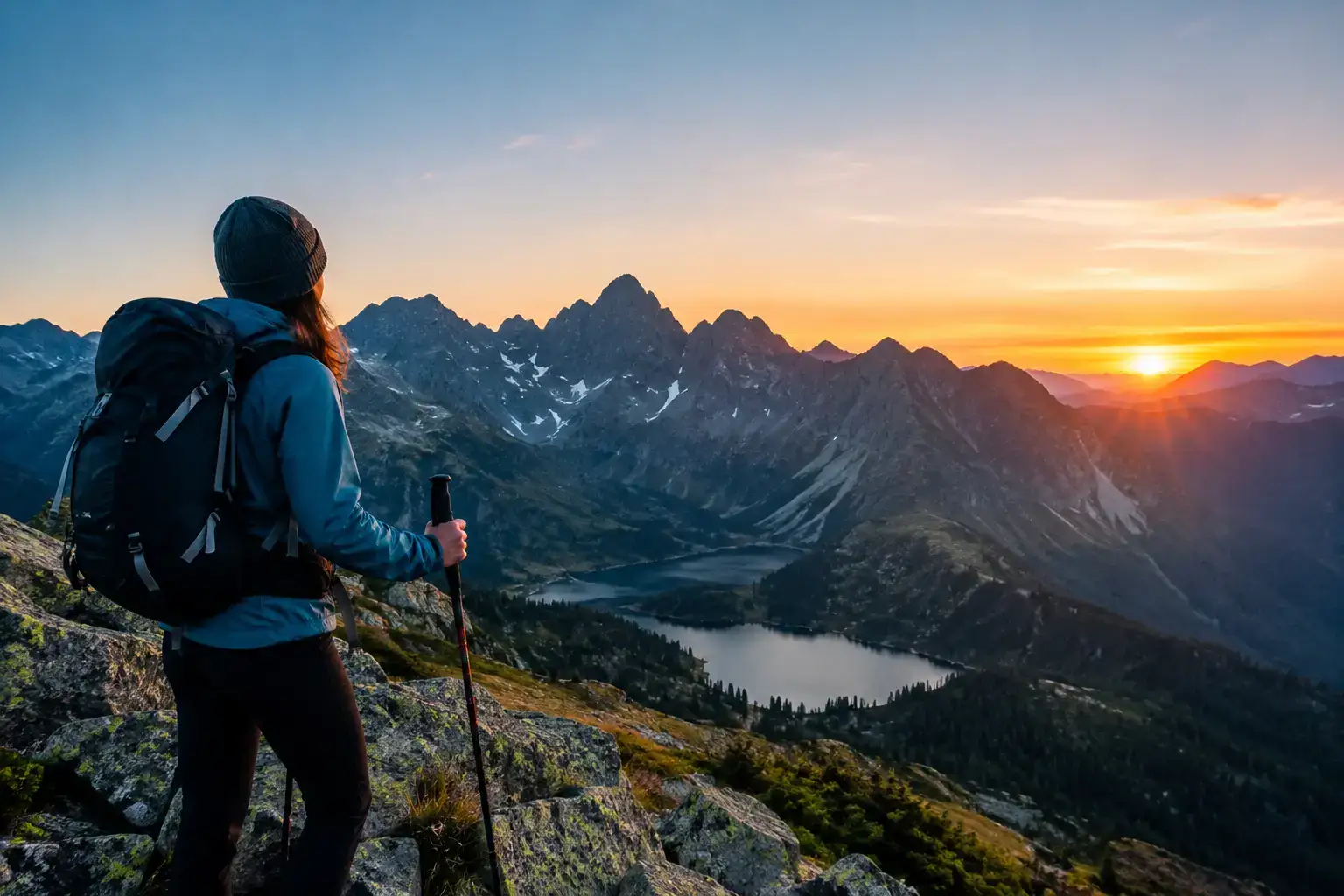
At 4:20 in the morning, the car park at Palenica Białczańska does not look like the start of a mountain adventure. It is dark, it is cold, you are hunting for a headlamp in your pockets, and a friend has just remembered that the water bottle is still in the fridge. That is why it is worth knowing how to plan a pre-dawn start. The point is not to prove your grit to the world. It is to have time, a margin of safety, and at least a little calm on the trail.
In the Tatras an early start can save a great day. It lets you skip the human snake on popular climbs, get ahead of the afternoon storm, and come down from the high ground before your legs and your concentration start to rebel. A wake-up at an absurd hour will not fix a badly chosen route, a terrible forecast, or a lack of fitness. If the plan rests on “it’ll be fine somehow”, at dawn it will be exactly as bad, only darker.
The biggest gain is not a photo in pink light above Dolina Pięciu Stawów. It is time. On a long route that spare time works like an emergency brake: you can slow down on a steep climb, wait out a brief spell of fog, stop to eat, or turn back without nervously counting the minutes to dusk.
An early start makes particular sense on routes that go high and stay above the treeline for a long time. Orla Perć, Rysy, Czerwone Wierchy, Kościelec, or ridge crossings on the Slovak side need fitness, and they also need sensible use of the hours. In summer storms most often build in the afternoon, though “most often” does not mean “always”. A front can arrive in the morning, and yesterday’s forecast can go stale faster than a bun in the pack.
There are less heroic reasons too. Before dawn it is easier to find a parking space, walk a popular valley in peace, and avoid moving in a crowd. For families with children, or for people who are only just building confidence in the mountains, the morning is often more pleasant than a hot, crowded trail at noon.
A good morning starts the day before. It does not start in the guesthouse, when one person is scrolling the map on a phone, another is looking for socks, and a third is asking whether the trail is definitely open.
First, set the time you want to leave the car park, not the wake-up time and not the time you drive out of Zakopane. That is the basic difference. If the goal is a 5:00 start, work the plan backwards: the walk to the car, the drive, the car park, the toilet, putting the boots on, a last check of the kit. Add 15-20 minutes of spare time. In the season, and at popular places, the spare time should be larger.
Then go back once more, to the evening. You pack the rucksack in the evening, you lay the clothes in one place, and you prepare breakfast so that in the morning you only have to eat it or take it with you. It sounds banal, and banal things are exactly what eat the time. At 4:00 even an intelligent person can spend five minutes looking for the gloves that are on the chair in front of them.
Planning a pre-dawn route is not a matter of typing an ambitious summit into an app. You need a cut-off time, after which you turn back whether 40 minutes are left to the goal, or “you can almost see the cross already”.
The turnaround time depends on the length of the route, the season, the forecast, the pace of the group, and the descent. Descent is the key word here. Many people count the time to go up, then treat the way down as a free extra. After several hours of walking, wet rock, exposed ground, and tired thighs do their work. In the dark they do even more.
If you are walking with someone less experienced, their pace sets the pace of the group. You do not “motivate” them to walk faster on the chains or in a gully. That is not character training. It is a simple recipe for stress, a mistake, and an argument in a place where there is no sensible shortcut.
The Tatras do not read the short version of the forecast. A little sun icon over Zakopane says little about what will happen under a ridge, at 2,000 metres, or on the Slovak side. In the evening, check the wind direction and strength, the feels-like temperature, the precipitation, the storm risk, and the cloud at height. In the morning, do it again.
Take particular care with a strong wind, storms, heavy rain, ice, and poor visibility. A high-mountain trip in heavy rain is not a romantic test of how outdoorsy you are. It is often plain stupidity. Slippery rock, getting chilled, a drop in visibility, and a slower pace can overturn a plan in a few minutes.
Plan B should be ready before you leave. Not as the sentence “if need be we’ll go somewhere else”, but as a specific route: a valley, a cave, a walk, a shorter climb, or a recovery day. Turning back because of the conditions is not a loss. The loss is pushing higher only because the alarm went off at 3:30.
A trail that is simple and obvious at noon can be a quite different place at dawn. The waymarks are harder to see, roots and stones appear too late, and forks in the forest can look suspiciously alike. A headlamp is not an accessory for people who want to look professional. It is basic kit.
Take a model with a charged battery, or with fresh spare batteries. Check it in the evening, not in the car park. The torch on your phone can help you find the keys. It should not lead the group through a wet forest. Save the phone for the map, an emergency call, and photos, if the day really does turn out to be a photographic one.
Download the navigation offline and look through the route before you start. See where the junctions are, the mountain huts, the possible turnaround points, and the exposed sections. A paper map still makes sense as a backup, especially when the phone runs down from the cold or the damp. You do not need to be able to lead a polar expedition. It is good to know where you actually are.
Before dawn it is usually colder than the evening feeling suggested after you got back to the room. At the start, put on a layer you can take off easily once you warm up. Do not set off in only a thin fleece because “it’ll be uphill in a minute”. A stop, the wind, or wandering at a junction will test that idea quickly.
Put a light insulating layer, and protection from the rain, in the pack. The choice depends on the season and the goal, but on a high route there is no room for counting on the jacket turning out to be unnecessary. Gloves and a hat or a headband are worth having outside the height of summer, and in autumn often even when Zakopane feels pleasant.
Breakfast does not have to be a culinary triumph. It has to be eaten, and tolerated by the body at an ungodly hour. If you cannot get a proper meal down in the morning, take food you can reach easily for the first hour of walking. The water cannot stay in the car either. Coffee helps you open your eyes. It does not replace fluids, calories, or sleep.
And sleep? There is no clever workaround. An early start after three hours of rest, because in the evening you “just popped out to Krupówki”, is a poor deal. Tiredness makes navigation, balance, and decisions worse. On an easy valley that is irritating. On an exposed ridge it is needlessly risky.
The best moment to change the plan is before you leave the room. The second best is in the car park. If someone feels unwell, the weather looks worse than you assumed, the headlamp does not work, or the group is clearly short of sleep from the start, choose the shorter variant. The Tatras will not close after your holiday.
Ambition is useful in the mountains for as long as it can work with sense. A well-planned start before dawn should not hurt on principle. It should give you a day in which, on the summit, there is still energy left to look around, and on the way back, enough attention to reach safely the place you left in the morning.
Newsletter
A few times a year: trail conditions, closures, the best time to go and new routes. No weekly spam.
Wielka Świstówka on the route through Kobylarzowy Żleb: the difficulty, the chains, the weather and sensible preparation before heading for Czerwone Wierchy.
Is Wołowiec hard? See how much effort the climb takes, where the route wears you out, when to turn back, and how to plan the day with some sense.
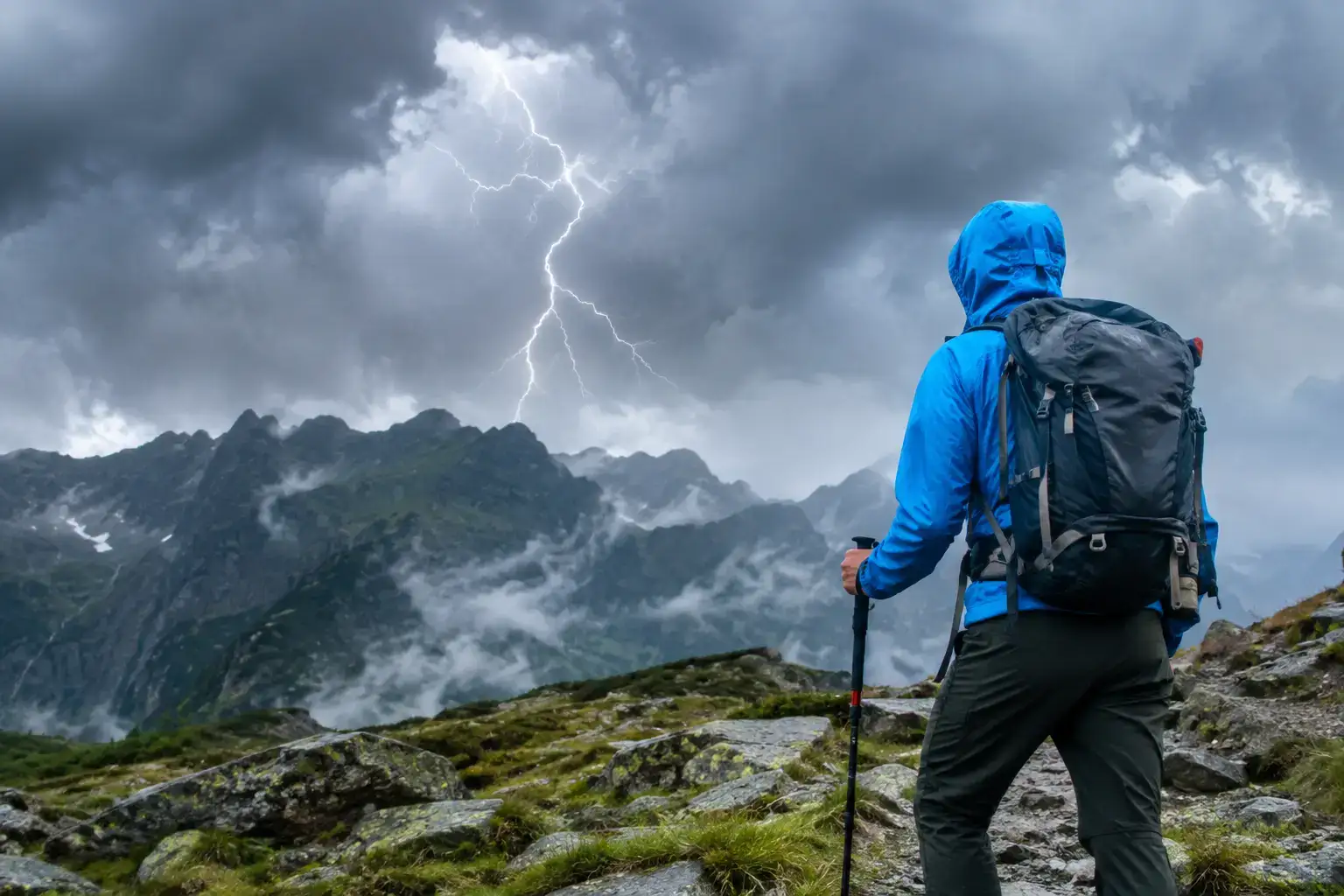
A storm in the Tatras - what to do on the trail? Check when to turn back, where to seek shelter and how to reduce the risk of a lightning strike in the mountains without panic.
These are affiliate links. If you book a stay or a ticket through them, we earn a small commission, for coffee :), at no extra cost to you.