What to take to the Tatras in summer? A list without the nonsense
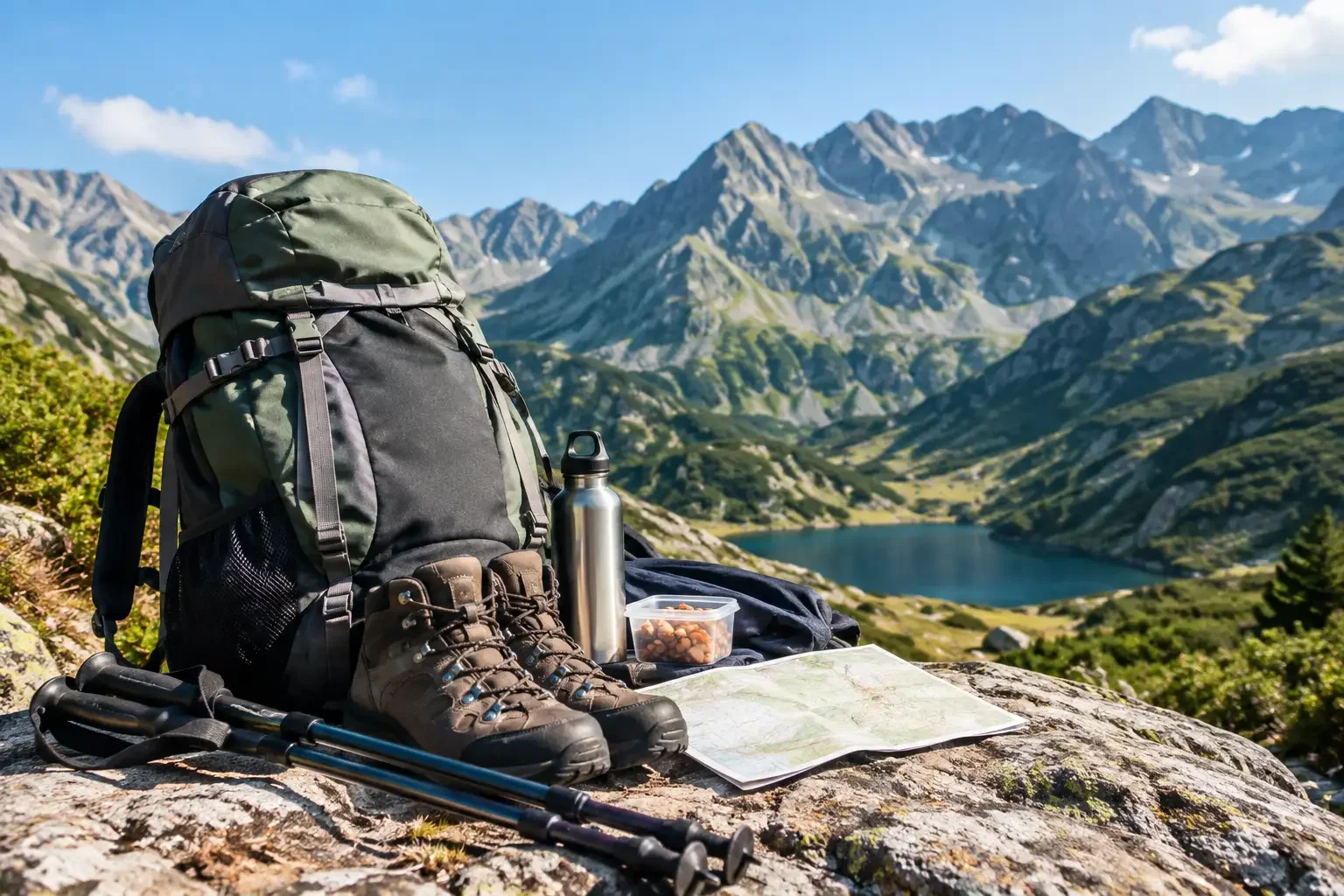
Packing for a Tatra day often starts with the wrong question: what to take to the Tatras in summer so the backpack is as light as possible? Better to ask: what do I need when a beautiful morning turns into a cold wind, a downpour or a descent over wet stones? In the Tatras in summer the winner is not the person who carries the least. It is the person who has a sensible kit and can turn back before the situation gets unpleasant.
That does not mean you have to take winter-expedition kit to Kościelec or the Five Lakes. It means that flip-flops, a half-litre bottle of water and a sweatshirt tied around the waist are a set for a promenade, not a mountain trail. Below you will find a list that works for a longer valley and for a more ambitious day above the treeline. The difference is the amount of water, the time buffer and whether the route goes into exposure.
What to take to the Tatras in summer on every trail
There are things worth having even when you only plan an easy walk to a hut. The weather changes faster than plans, a phone can die, and a twisted ankle does not ask about the difficulty grade of the trail.
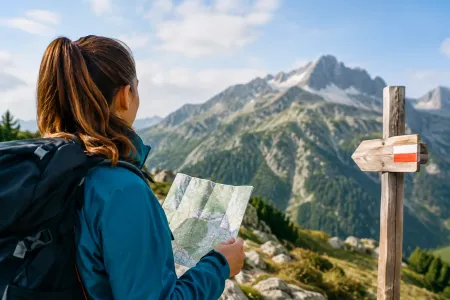
a paper map if you are not confident with offline maps or you are picking a long variant;
a charged phone, ID, cash and a card;
a first-aid kit with plasters, an elastic bandage, disinfectant, a painkiller and your own medicines;
an emergency blanket, a headlamp and a whistle;
sunscreen, sunglasses and a hat;
tissues, a small rubbish bag and something to sit on, even a light mat.
A headlamp sounds like overkill until you get stuck on the descent after dark because the group misjudged the time or waited out a storm in the hut. In summer it does not get dark at five, but on long routes time has an irritating tendency to vanish. Especially when someone says: just a bit further.
A phone does not replace common sense or a sense of the terrain. An offline map is very helpful, but the battery drops faster in cold and rain, and a cracked screen will not show you a safe descent. So keep the power bank in a sealed pouch, not loose between a wet jacket and an apple.
Clothing: summer in the Tatras does not mean summer on the beach
The most common mistake? A cotton T-shirt, a sweatshirt and faith that a forecast with a sun icon settles it. In the morning in Zakopane it can be pleasant, and on the ridge the wind will turn those same 18 degrees into conditions where you start freezing after a stop. Add sweat, shade, wet rock and rain.
Dress in layers. The first layer should wick moisture — a synthetic or merino shirt is far more sensible than cotton. For a stop a light fleece or a thin insulating layer helps. In the backpack there must be a rain jacket with a hood. Not a trendy supermarket poncho that at the first gust turns you into a flapping sack.
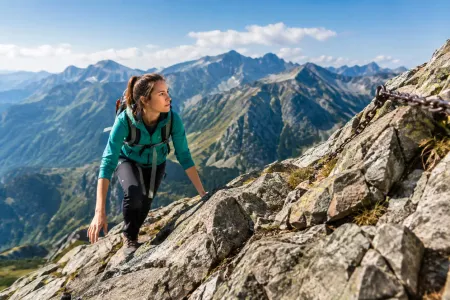
For easy valleys light trekking trousers or shorts often suffice, but pack a long layer to change into or for cooler moments. On trails with chains, in dwarf pine and on long descents, long trousers protect the legs better than ambition. If you get cold quickly, thin gloves and a beanie or a headband are not absurd even in July. They weigh almost nothing, and in the wind on a pass they can save your comfort.
Shoes should lead, not look good
Shoes are chosen for the route, not for a photo at Morskie Oko. On the tarmac road to Palenica or an easy valley, good sports shoes with a sticky sole may be enough. On stony, steep and wet trails it is better to wear trekking shoes that stabilise the foot and do not slip on rock.
There is no duty to buy high, heavy boots before every trip. Low trail shoes are a great choice for experienced people who know their ankles and move with confidence. The problem starts when someone tests new footwear on the way to Orla Perć or climbs in city sneakers with a smooth sole. Wet granite does not forgive marketing optimism.
Take spare socks too. One pair in a sealed pouch can save the end of the day after a soaking, and dry feet mean fewer blisters and less moaning in the car.
Water and food: count the route, not a craving
For a calm valley walk about 1–1.5 litres of fluid per person is usually enough if the day is not hot. On a long route with a lot of elevation, in full sun and without a sure water source, aim more like 2–3 litres. That is a lot and it weighs a lot. Unfortunately the body will not accept the argument that the bottle ruined the look of the backpack.
Water from a spring or a stream can look crystal-clear, but do not treat it automatically as a sure tap. If you plan to refill, have a filter or purification tablets and check in advance where the springs actually are. At huts, do not assume everything will work the way you imagine in the middle of a long weekend either.
Food should give energy, not only take up space. Sandwiches, fruit, cereal bars, nuts, dried fruit and something salty work well. For a route longer than six hours take more than breakfast appetite suggests. Hunger on the descent lowers concentration, and that is exactly when a stupid step is easiest.
Rain, storm and Plan B
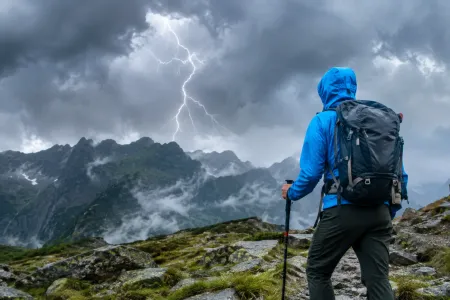
A rain jacket is compulsory, but it is not a pass to walk in a storm. If forecasts show storms from midday, set off early or pick a shorter route. On a ridge, around chains, on an open meadow or by a tarn you do not want to be the person telling themselves they might somehow get through.
When you hear thunder, get off exposed ground. Do not hide under a lone tree, do not hold trekking poles in your hands and do not wait for a better moment for a photo. A storm in the High Tatras is not an attraction. It is a signal that today’s plan has just changed.
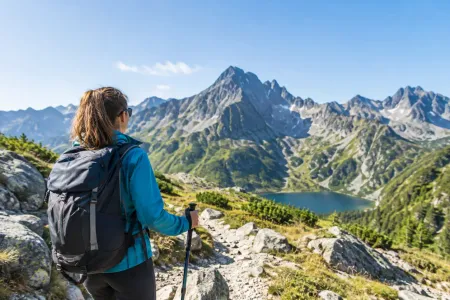
Trekking poles are worth taking for long climbs and above all for descents. They spare the knees, help in mud and on loose stones. They are not a good idea on every stretch with chains, though — there it is often better to put them in the backpack so you have free hands and do not snag other people.
Match the backpack to the goal, not to ambition
For a full-day route the most practical choice is a backpack of about 20–30 litres. It should hold water, food, clothing layers, a first-aid kit and emergency items, but it cannot be a giant suitcase you dump half the flat into. A heavy backpack tires the shoulders, worsens balance and turns the descent into a punishment.
For an easy walk you can drop to a smaller volume, but do not drop the jacket, water and basic protection just because the route is meant to be short. For ambitious outings such as Czerwone Wierchy, Rysy or Slovak ridges, add extra food, an extra warm layer and check the real walking time. The time on the sign does not include your breaks, queues at the chains or the pace of the slowest person in the group.
Before you leave, tell someone where you are going and when you plan to be back. Check tourist notices, trail closures and the weather for the height you will be walking at, not only for Zakopane. And if in the morning the conditions look bad, treat a change of plan as a good decision, not a failure. The Tatras will not vanish. A badly packed and badly played day, on the other hand, can stay in the memory far too long.

 2026-09-25
 2026-09-24
 2026-09-20
 2026-09-28
 2026-09-27
 2026-09-23
 2026-09-22
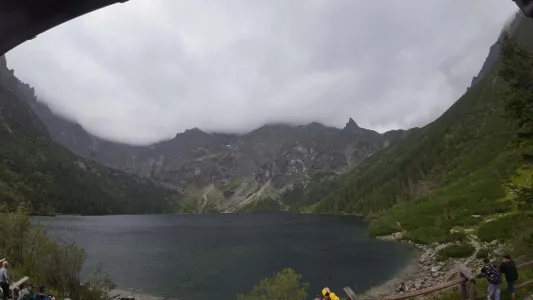 2026-09-21
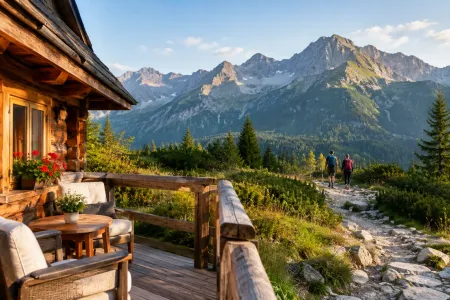 2026-09-19
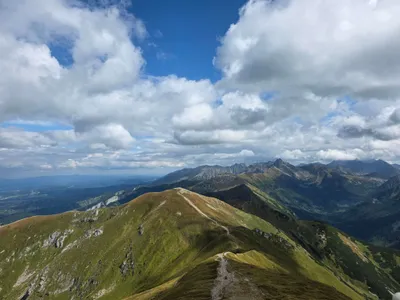 Distance: 18.5 kmDuration: 8 h 09 min
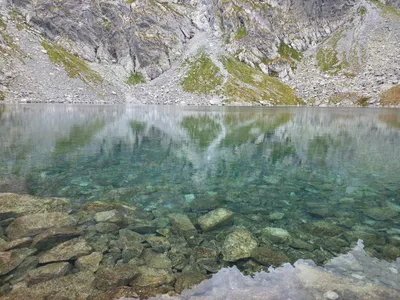 Distance: 24.7 kmDuration: 7 h 38 min
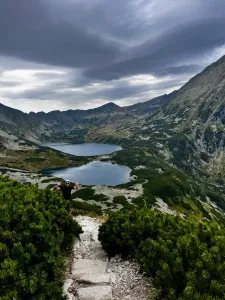 Distance: 16.5 kmDuration: 5 h 45 min
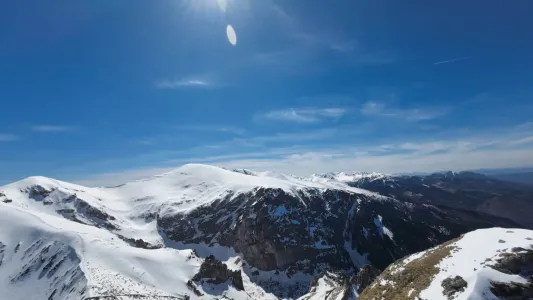 Distance: 6 kmDuration: 3 h 15 min
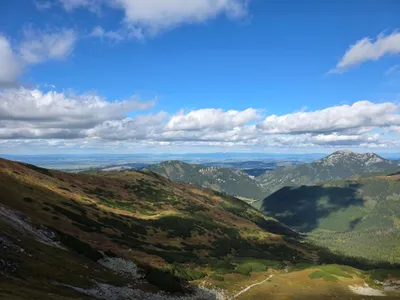 Distance: 18.1 kmDuration: 6 h 50 min