Mountain backpacks: Why your old school backpack will ruin your holiday
You’re hiking to Hala Gąsienicowa. It’s warm and sunny. You pass a tourist. His T-shirt is completely soaked on the back (like he just stepped out of a pool), the straps of a thin chain-store backpack dig into his neck, and he keeps adjusting the sliding load.
It’s a classic sight. We spend a fortune on boots and forget that the backpack is our “home” for the whole day. A bad backpack means sore shoulders, a wet back, and a ruined trip.
So how do you choose the right one for 1-day outings in the Tatras without spending half your paycheck?
1. Literage: How much is “just right”?
Mistake: Going for a huge 50-litre “chimney” (because “maybe I’ll pack something else”) or a 10-litre sack where even a windbreaker won’t fit.
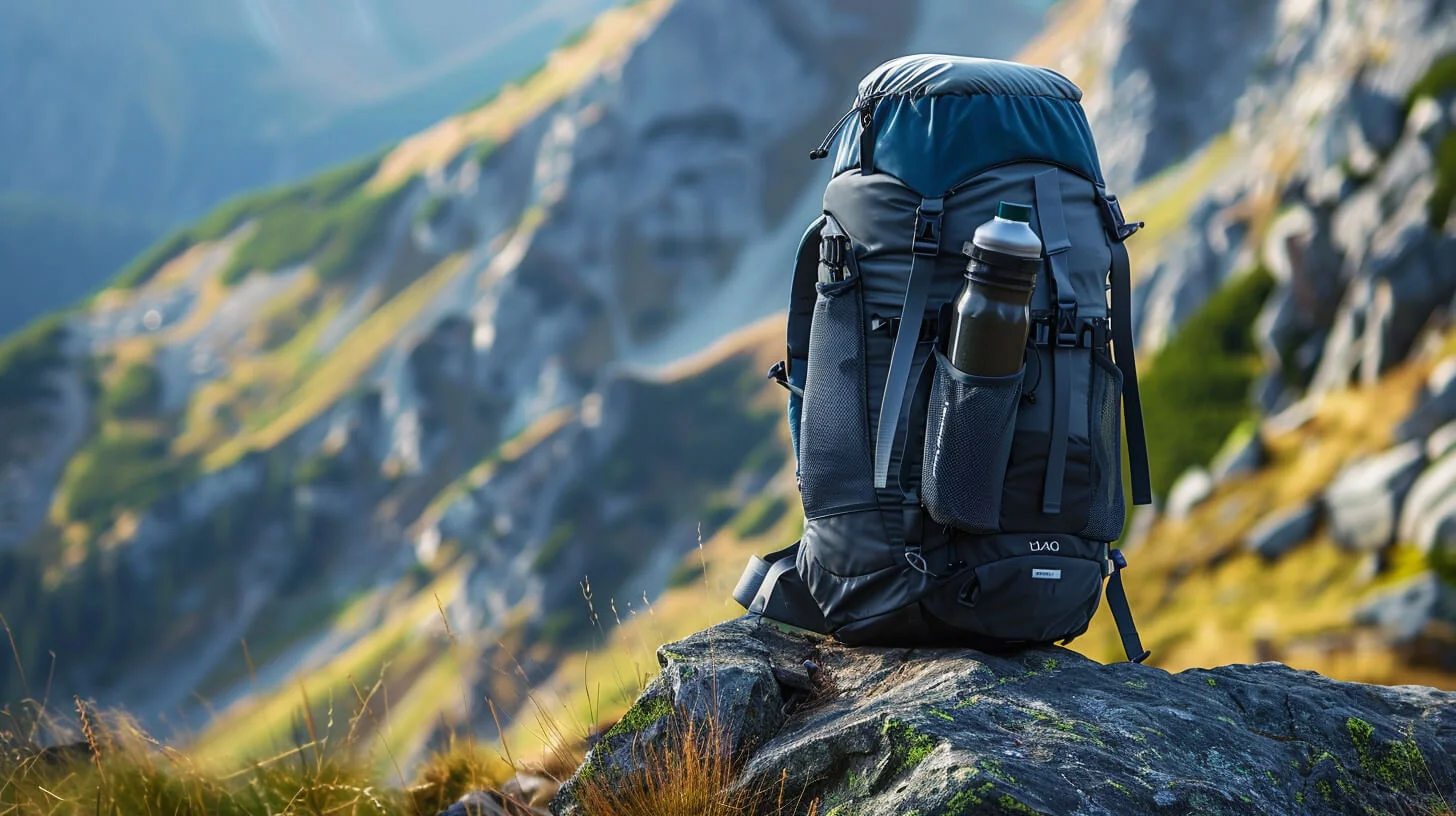
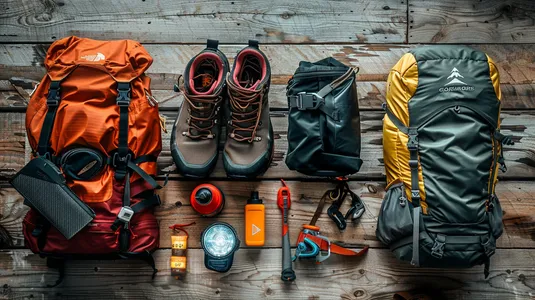
Optimal for the Tatras:20 to 30 litres. That’s absolutely perfect for one day. It fits a rain jacket, first-aid kit, power bank, 2 litres of water, and food. Not too much, not too little. This kind of backpack also won’t get in your way (it won’t snag on rocks) during chain sections on Giewont or Szpiglasowy Wierch.
2. Ventilated back panel (your lifesaver)
Remember the tourist with the soaking back from the first paragraph? He didn’t have a mesh back. This is one of the most important features. Choose backpacks with a curved frame and a tensioned mesh.
Thanks to that, the backpack material doesn’t touch your back directly. There’s a few-centimetre gap where air flows freely.
The comfort difference on a hot summer day on Czerwone Wierchy is absolutely huge.
3. Hip belt: no, it’s not only for “pros”
“Why do I need a hip belt in a small backpack?” you’ll ask. Physics doesn’t lie. If you’re carrying 2 litres of water, food, and clothes (about 4–5 kg), without a hip belt all that weight hangs on your shoulders and neck. After 6 hours of hiking, you’ll have a stiff neck.
A good hip belt takes about 70% of the load onto your pelvis (the strongest bones in your body). Suddenly the backpack feels half as heavy.
Bonus: hip belts often have small pockets — perfect for your phone so you can snap a quick photo, or for gummies (without taking the backpack off!).
4. Extras that change the game
What else should you look for when buying a backpack?
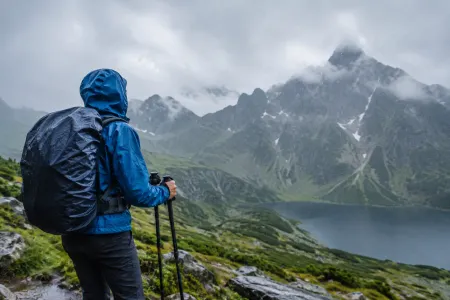
Rain cover (Raincover): Mountain weather can be moody. A good backpack has an integrated cover hidden at the bottom. When it starts raining on Kościelec, you pull it over in 5 seconds and your dry clothes stay dry.
Side pockets: They need to be flexible enough to fit a water bottle. Reaching for water inside the backpack every time you get thirsty is torture.
Hydration bladder compatibility (Camelbak): If you want to drink on the move through a tube (great for long, monotonous approaches like Krywań), check whether the backpack has an H2O outlet.
Summary and prices
You don’t have to buy top-brand packs (Osprey, Deuter) for 600–800 zł, even though they’re the “Mercedes” of this segment and will last you a decade. A very decent backpack that meets the conditions above (mesh, belt, rain cover) you can find from brands like Gregory, Salewa — and even in basic models from popular outdoor shops, already in the 200–350 zł range.
Treat it like an investment in your own health. A good backpack is the one you simply forget about after an hour on the trail.

 2026-06-21
 2026-07-27
 2026-09-18
 2026-09-19
 2026-09-17
 2026-09-16
 2026-09-15
 2026-09-14
 2026-09-13
 Distance: 18.5 kmDuration: 8 h 09 min
 Distance: 24.7 kmDuration: 7 h 38 min
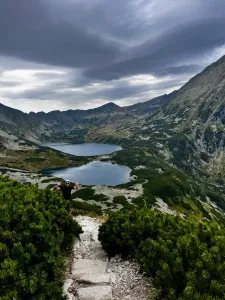 Distance: 16.5 kmDuration: 5 h 45 min
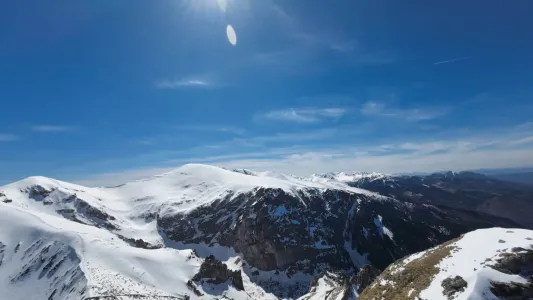 Distance: 6 kmDuration: 3 h 15 min
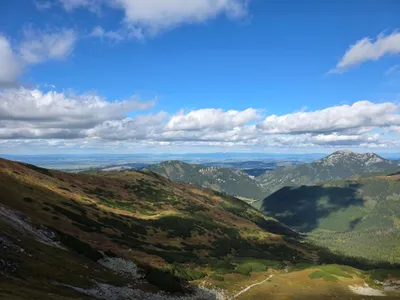 Distance: 18.1 kmDuration: 6 h 50 min