
Tatra weather - how to read the forecast before you go
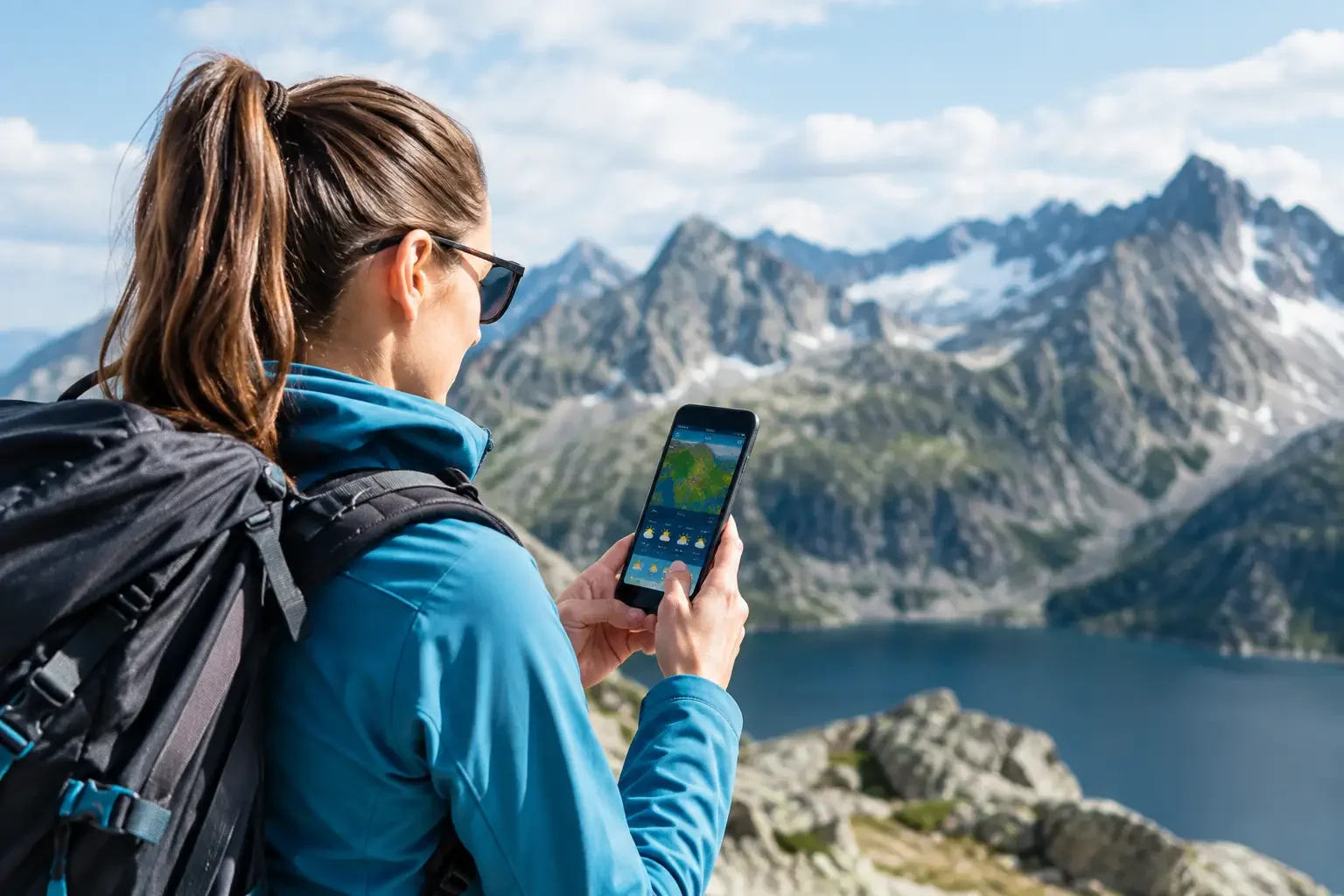
You type “Tatra weather” into your phone, see a cloud icon, 20 percent chance of rain, and think: relax, we are going for Orla Perć. Then at 1 p.m. you are standing on wet rock, the wind is ripping your hood off, and the lightning is providing a free soundtrack. In the Tatras the problem is rarely a missing forecast. The problem is reading it as if it were a city forecast.
Mountain weather has no duty to cooperate with your holiday, your booked room, or the group’s ambitious plan. The good news is that you can cut down the number of stupid decisions. You just have to stop asking only “will it rain?” and start checking when, where, how hard, and what the wind will do with it.
Tatra weather starts with elevation
The temperature below Zakopane does not say much about what awaits you above Czarny Staw, on Kasprowy Wierch, or on the Czerwone Wierchy ridge. The height difference between the valley and your destination often means several degrees less, and in a strong wind it feels even colder. In July you can leave the car park in a short sleeve and two hours later freeze on a pass as if it were October.
So do not treat a single temperature as the answer to everything. Check conditions separately for Zakopane or the valleys, and for high points. If you are planning a route on the Slovak side, the rule is the same. Dolina Rohacka can look gentle while higher up on Baníkov clouds are sliding along the ridge and gusts turn an ordinary crossing into a job for people who really know why they are there.
Take a simple rule: the higher, more exposed, and more technical the route, the smaller the margin of error the forecast leaves you. A walk through Dolina Kościeliska in passing rain is usually a wet jacket and a sensible pace. Going up Rysy, Kościelec, or an exposed Slovak ridge in the same conditions can stop being a hike and start being a problem.
Do not look only at the sun icon
Weather apps love simplifying the world into sun, cloud, and a raindrop. In the Tatras you need a bit more data. The most important things are the hour of precipitation, the chance of storms, wind strength and direction, temperature at elevation, and visibility driven by cloud cover.
A forecast of “rain in the afternoon” sounds harmless, but it means completely different things depending on the plan. If you are doing a short valley loop and should be at the hut by 2 p.m., you can leave earlier, watch the sky, and keep a time buffer. If at 2 p.m. you will only just be reaching the highest, most exposed point of a long route, that message should trigger a change of plan already at breakfast.
Wind is the most underestimated parameter. A pity, because it can chill you faster than light rain, make balance on wet slabs harder, and steal the pleasure from a ridge even under a cloudless sky. Gusts that in town barely move the branches can be exhausting on an open stretch. In very strong wind, skip the high ground. The view will not run away, and you do not have to prove anything to random hikers you pass on the trail.
A storm does not mean “we will see on the spot”
When forecasts show storms, do not plan a long route with a ridge, chains, or a wide plateau high above the valley. That is not excessive caution. A storm in the Tatras can build faster than it takes you to eat a second sandwich, and getting off exposed terrain takes time you simply do not have then.
If a storm is due in the afternoon, a dawn start is sensible only when the plan lets you be well below the ridge before the danger hour. “We might make it” is not a strategy. It is the slogan of people who later run over wet stones because they heard the first thunder far too late.
On the trail, react to reality, not to hope. Fast-building towers of cloud, a sudden drop in temperature, a strengthening wind, and the first distant rumble are reasons to turn back or change the variant. Do not wait for rain as official permission to descend. When a storm is close, metal chains and via ferratas are not the place to analyse the situation.
In the morning check three things, not one forecast
The evening before a hike, it is worth looking at the overall weather picture and preparing variant A and B. In the morning check the hourly forecast again, the rain radar, and the current mountain conditions bulletin. That is enough to catch a situation where the front sped up, the wind is meant to be stronger, or overnight rain left the rock slick.
Radar is excellent for judging what is happening now and what is coming in the next few hours. It is not a crystal ball for the whole day. Model forecasts help you plan the outline of the trip, but different models can show different hours of rain. When they clearly disagree, do not pick the version that best matches your dream route. Pick a shorter and safer objective.
Check webcams in the area too, if they are available, but keep some distance. An image from one place shows conditions in one place. Fog can hang over Kasprowy while lower down it is quite clear. It can also be the other way round. A camera helps you judge cloud cover and visibility; it does not replace the forecast or your own observation.
Rain changes the difficulty of a trail, not just the colour of your jacket
On Tatra routes, wet rock, roots, and mud are a separate category of difficulty. Chains on a dry ascent can be a pleasant aid. In a downpour, in a crowd and poor visibility, they become a bottleneck where every move takes longer. Then the risk of slipping, getting chilled, and simply getting stuck behind a human snake goes up.
This matters especially for people who judge a route only by kilometres. Eight kilometres in a valley after light rain can be a relaxing walk. Eight kilometres with elevation gain, exposure, and slippery slabs is a completely different day. In rain, drop your assessment of your own abilities by one level. If you normally choose moderate routes, that day choose an easy one. If an easy one is already tiring for you, stay in the valley, at a hut, or plan a day off the trail.
At Taterki we stick firmly to the rule that a high-mountain trip in heavy rain is not “atmospheric”. It is simply stupid, especially when you have hundreds of safer options for the next day. Ambition is useful in training. In the mountains it is better if common sense is in charge.
Dress for the scenario, not for the photo from the car park
A rain jacket in the backpack is not decoration or a talisman. It should be easy to reach, just like an extra insulating layer, a hat or headband, and gloves when you are going higher outside the height of summer. On a long route, a pack cover or a waterproof bag for the things that must stay dry also helps.
The biggest mistake? A cotton hoodie, a city umbrella, and shoes with a smooth sole, because it was 24 degrees in the morning. Tatra weather checks that kit quickly and without pity. You do not need Himalayan expedition gear, but you do need shoes that grip, clothing layers, and protection from water and wind.
And in a heatwave, do not forget that a cloudless sky can be a threat too. On exposed trails the sun, lack of shade, and a long climb can drain you more than the elevation gain. Water, a hat, sunscreen, and an early start are not details. They are part of the plan.
When to call it off, and what to choose instead
Dropping a high objective does not mean sitting in your room watching rain on the window. With a low cloud base it is worth choosing a valley route, a shorter walk to a hut, or a calm stroll where you can turn around easily. When it has been pouring since morning, the wind is tearing at the trees, and forecasts warn of storms, pick an attraction outside the mountains and save your legs for a better day, or see what to do when it rains.
It is worth having two ready variants before you even arrive. The first for a stable weather window - ambitious, long, with a start ahead of the crowds. The second for cloud, rain, or wind - shorter and lower down. That way you are not making the decision in a rush at 8:30, when the whole group is already in boots and everyone wants to “go somewhere at least”.
The best Tatra hike does not always end on a summit. Sometimes it ends at a hut, with a dry jacket, a hot tea, and a plan for tomorrow. That is a much better story than coming down injured, or explaining to mountain rescue at night why, despite a storm forecast, you went up on the ridge.
Plan your trip
These are affiliate links. If you book a stay or a ticket through them, we earn a small commission, for coffee :), at no extra cost to you.
Recent blog posts
 2026-09-18
Tatra weather - how to read the forecast before you go
Tatra weather can turn a good plan into a wet retreat. Learn how to read forecasts, spot a storm coming, and match your route to the conditions in the Tatras.
#safety#weather#planningView post 2026-09-17
8 of the best Tatra trails for a good day
The best Tatra trails for beginners and seasoned hikers: specific routes, difficulties, walking times, and advice on when to turn back without taking extra risk in season.
#routes#tatras#views+1View post 2026-09-10
The Tatras at full throttle and a cycling reset. Our 5-day marathon (and the drive back to Szczecin)
How do you squeeze the most out of a holiday when you have to drive across the whole of Poland? Here is our plan: 4 days of hard hiking in the Tatras and 1 day of cycling chill by Lake Czorsztyn to loosen up the knees.
#trip report#planning#bikes+2View post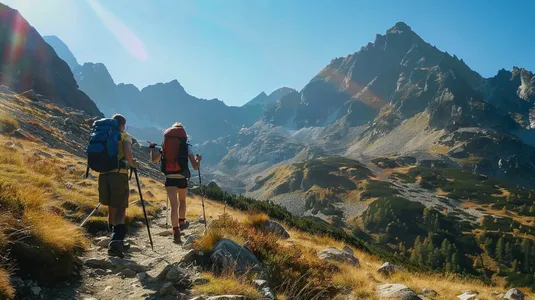 2026-08-30
Trial by fire. How do you take a friend into the Tatras without ruining your friendship?
You are in iron shape and want to show your friend or partner the beauty of the Tatras? Before you drag them onto Orla Perć in trainers, read how to plan the trip so they do not come home in tears.
#beginners#tips#safety+2View post 2026-08-20
15 tabs open in your browser? How to plan a Tatras trip without losing your mind
You look up a trail, then a hotel, then tickets for the thermal baths... and suddenly you have 20 tabs open. See how from today you can do it all in one place, over your morning coffee.
#planning#tips#accommodation+2View post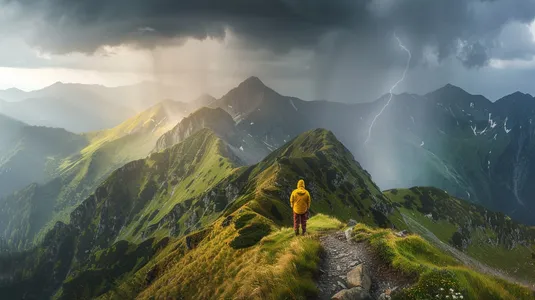 2026-08-02
Sun in Zakopane, a storm on Kasprowy. Why do the mountains lie about the weather?
You check an app: sunshine and 25°C. You reach the top and suddenly you are running from lightning. Learn how to read weather forecasts in the Tatras and why the “before noon” rule can save your life.
#weather#safety#tips+1View post
Popular trails
- Distance: 21.4 kmDuration: 10 h 10 min
Banówka (Baníkov)
Difficulty: difficult (high exposure, climbing, chains!)
#slovakia#western tatras#západné tatry+3View trail - Distance: 19.1 kmDuration: 5 h 54 min
Czarny Staw pod Rysami
Difficulty: moderate
#high tatras#lake#views+1View trail - Distance: 15.6 kmDuration: 8 h 27 min
Czerwone Wierchy (Red Peaks)
Difficulty: average
#western tatras#ridge#fitness+2View trail - Distance: 5.1 kmDuration: 2 h 10 min
Dolina Białego (The Biały Valley)
Difficulty: easy
#western tatras#valley#walk+1View trail - Distance: 12.6 kmDuration: 3 h 45 min
Dolina Chochołowska (The Chochołowska Valley)
Difficulty: easy
#western tatras#valley#for families+1View trail - Distance: 11.1 kmDuration: 2 h 59 min
Dolina Kościeliska (The Kościeliska Valley)
Difficulty: easy
#western tatras#valley#family-friendly+4View trail
Did you find the information here useful? I spent quite a bit of time compiling it. If it helped you plan your trip, buy me a virtual coffee! ☕
Buy me a