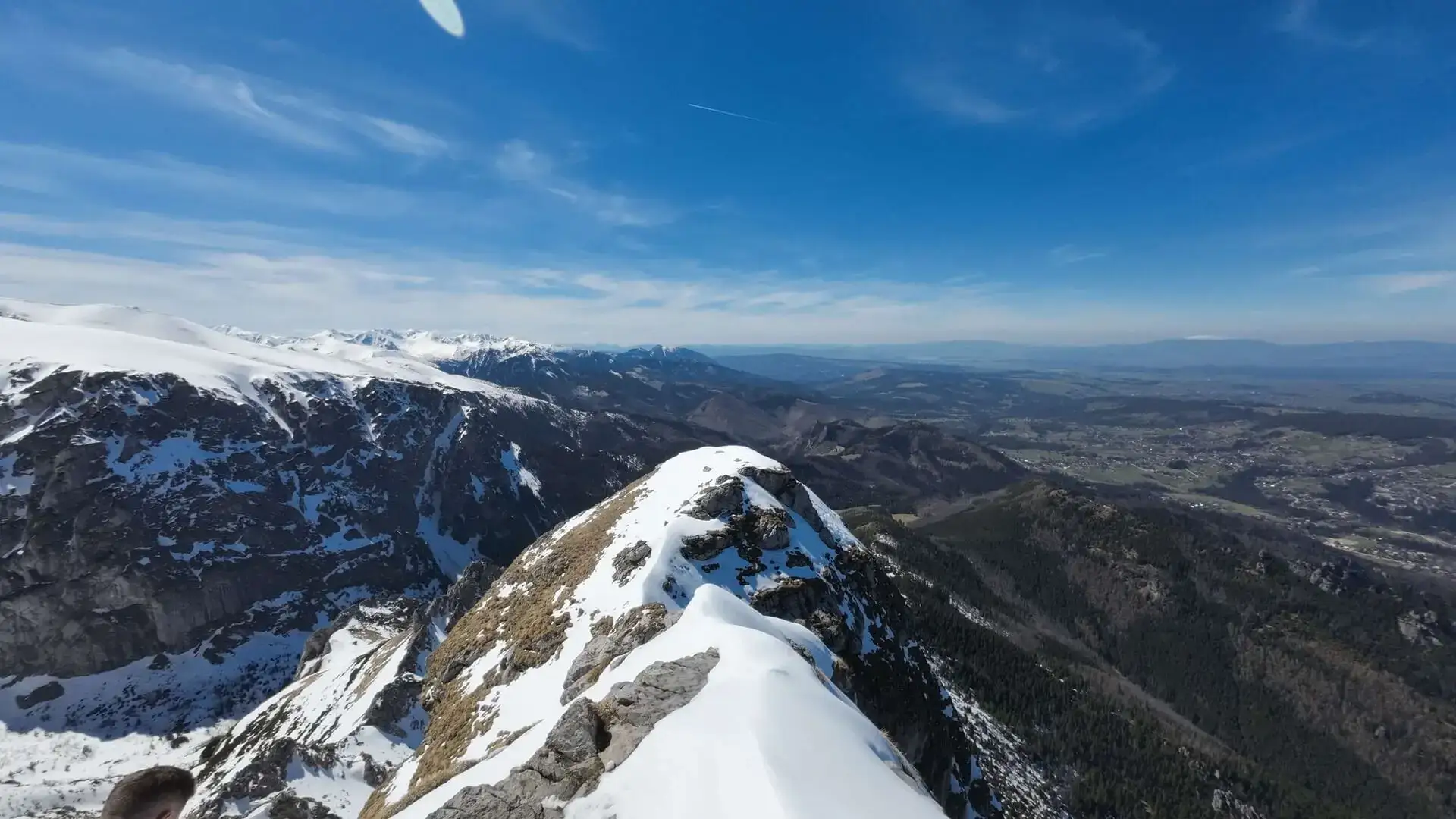
Difficulty: ModerateWestern Tatras
Giewont from Strążyska
Start: Dolina Strążyska · via Polana Strążyska and Przełęcz w Grzybowcu
- 3:15 h
- Time
- 6 km
- Distance
- +1014 m
- Ascent
1894 m a.s.l. · trail blue · start: Kuźnice
TPN alert: Maintenance work underway: Wielka Polana Małołącka - Przełęcz w Grzybowcu - Wyżnia Kondracka Przełęcz. Proceed with caution.
TPN advises special caution in this section.
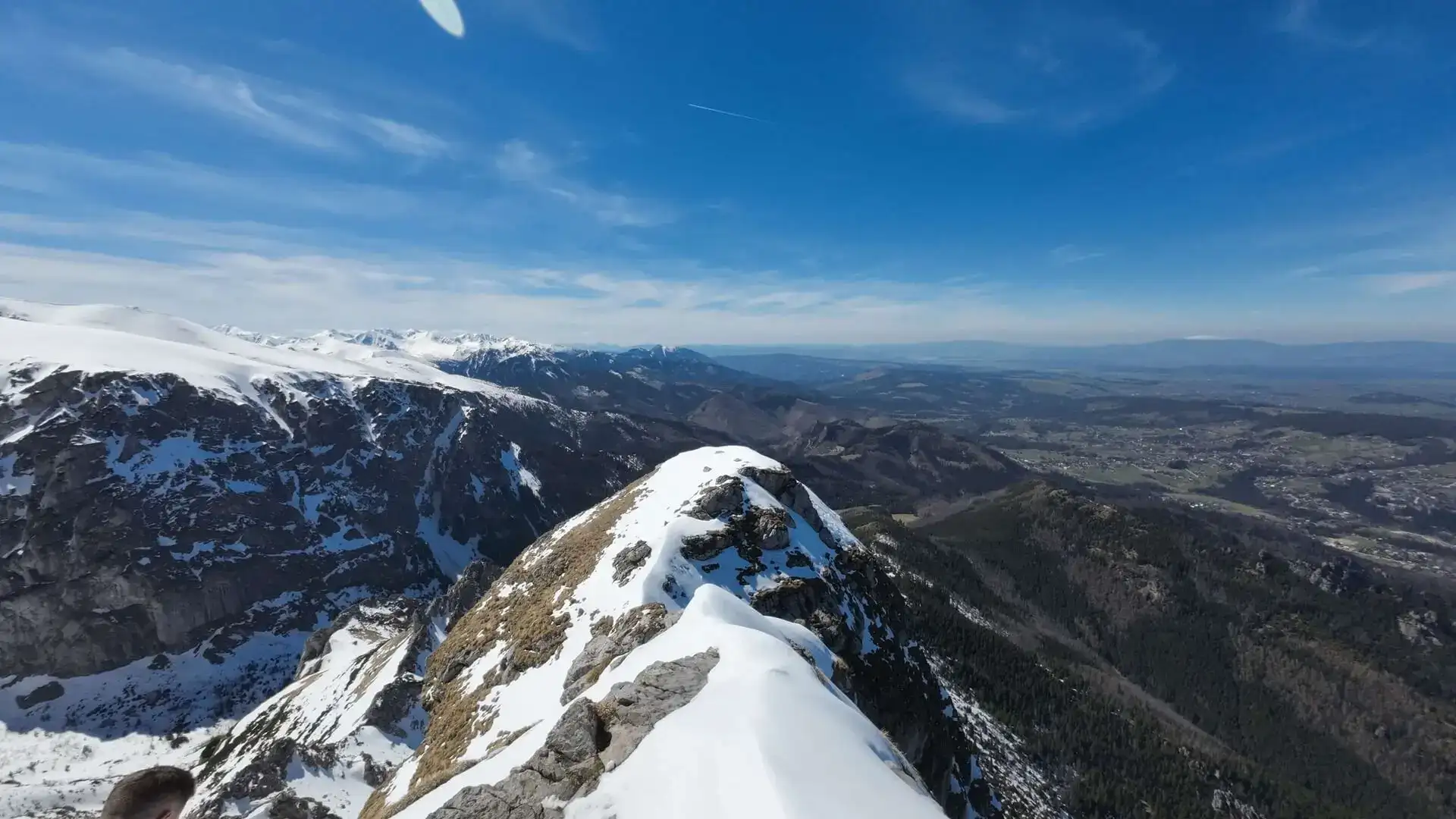
PolecanyBlue from Kuźnice
Czas i dystans dla całej wycieczki, z powrotem do startu.
Tempo
5 h 57 minSzacunek od czasu z opisu, bez kolejek i postojów.
Polecany jest na tej stronie. Inny start ma osobną kartę — własny opis i mapę.
| Wariant | Start | Czas przejścia | Łańcuchy | Kolor szlaku |
|---|---|---|---|---|
Blue from KuźnicePolecany The classic attack. Kalatówki, Kondratowa, the pass, then chains. The figures at the top of the page show this loop. | Kuźnice | 5 h 57 min | TakOne-way loop on the dome. Polished limestone. |
|
Strążyska and Grzybowiec Red climb. Separate page with its own map. Count the descent separately. Grzybowiec closed in winter. Zobacz ten szlak → | Dolina Strążyska | 3 h 15 min | TakThe same summit chains. TPN closes Grzybowiec in winter. |
|
From Gronik via Mała Łąka Quieter at the start. Separate page with its own map. Same queue on the dome. Zobacz ten szlak → | Gronik | 3 h 31 min | TakChains only on the dome. The valley and Kondracka Pass have none. |
|
Polecany
Blue from Kuźnice
The classic attack. Kalatówki, Kondratowa, the pass, then chains. The figures at the top of the page show this loop.
Blue from Kuźnice
Wykres podejść wygenerowany ze śladu GPX. Przesuń kursor lub palec po wykresie, aby sprawdzić profil podejścia i punkty kulminacyjne.
Wgraj trasę do zegarka sportowego (Garmin, Coros, Suunto, Apple Watch) lub aplikacji nawigacyjnej (Mapy.cz, Komoot, Locus Map, Strava) i nawiguj po szlaku w trybie offline bez zasięgu.
Giewont stands at 1,894 m above sea level. It is not just a mountain, but the absolute symbol of Zakopane, the legendary “Sleeping Knight,” and a destination dreamed of by almost every tourist visiting the Polish Tatras. The summit, crowned with a massive 15-metre iron cross, attracts hikers like a magnet, but it can also brutally test your fitness and common sense. Although it seems within arm’s reach from Krupówki street, climbing Giewont is a full-fledged, demanding high-mountain excursion that serves up a dose of adrenaline on the chain-secured final section.
💡 In a nutshell – Giewont:
- For whom: For hikers with good fitness, without a fear of heights. The final section below the summit is steep rock with chains.
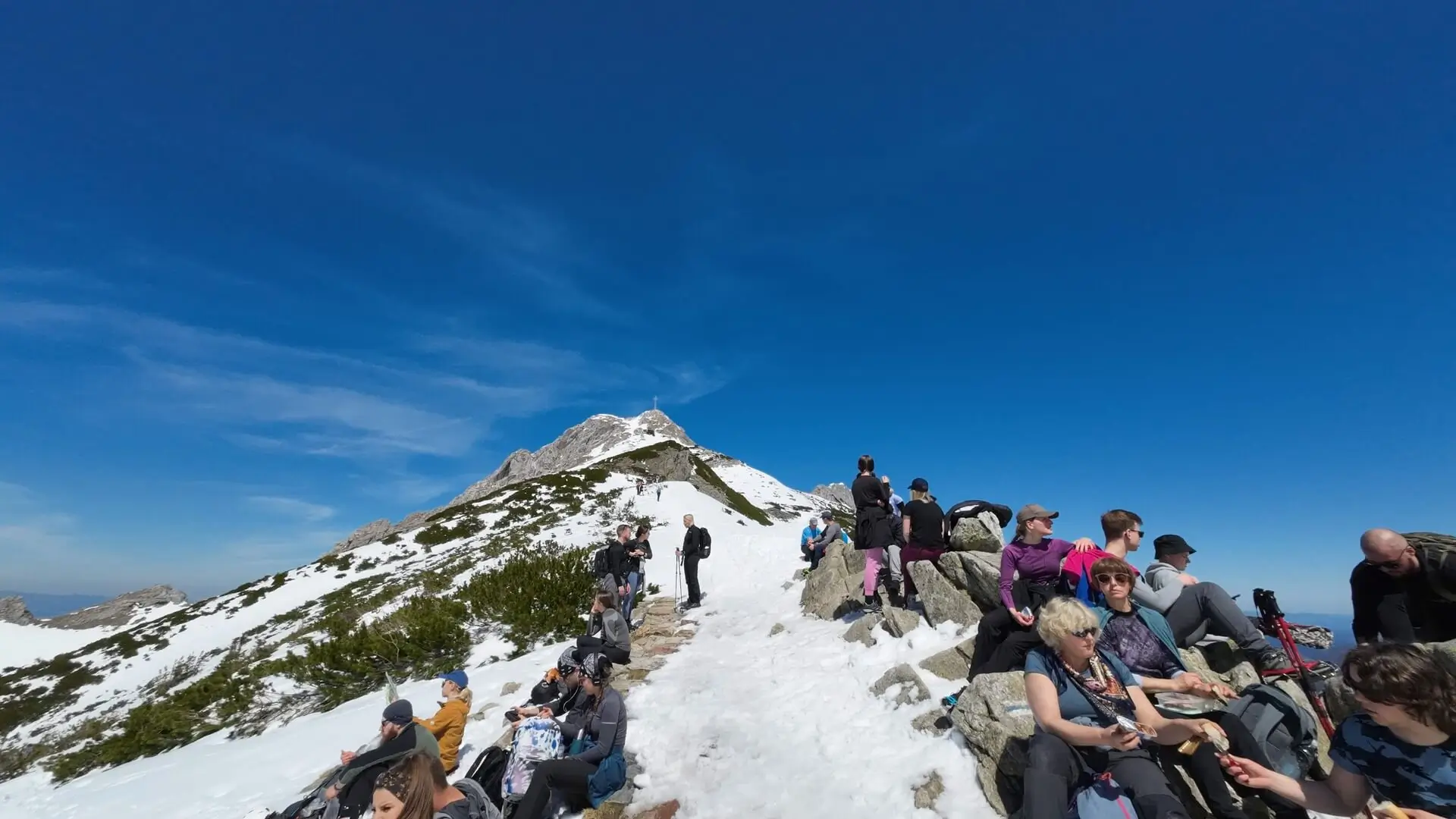
- Golden rule: Hit the trail no later than 6:00 AM! You will avoid 2-hour queues for the chains and afternoon storms.
- Dangers: The cross on the summit attracts lightning. If you hear a storm, turn back immediately, even if you are 5 minutes from the top.
- One-way traffic: The summit dome is one-way. Always descend via the designated loop, never go back against the flow.
| Item | Value |
|---|---|
| Height | 1894 m above sea level |
| Range | Western Tatras |
| Start | Kuźnice (Zakopane) |
| Ascent from Kuźnice | about 900 m |
| Up the blue trail | about 3 h |
| Whole loop | 11.8 km, 5 h 57 min walking |
| Chains | yes, the last ~25 min below the cross |
| Traffic on the summit dome | one-way |
| Summit cross | about 15 m, steel |
Fitness-wise it is a moderate hike: about 900 m up, no long ridge. The hard part is the end. The summit dome has chains, exposure and limestone polished like an ice rink, and in season a queue where you cannot move at your own pace. For a fit person without a fear of heights it is doable; for a child or someone holding a chain for the first time, it is not. In winter it is a different, serious mountain.
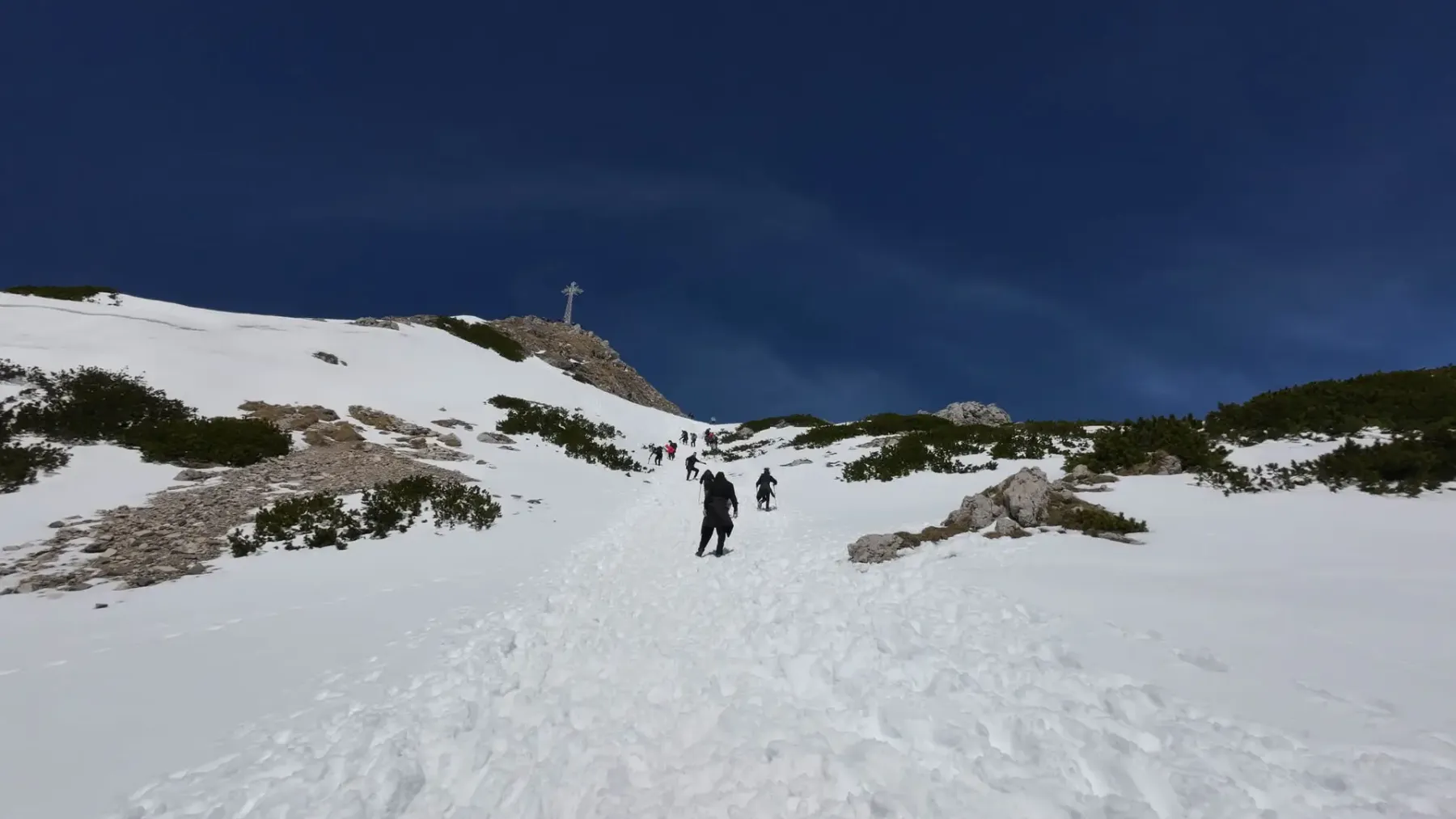
This is the most popular, classic, and logistically straightforward route to the summit. You start and finish in the same place, which makes planning your return easy.
The beginning is a wide, cobblestone road that climbs quite steeply. Along the way, you pass Polana Kalatówki (it’s worth taking a short detour to see the Albertine convent). Eventually, you enter a pleasant, cool forest that, after about 1 hour and 20 minutes, leads you to the charming Hala Kondratowa. Here you will find the smallest mountain hut in the Tatras – a perfect place for a quick tea and gathering strength before the real effort begins.
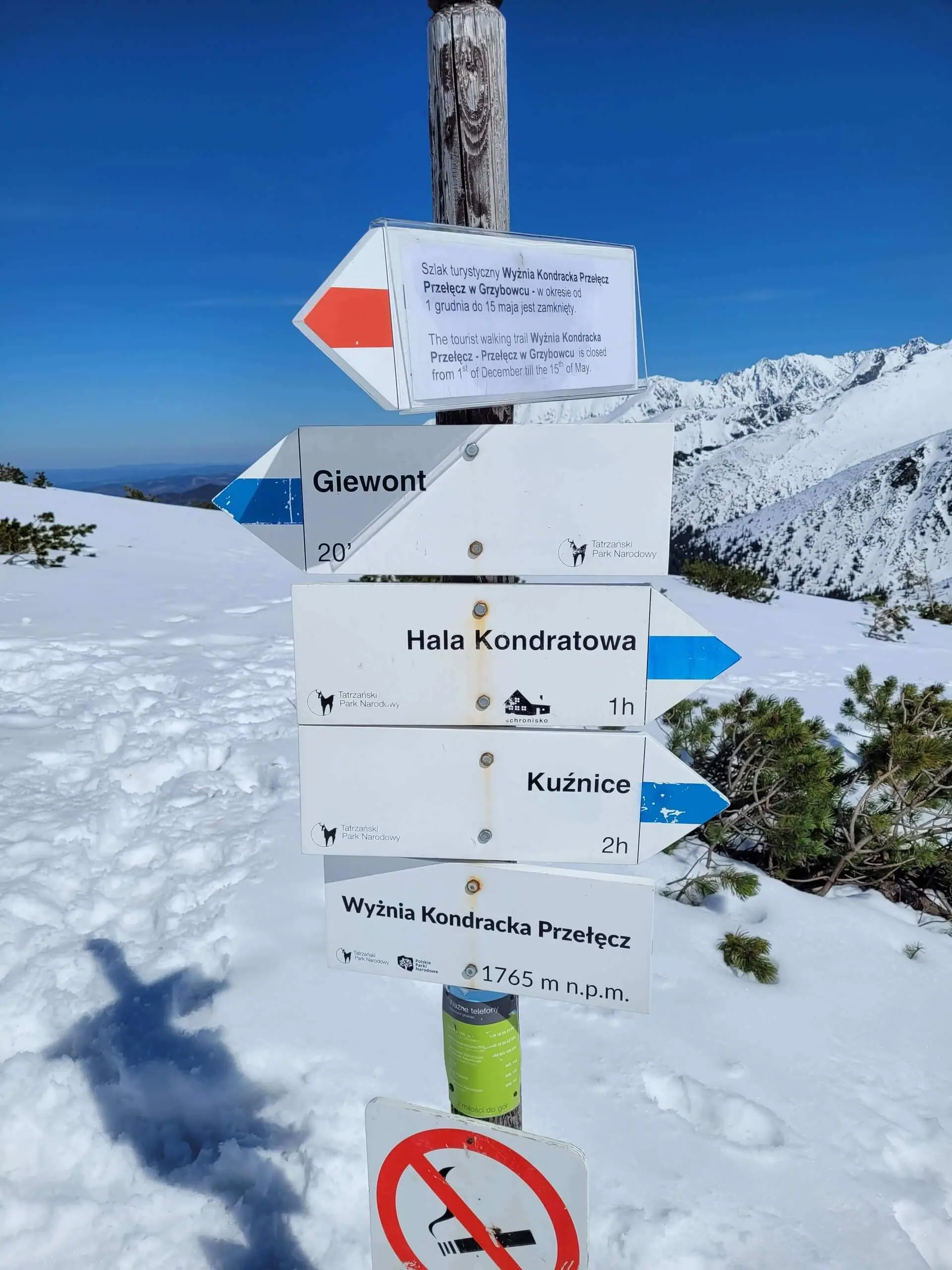
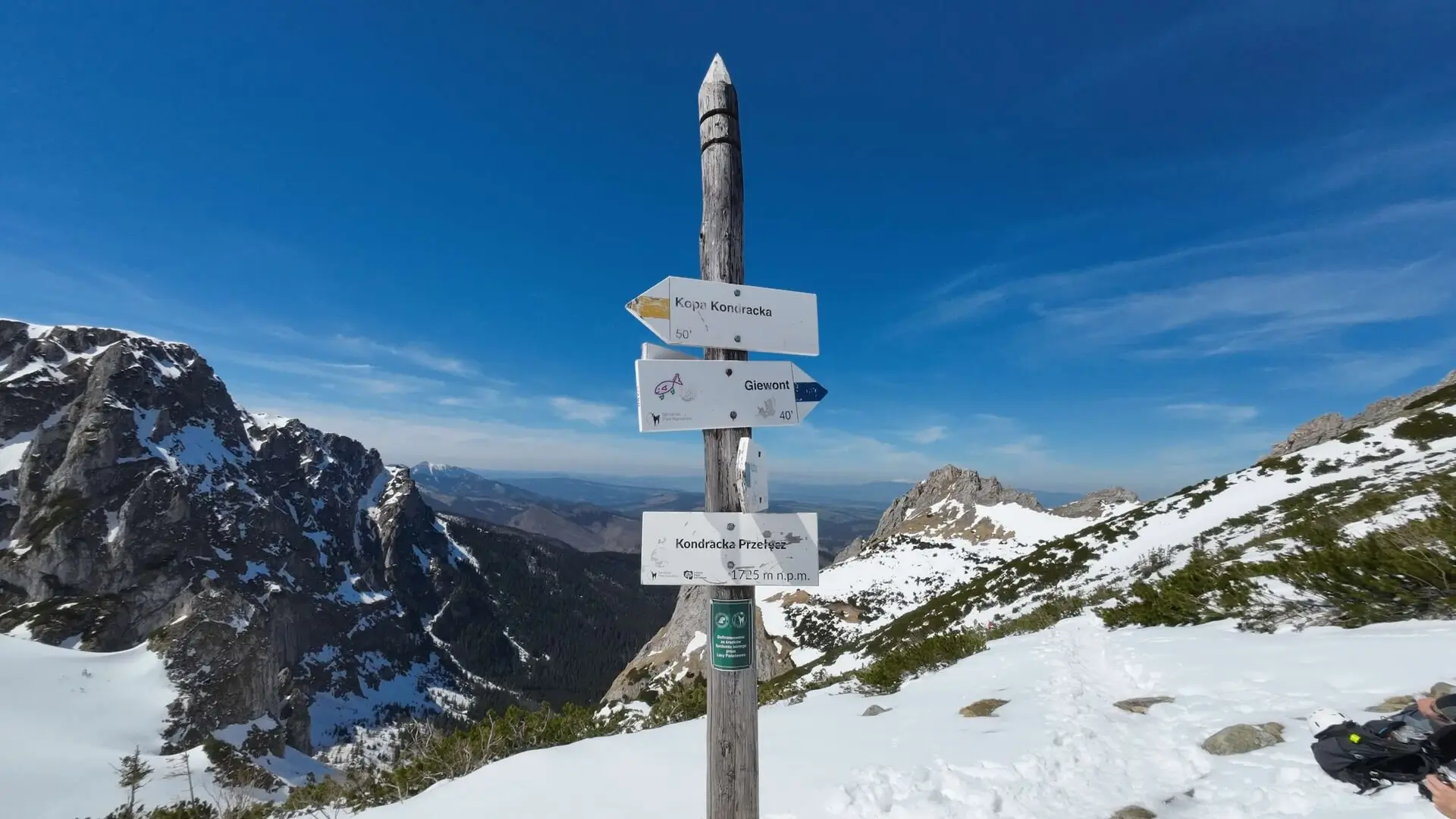
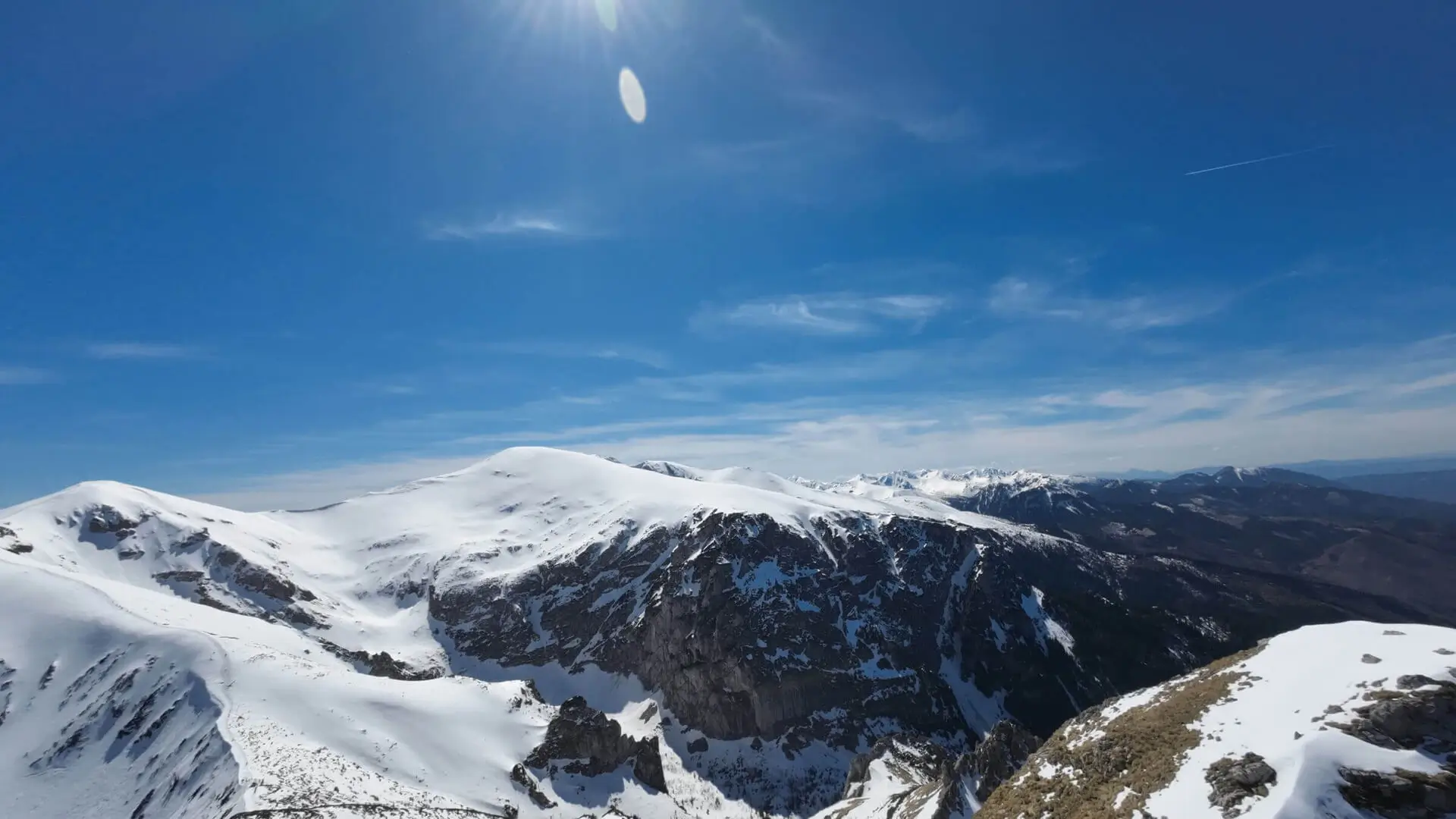
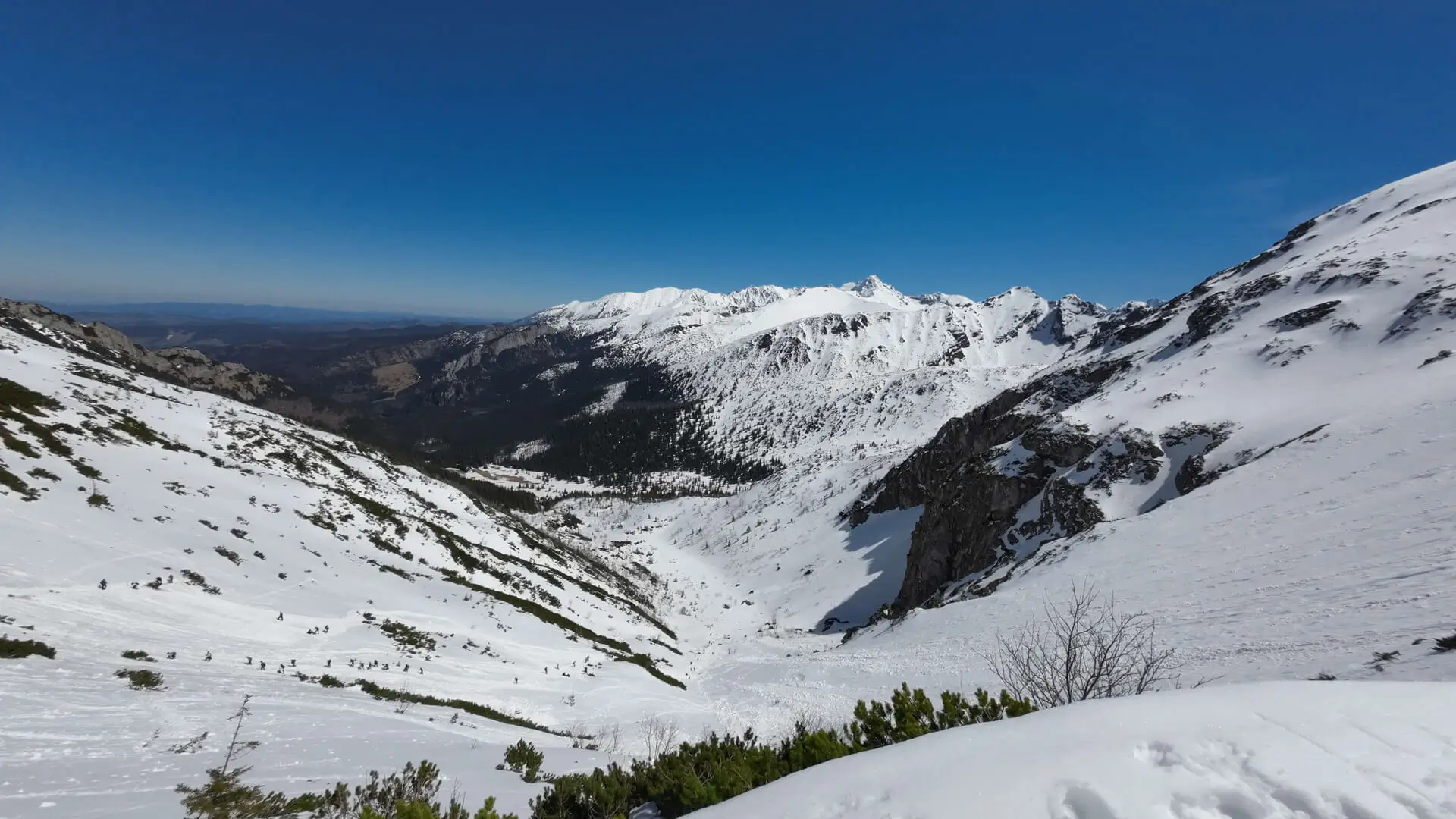
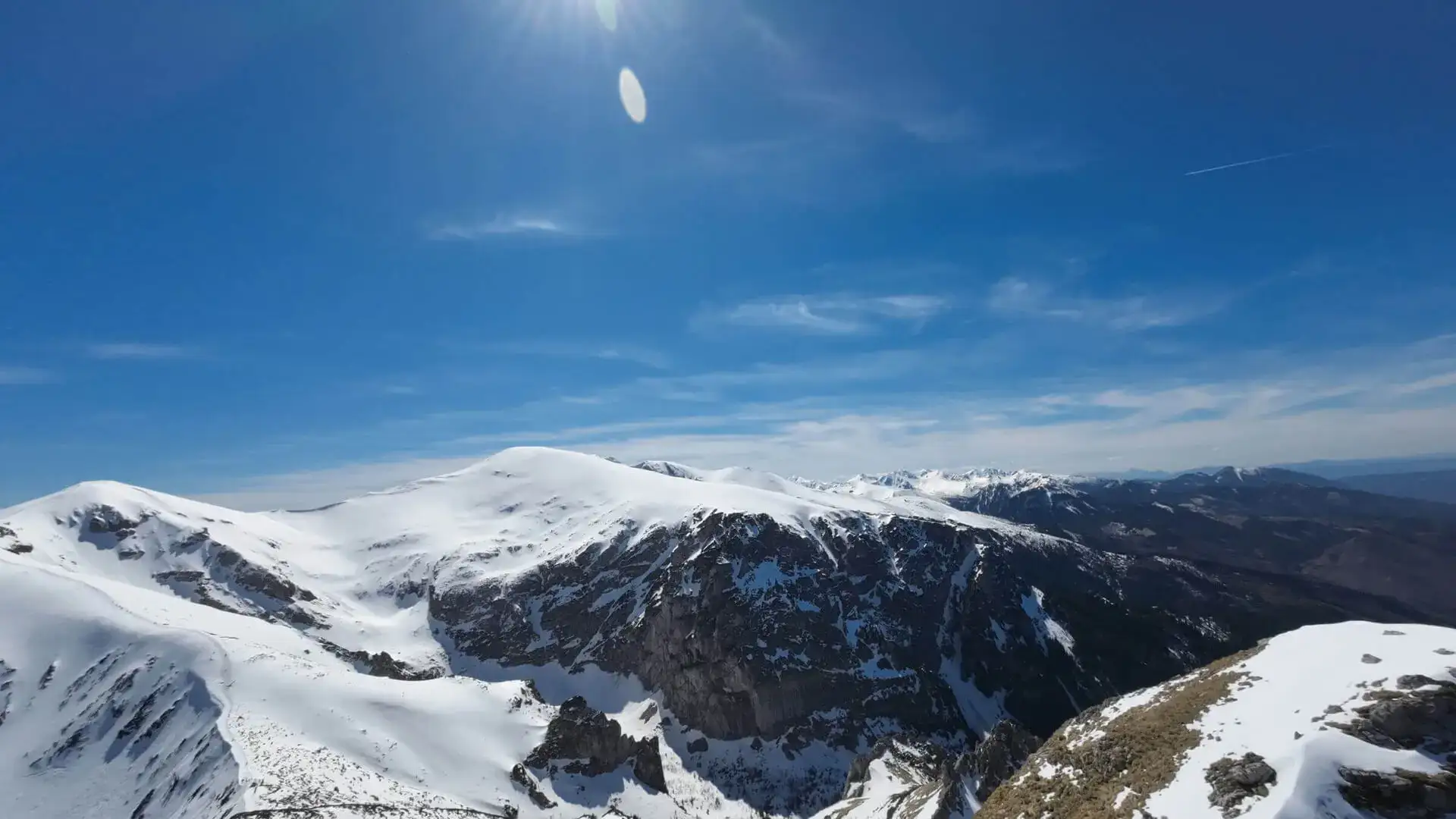
Beyond the hut, the jokes end. The trail begins to climb steeply, forming long, rocky zigzags leading to Kondracka Pass. This is the most physically exhausting section of the trip. The sun can beat down hard here, and your heart rate will spike. However, when you finally stand on the pass after over an hour of arduous marching, a phenomenal view of the Western Tatras opens up before you, rewarding all the sweat.
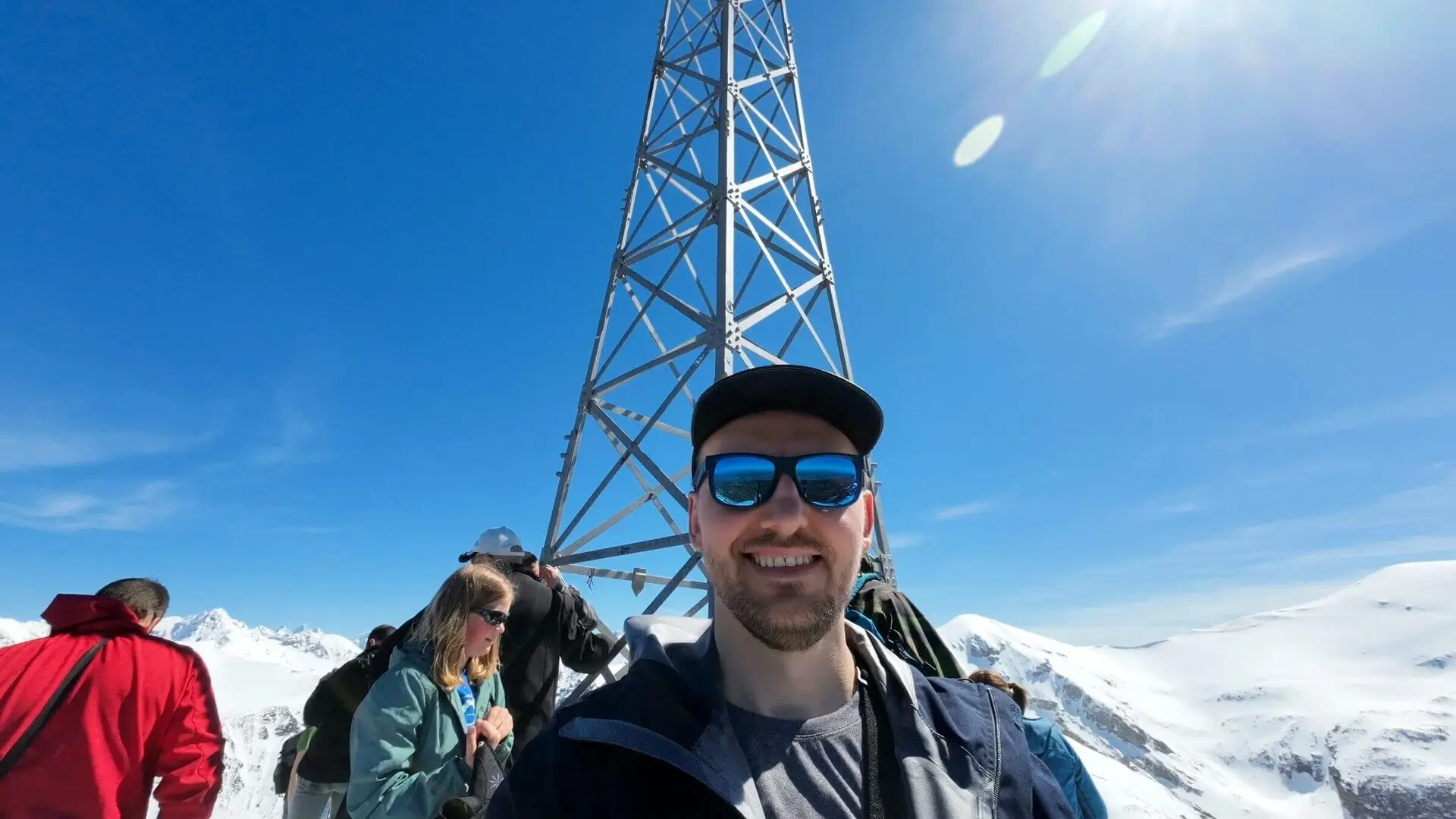
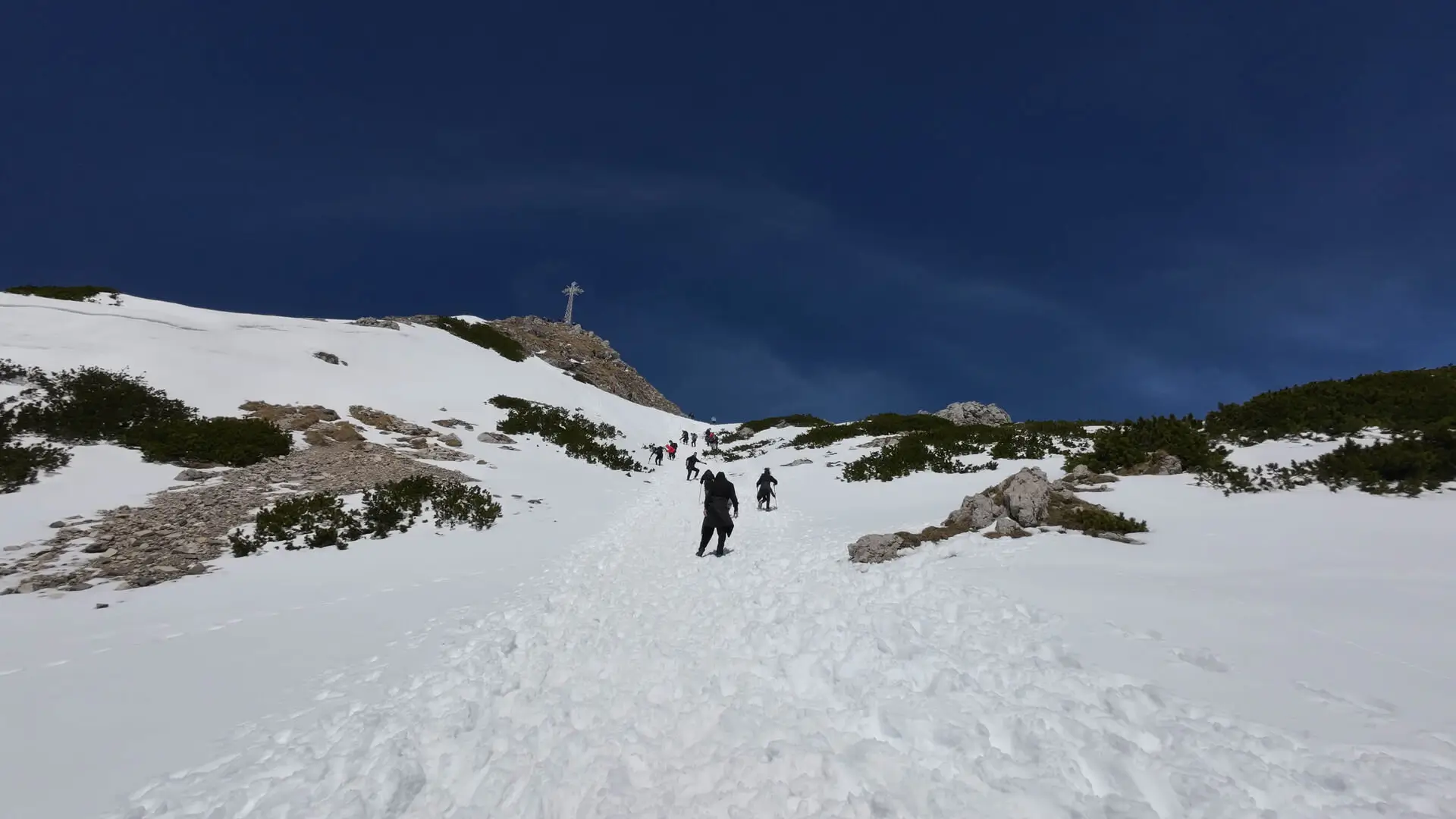
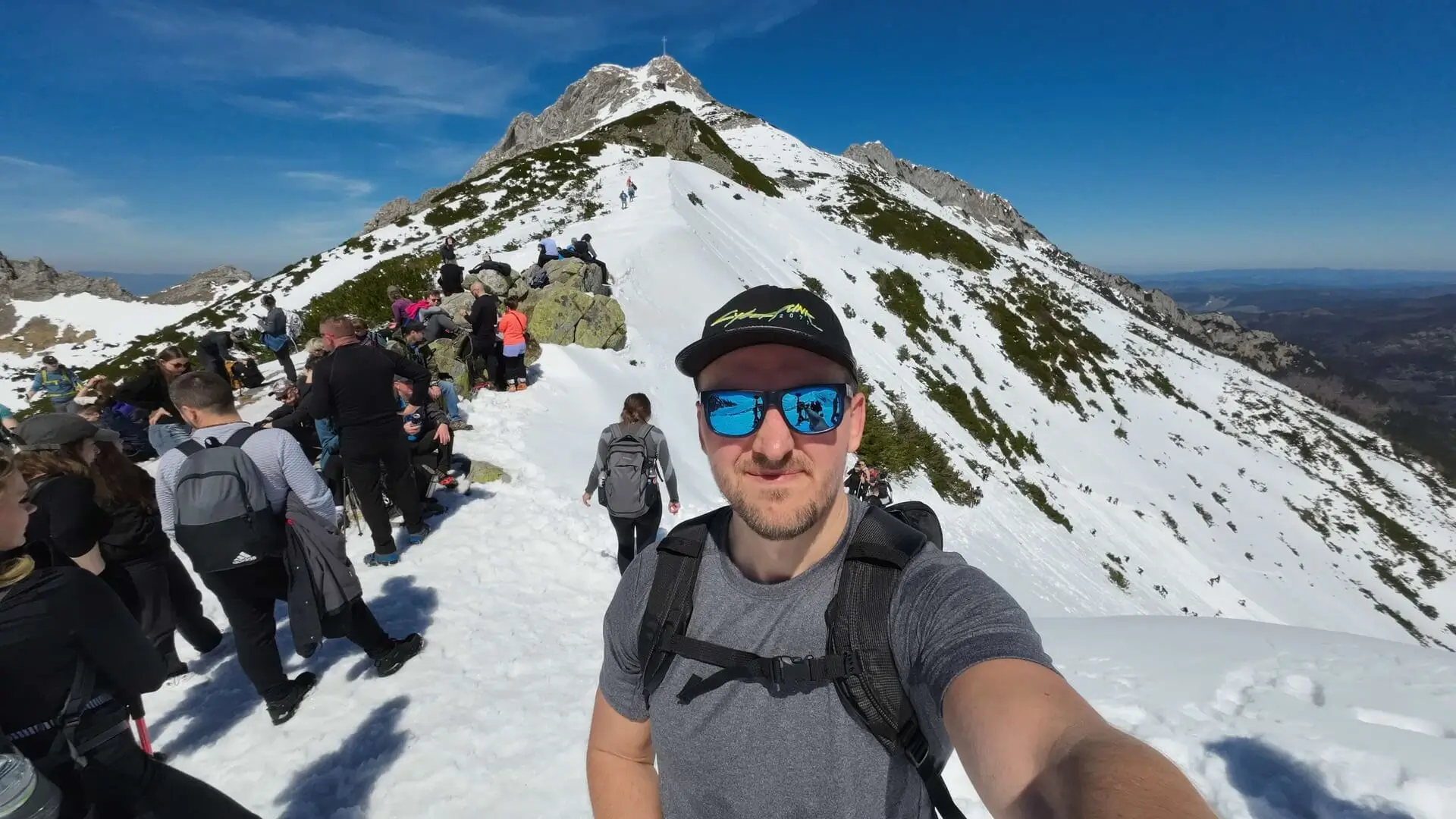
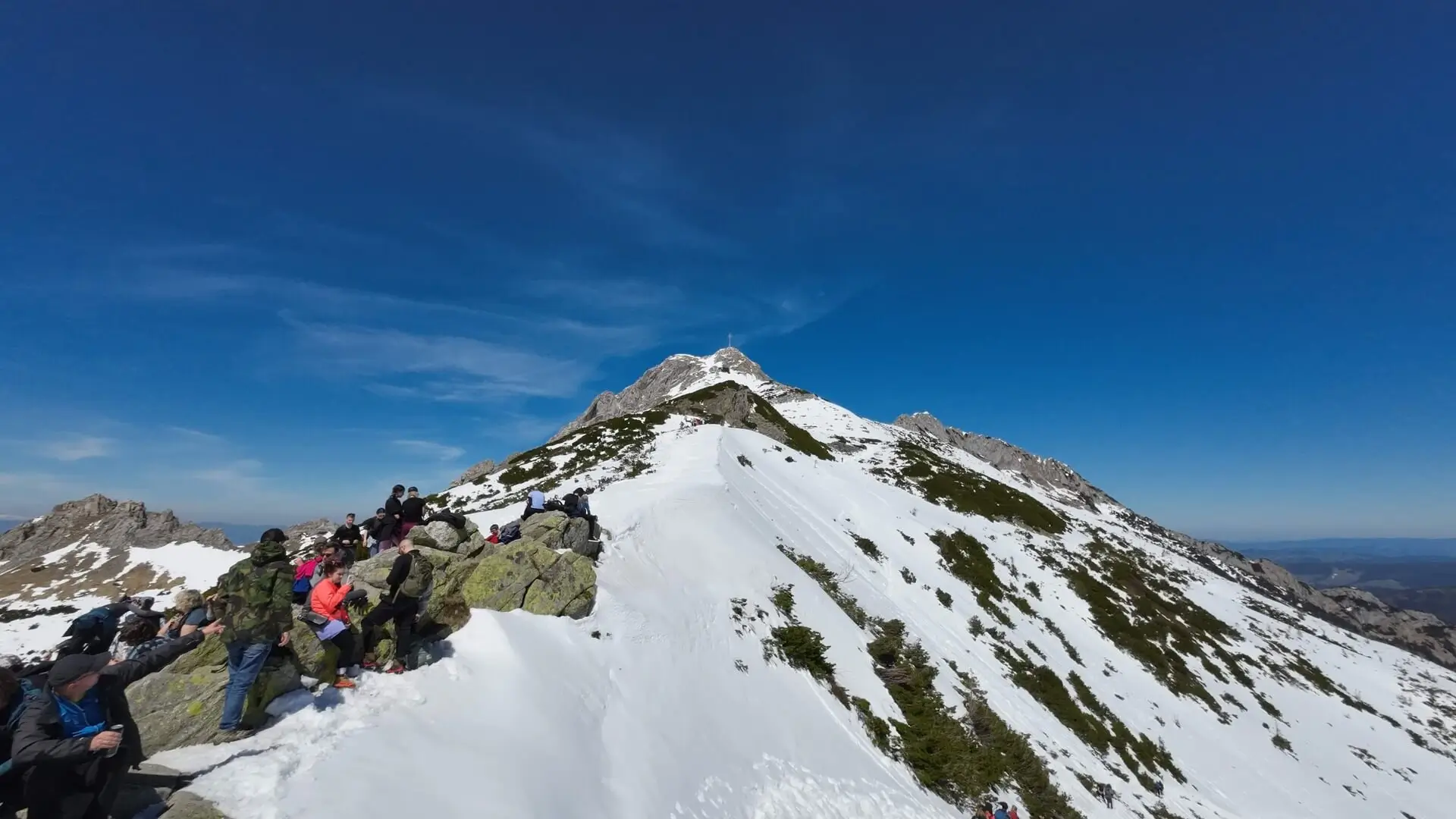
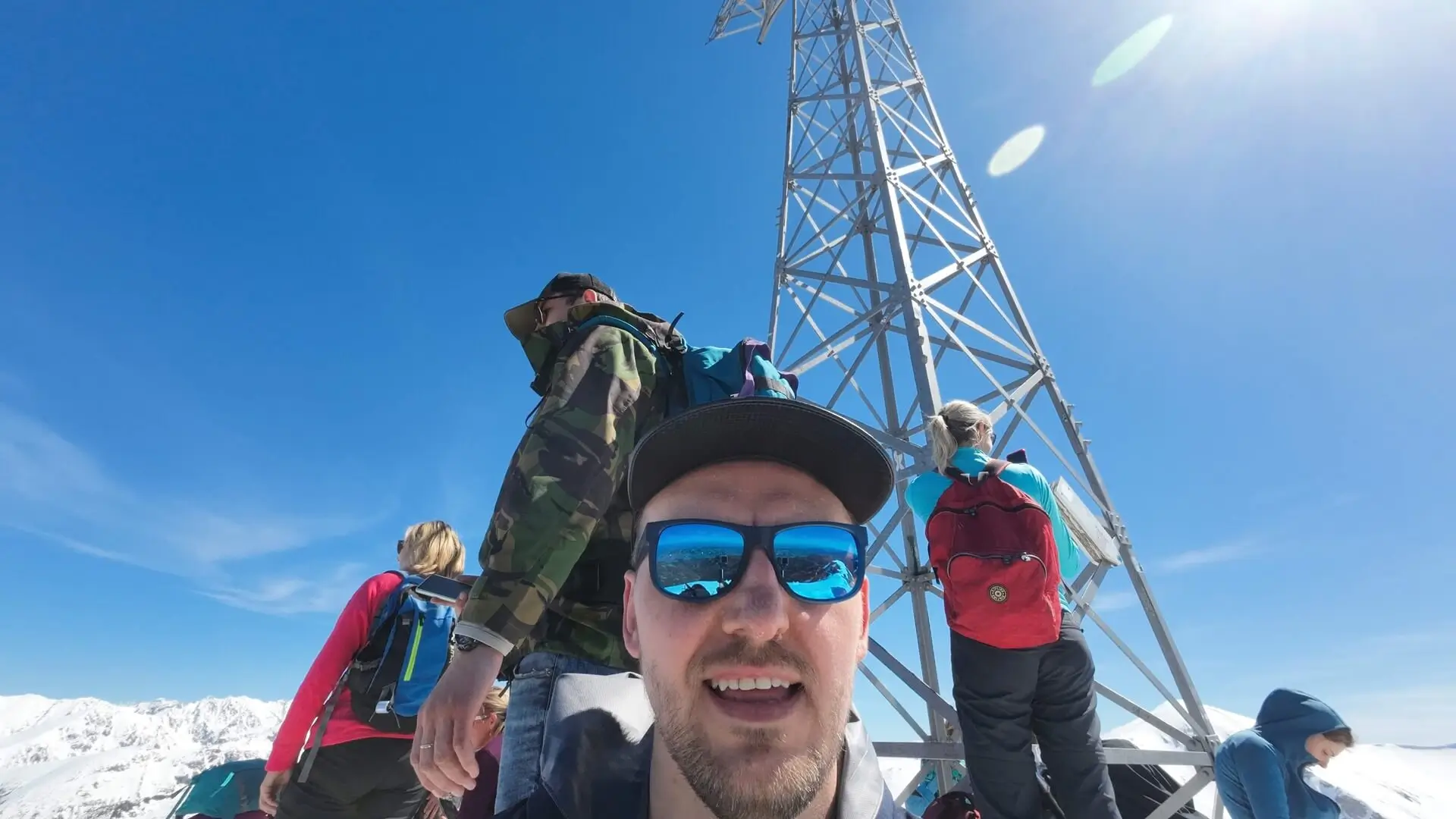
From the pass, you approach the summit dome of Giewont itself. This is where one-way traffic and the real mountain adventure begin. The right branch (looking from below) is for ascending, the left for descending. The trail climbs steeply over rocks and is secured with chains. The main problem here isn’t the drop (although the exposure is noticeable), but the limestone rock, which has been polished by millions of boots to the point where it resembles an ice rink – even on a sunny, dry day.
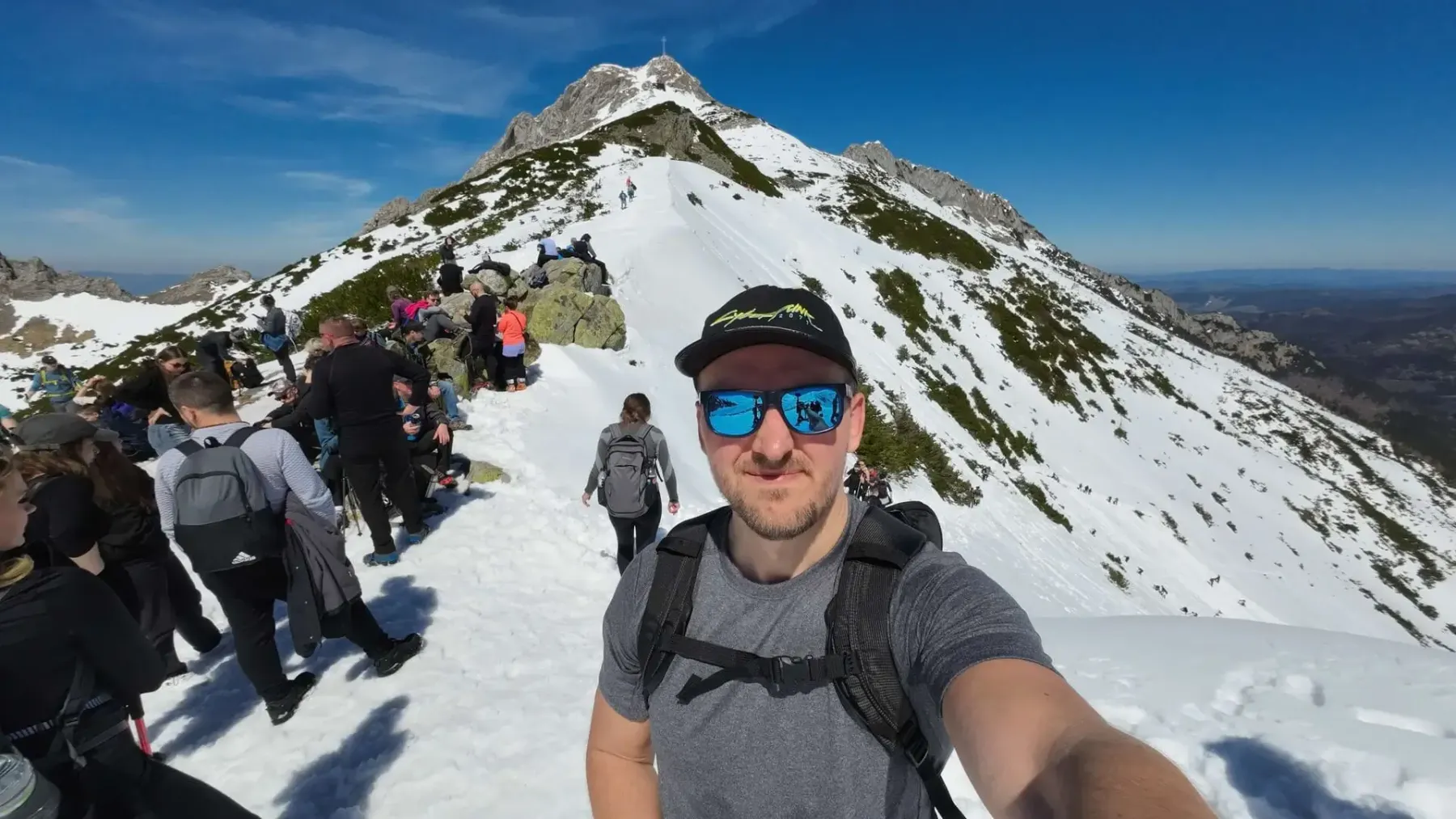
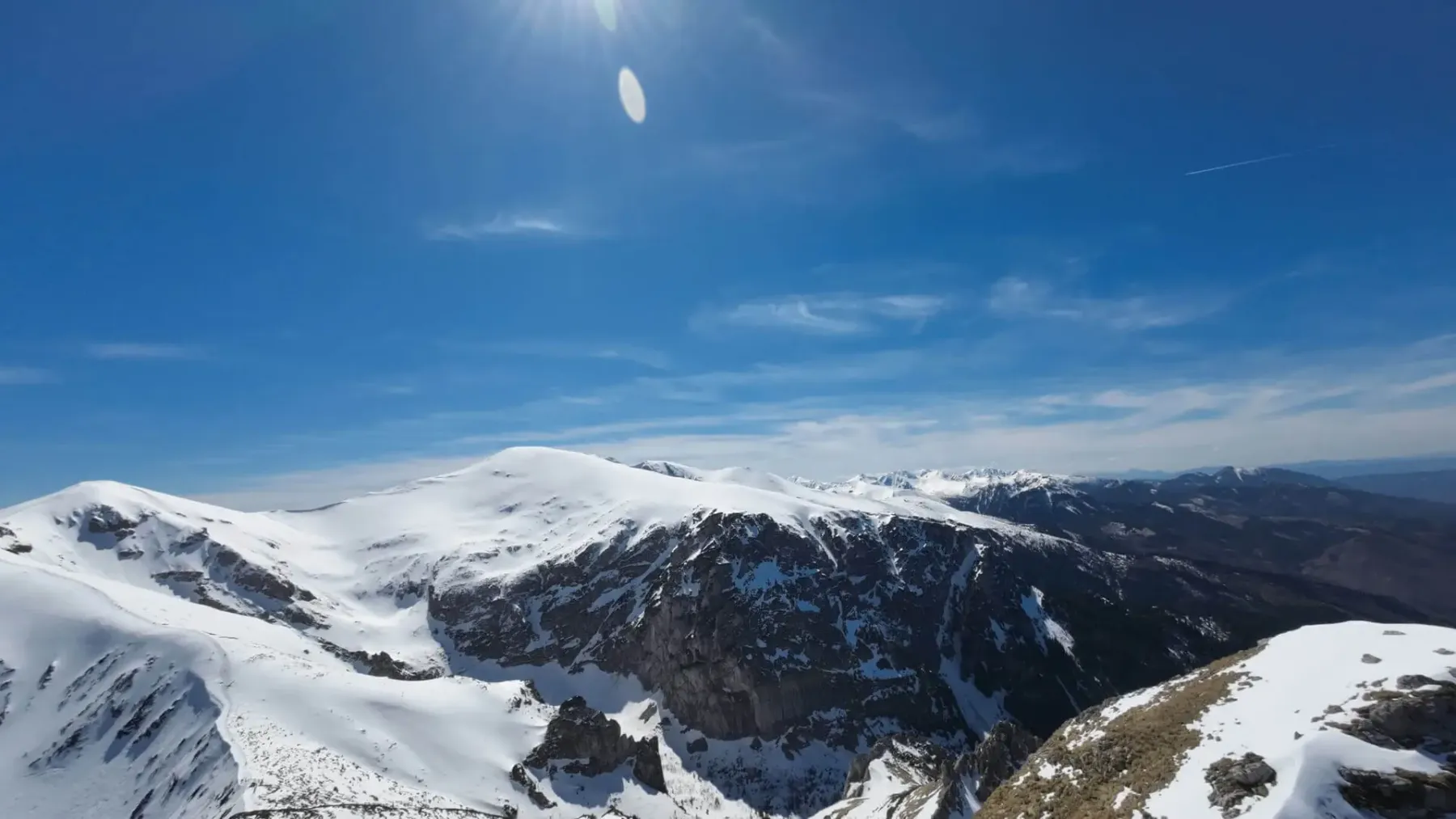
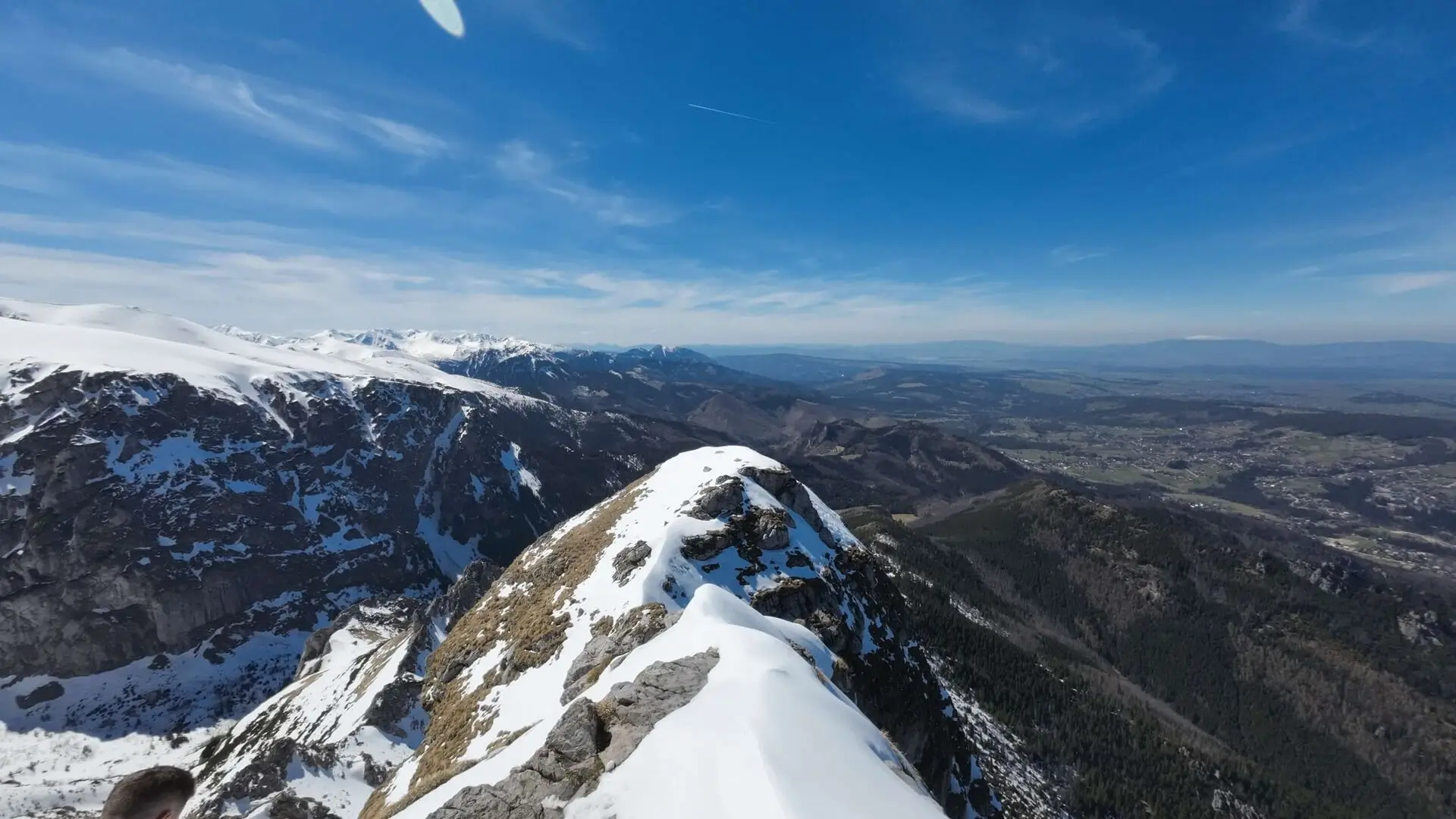
Standing beneath the great cross, Giewont offers an absolutely unique perspective, dividing the world into two parts:
The blue trail from Kuźnice is not the only option. If you prefer to avoid the crowds at the start or want to make a more interesting loop, you have other variants to choose from (described on separate pages):
Remember, however, that all these routes meet at Wyżnia Kondracka Pass. The summit push itself (chains and queues) is always the same, regardless of where you started.
Rough walking times on the blue trail from Kuźnice:
The one-way descent loop is shorter, usually 2–2.5 h. The 5 h 57 min at the top of this page is map walking time. A holiday day with a queue for the chains is 6–8 hours. If you are still at Hala Kondratowa at 11:00 and storms are forecast after noon, turn around. The cross can wait.
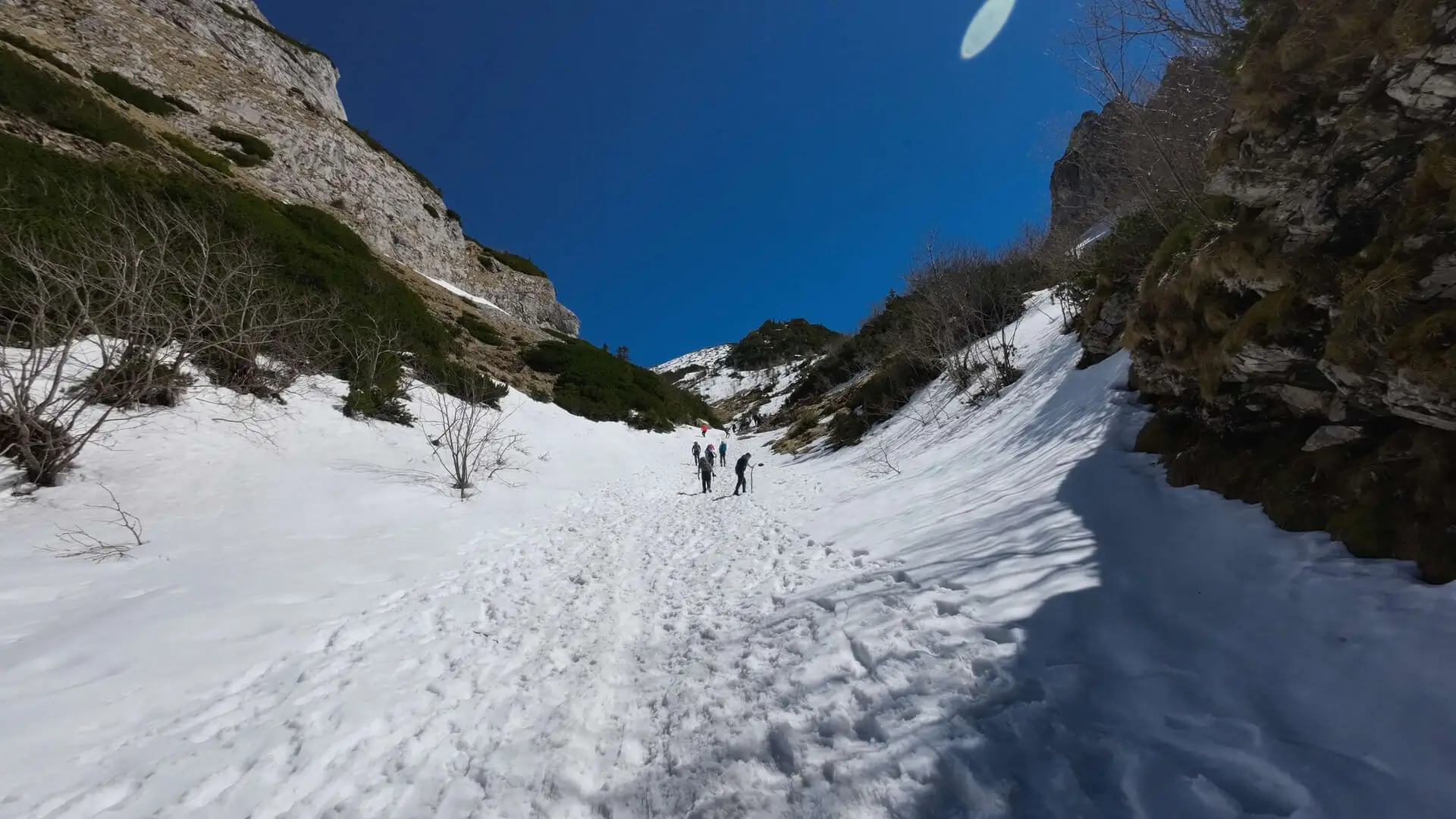
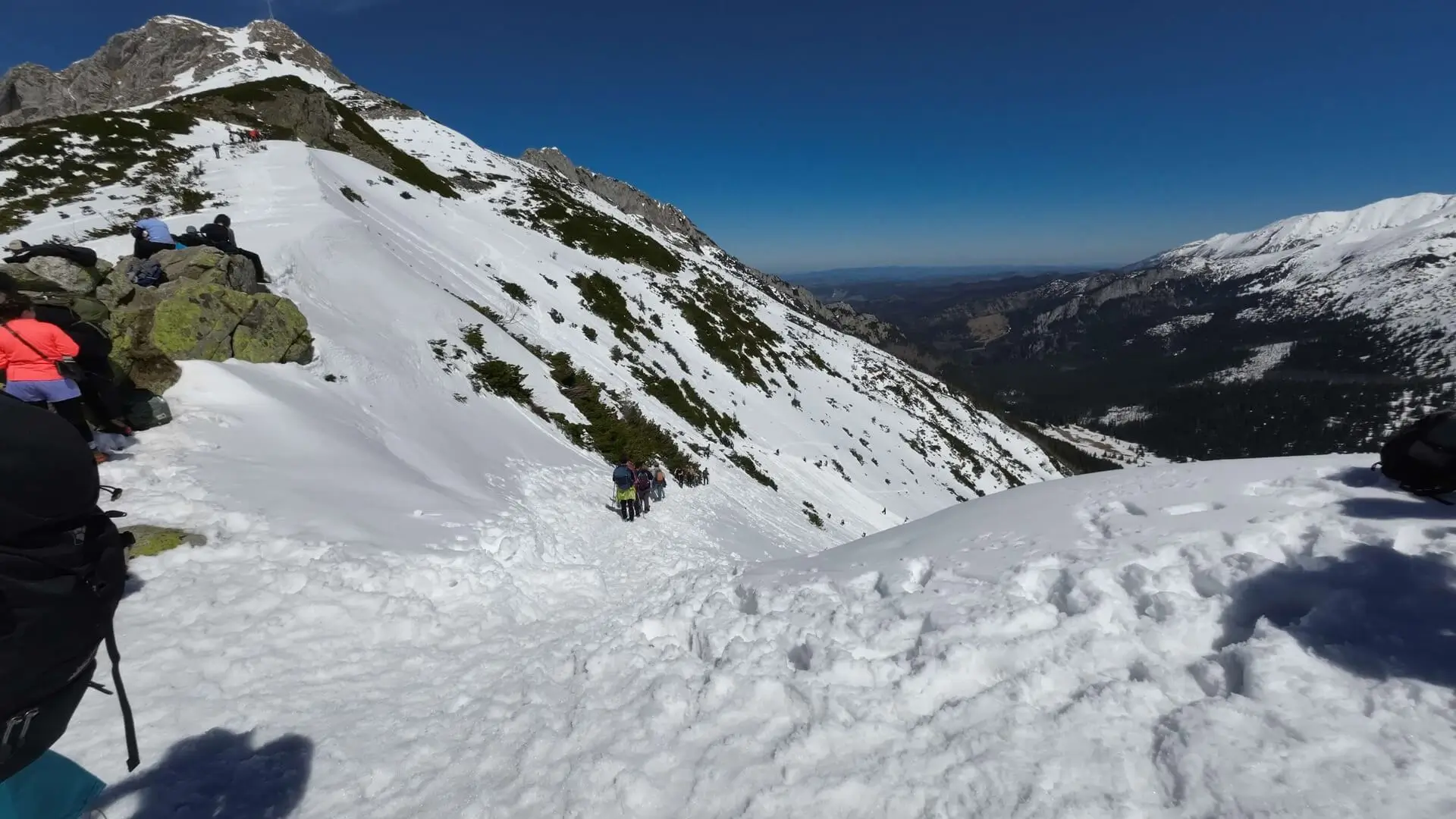
In winter, Giewont is a completely different mountain. It ceases to be a “moderately difficult trail with chains” and becomes a serious alpine challenge. The summit dome ices over heavily, and the chains often disappear under the snow. The consequence of slipping increases drastically. Crampons (not microspikes!), an ice axe, a helmet, and experience in winter tourism are required. If you don’t have it, it will be safer to end the trip at the Hala Kondratowa hut or choose Sarnia Skała instead.
Do not take someone who is putting on hiking boots for the first time in their life. Do not take small children onto the chains. Give it up if you have a strong fear of heights and hope that “you will somehow get used to it on the spot”. There is no place for learning and overcoming barriers on the summit dome – there is exposure, polished limestone, and a crowd of people pushing from behind.
If you want to admire the impressive silhouette of Giewont without stress and chains, choose the aforementioned Sarnia Skała. You can find a full list of easier alternatives in our Tatra trails catalogue.
Trailhead logistics – reach the start smoothly without parking hassle.
Car parks near Rondo Jana Pawła II / Bronisława Czecha St.
Parking fee: 30–45 PLN / day (private & municipal car parks near Rondo JP2)
From Rondo Jana Pawła II, private cars are strictly prohibited. Reach Kuźnice only by local bus (5 min) or on foot via Aleja Przewodników Tatrzańskich (20–25 min).
Buses from Main Station & Rondo JP2 to Kuźnice
Route & bus stop: Main Station (Transport Hub) ➔ Rondo Jana Pawła II ➔ Kuźnice (cableway station)
Fare: ~5–6 PLN (cash payment to driver)
Buses shuttle every 5–10 minutes from dawn till dusk. Prepare exact change.
Local buses and transit help bypass morning traffic and parking hassles.
Complete guide to Tatra car parks, buses, and TPN reservations.
Tool
Check off items as you pack, switch between summer/winter and clear the list before your next trip. Progress is saved automatically.
Newsletter
A few times a year: trail conditions, closures, the best time to go and new routes. No weekly spam.
Planning your next hike? From the same starting point and area, we recommend:
Granaty from Kuźnice: Skrajny, Pośredni and Zadni Granat, down Żleb Kulczyńskiego. 17.5 km, 8 h 30 min, chains and exposure. A section of Orla Perć, not a stroll.
Start: Dolina Strążyska · via Polana Strążyska and Przełęcz w Grzybowcu
Start: Gronik · via Wielka Polana Małołącka and Kondracka Pass
Start: Mouth of the Žiarska Valley (car park) · via Highest point of the Western Tatras main ridge and Plačlivý Roháč
Avalanches in the Tatras do not forgive a rush. Check the bulletin, the weather, the ground and the decisions that help you get back safely from a ski tour or a hike.
See where to go in the Tatras in winter with children, safely: valleys, meadows and places in Slovakia, plus how to pick a route for a family day in good conditions.
Tatra sights with little effort: reliable places, cable cars and short walks when you want to see the mountains without a long hike or extra risk.
These are affiliate links. If you book a stay or a ticket through them, we earn a small commission, for coffee :), at no extra cost to you.