Difficulty: Very hardHigh Tatras (Vysoké Tatry)
Priečne sedlo (Czerwona Ławka)
Start: Hrebienok (funicular from Starý Smokovec) · via Téryho chata and Zbojnícka chata
- 8:11 h
- Time
- 17.9 km
- Distance
- +1416 m
- Ascent
1805 m a.s.l. · trail red · start: Biela skala (horáreň)
Trail is located in the Slovak Tatras. Check TANAP rules and seasonal closures above mountain huts (Nov 1 – June 14).
Hikes in Slovakia require mountain rescue insurance (HZS). Check details on tanap.sk.
PolecanyBiela skala – Siwy Wierch
Czas i dystans dla całej wycieczki, z powrotem do startu.
Tempo
5 h 50 minSzacunek od czasu z opisu, bez kolejek i postojów.
Polecany jest na tej stronie. Inny start ma osobną kartę — własny opis i mapę.
| Wariant | Start | Czas przejścia | Łańcuchy | Kolor szlaku |
|---|---|---|---|---|
Biela skala – Siwy WierchPolecany Red out and back. There are chains. The figures at the top of the page show this route. | Biela skala | 5 h 50 min | TakChains on Radové skaly. Shorter than Giewont; wet limestone is worse. |
|
Banówka and the Roháče A different car park, a different ridge. Separate page: Banówka. Zobacz ten szlak → | Mouth of the Žiarska Valley | 9 h 50 min | TakChains on the Roháče are a different league than Radové skaly. |
|
Polecany
Biela skala – Siwy Wierch
Red out and back. There are chains. The figures at the top of the page show this route.
Biela skala – Siwy Wierch
Wykres podejść wygenerowany ze śladu GPX. Przesuń kursor lub palec po wykresie, aby sprawdzić profil podejścia i punkty kulminacyjne.
Wgraj trasę do zegarka sportowego (Garmin, Coros, Suunto, Apple Watch) lub aplikacji nawigacyjnej (Mapy.cz, Komoot, Locus Map, Strava) i nawiguj po szlaku w trybie offline bez zasięgu.
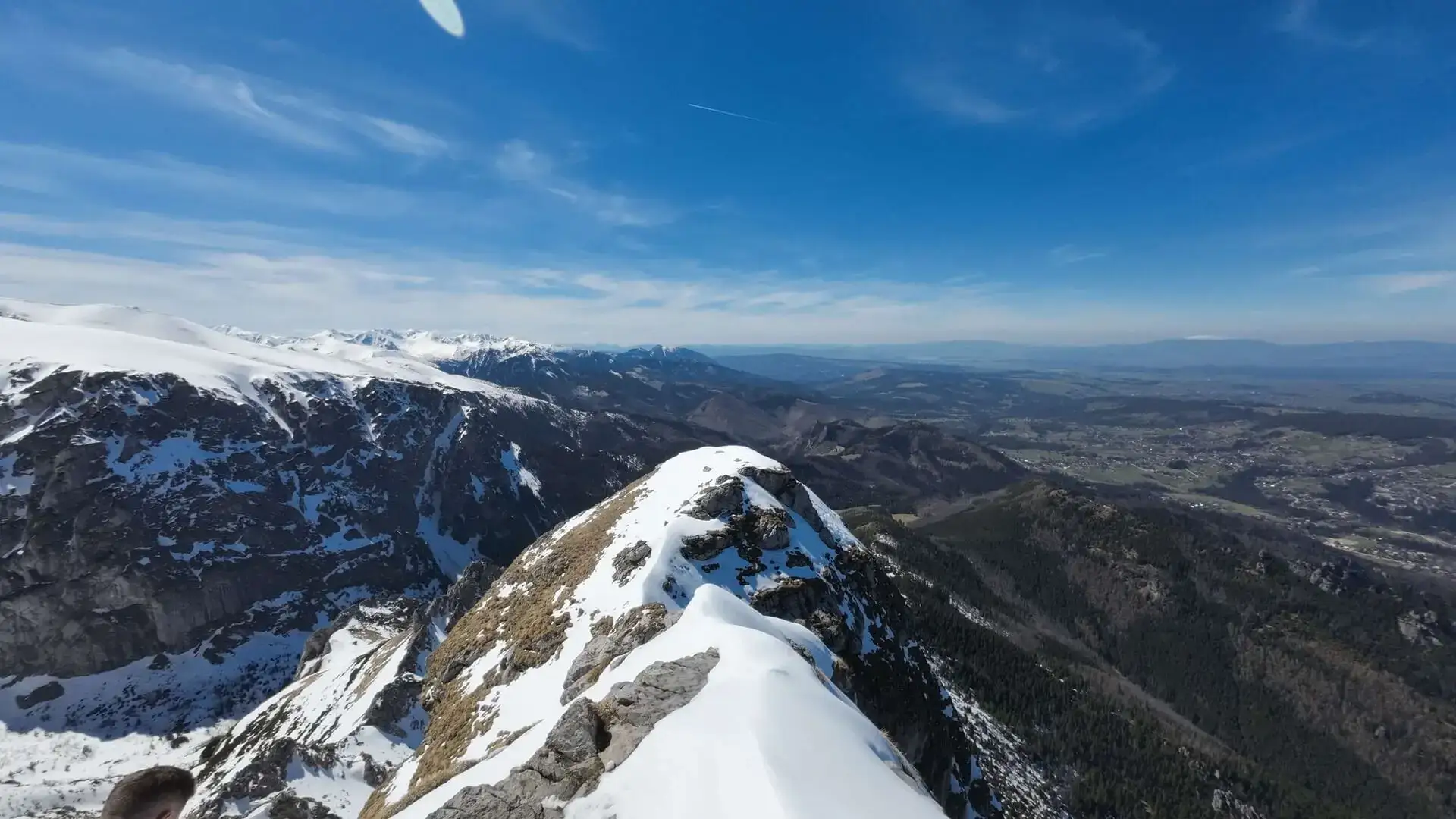
Siwy Wierch (1,805 m a.s.l.) is a unique peak. It lies on the western edge of the Tatras and, unlike its grassy neighbours (such as Wołowiec or Bystra), it is built of light limestone. From a distance it looks like a mountain moved from a completely different range.
💡 In a nutshell – Siwy Wierch:
- Route character: Short but steep and demanding (approx. 6 hours return). Red trail from the Biela Skala car park.
- Radové skaly: The route features a limestone labyrinth with chains. It requires using your hands and a head for heights.
- Beware of rain: Wet limestone is extremely slippery. Descending the chains in the rain can be very dangerous.
- Closure: The trail is closed from 1 November to 31 May. Remember to get insurance for Slovakia!
The main attraction of this route is the passage through Radové skaly (Row Rocks) – a fascinating limestone labyrinth full of spires, bastions and deep grooves. You will find aids in the form of chains there, which makes this trip very varied.
The figures at the top of the page show the variant starting and finishing at the small Biela skala car park (on road no. 584 from Zuberec to Liptovský Mikuláš).
We start from the car park and immediately join the red trail (this is the beginning of the famous Tatra Magistrala).
This is the most interesting and difficult part of the route.
After exiting the labyrinth of Radové skaly, a short approach to the summit still awaits us.
Do not attempt Siwy Wierch after rainfall (wet limestone is extremely dangerous). Do not take a dog on this route (it will not manage in the rock labyrinth). If you have a strong fear of heights, the chains in Radové skaly might block you. If you are looking for a long ridge walk with more difficult chains, choose Banówka.
Trailhead logistics – reach the start smoothly without parking hassle.
Biela skala car park (forester lodge under Sivý vrch)
Parking fee: Free or nominal seasonal fee
Quiet forest clearing along road 584 (Zuberec – Liptovské Matiašovce). Excellent trailhead for Sivý vrch rock labyrinths.
Driving from Zakopane
Route & bus stop: Via Chochołów ➔ Zuberec ➔ Huty pass (~55 min)
Fare: Private vehicle
No regular public transit from Poland – car travel recommended.
Local buses and transit help bypass morning traffic and parking hassles.
Complete guide to Tatra car parks, buses, and TPN reservations.
Tool
Check off items as you pack, switch between summer/winter and clear the list before your next trip. Progress is saved automatically.
Newsletter
A few times a year: trail conditions, closures, the best time to go and new routes. No weekly spam.
Planning your next hike? From the same starting point and area, we recommend:
Banówka (2178 m) from the Žiarska Valley car park via Plačlivé and Hrubá kopa: 20.6 km, 9 h 50 min, chains and exposure. Trail closed 1 Nov – 31 May.
Start: Hrebienok (funicular from Starý Smokovec) · via Téryho chata and Zbojnícka chata
Start: Sliezsky dom · via The roof of the Carpathians and Wielicka Próba
Start: Kuźnice · via The cross on Giewont and The mountain hut at Hala Kondratowa

Find out whether you need insurance in Slovakia. The EHIC covers basic healthcare, but will not cover HZS mountain rescue or helicopter costs after an accident.
Check when trails close in the Tatras, which routes the limits cover, and how to plan a day so you do not hit a closed valley in season.

Fees for Slovak trails: check when you pay for parking, a cable car and a night, and why a rescue can cost more than the whole Tatra trip.
These are affiliate links. If you book a stay or a ticket through them, we earn a small commission, for coffee :), at no extra cost to you.