winter
Białego Valley in winter – a short walk above Zakopane where it all started
Białego Valley in winter: about 2 h of walking straight from Zakopane, Biały Stream under snow, icy footbridges, microspikes and how to handle the short day.
Kościeliska Valley in winter: how long from Kiry to Hala Ornak and Smreczyński Pond, whether to take microspikes, what is closed and how to avoid the sleighs.
Author: Konrad Leśniak8 min read
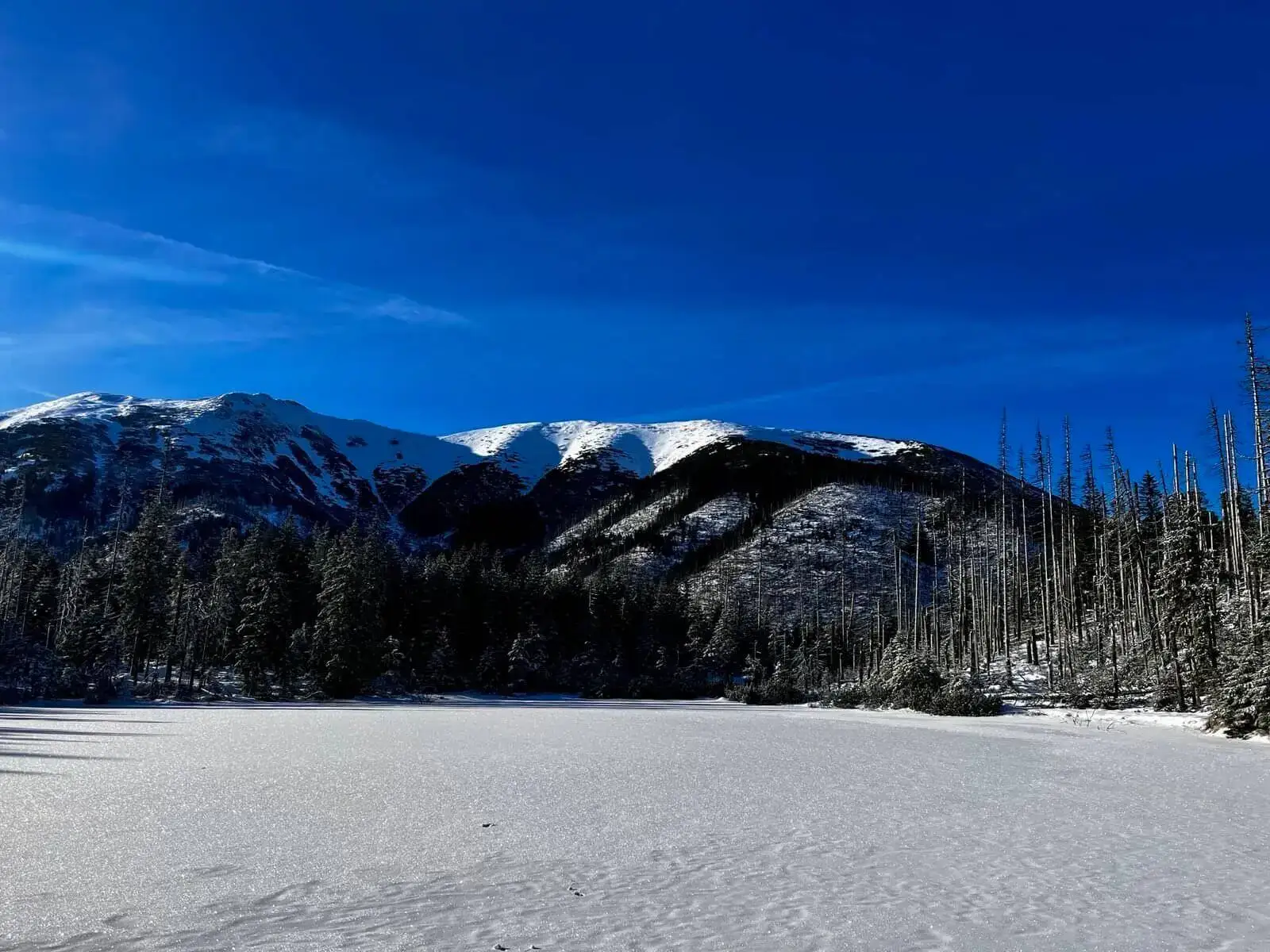
We spent another Christmas in Zakopane, and in December 2024 my wife and I ended up in Kościeliska Valley. The plan was simple: a walk along the valley floor, a few viewpoints on the way, and Smreczyński Pond at the end. The pond was frozen and covered with snow, with the white ridges of the Western Tatras above it. It is one of those winter routes that give you a lot of views for little effort – as long as you remember a few things nobody thinks about in summer.
💡 In a nutshell – Kościeliska Valley in winter:
- Route: Kiry – Polana Pisana (about 1 h) – Hala Ornak hut (25–30 min). There and back about 11 km and 3 h of walking without breaks.
- Smreczyński Pond: + about 30 min each way on the black trail from the hut, a short climb through the forest. In total about 13.5 km and 4 h.
- Microspikes: always in your backpack. The road is packed down by sleighs and people, and it turns to ice in the shade.
- Watch out for horses: don’t walk across the whole width of the road – horse-drawn sleighs and carriages use it.
- Closed: Mroźna Cave (until 25 April), the Ornak hut in November 2026 (3–30 Nov). As of 4 Nov 2026.
You start in Kiry, at the entrance to Tatra National Park (TPN). You can buy the TPN ticket at the booth or online in advance – how to buy a TPN ticket online.
Then you follow the wide road of the green trail, almost flat. Polana Pisana is about 1 h away, and on the way you pass a series of rock gates (Kantak, Kraszewski, Raptawicka). From Polana Pisana to the hut on Hala Ornak it is another 25–30 min. In total about 5.5 km one way and about 355 m of ascent spread so evenly that you barely notice it.
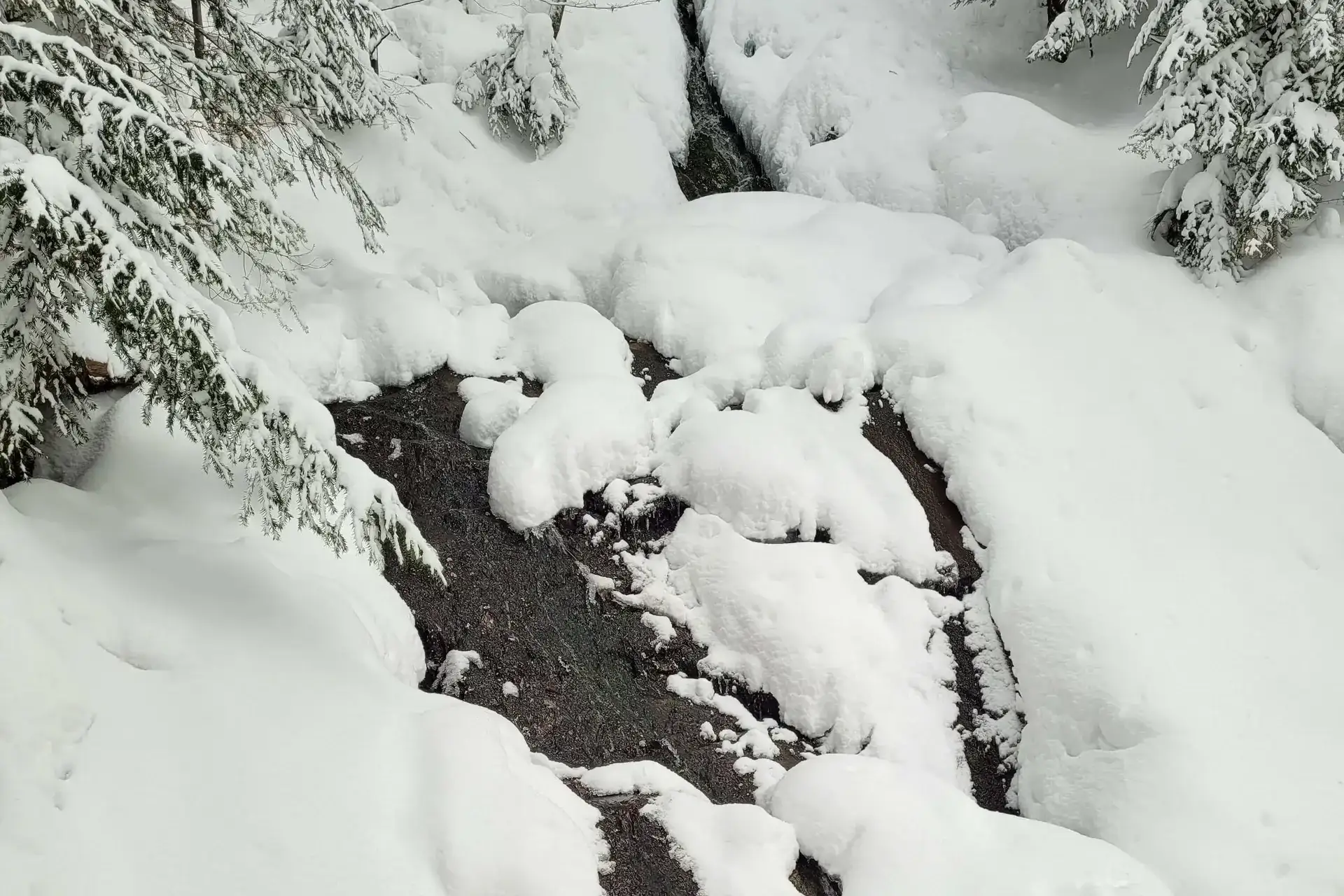
In winter the road looks different than in summer: Kościeliski Stream runs between pillows of snow and the spruces are dusted white down to the ground. We liked the spots by the stream best – every now and then step to the side of the road (only to the side, never off the trail) and look around.
Full description with map, profile and GPX: Kościeliska Valley – Kiry – Hala Ornak.
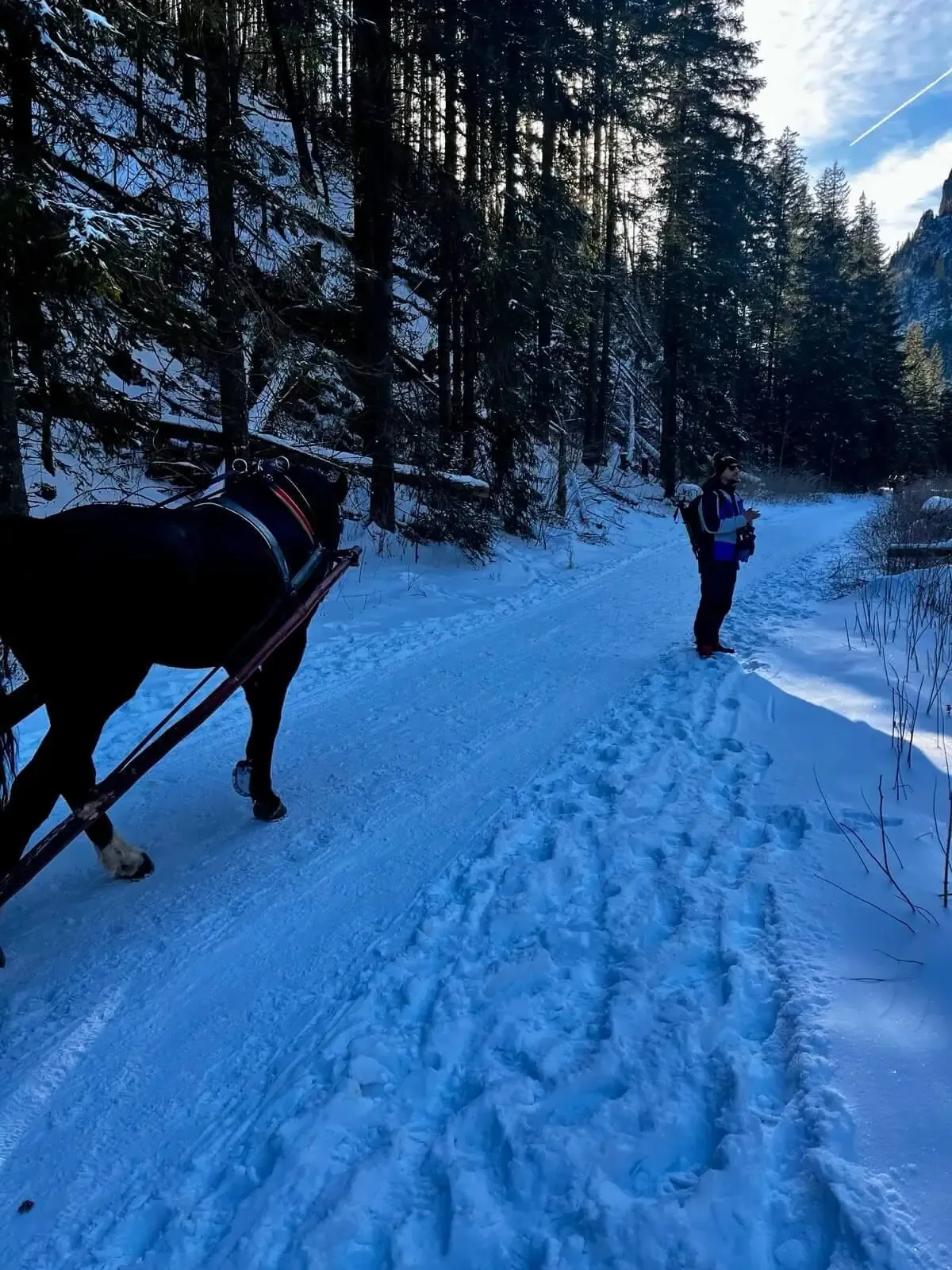
The most common mistake I see in this valley: a group walking shoulder to shoulder across the whole road. Horse-drawn carriages use that road – in winter, when there is snow, often sleighs – taking visitors to Polana Pisana. A horse with a sleigh on packed snow cannot stop on the spot, and the driver doesn’t always have room to swerve.
Keep to one side, leave the middle free and look back from time to time. Especially with children, who love running all over the road. Also: the ruts left by runners and hooves freeze quickly, so the middle of the road is often the slipperiest part.
If someone in your group can’t walk the whole way, a sleigh or carriage to Polana Pisana is a legitimate option. From there you still walk to the hut.
In my opinion – very welcome, and always in your backpack. There are no steep sections on the valley floor, but packed snow in the shade of the rocks turns to ice, and after a frosty night the whole road can be like glass. Microspikes weigh a few hundred grams and take a minute to put on, while one fall on your back can end your trip.
They are most useful on the black trail up to Smreczyński Pond and on the way back down – it’s narrow, in the forest and a bit steeper than the road.
Crampons and an ice axe are not needed on the valley floor. They are needed higher up: Ornak, Iwaniacka Pass or Czerwone Wierchy in winter are high-mountain, avalanche terrain. The difference between microspikes and crampons: crampons or microspikes – winter gear for the Tatras.
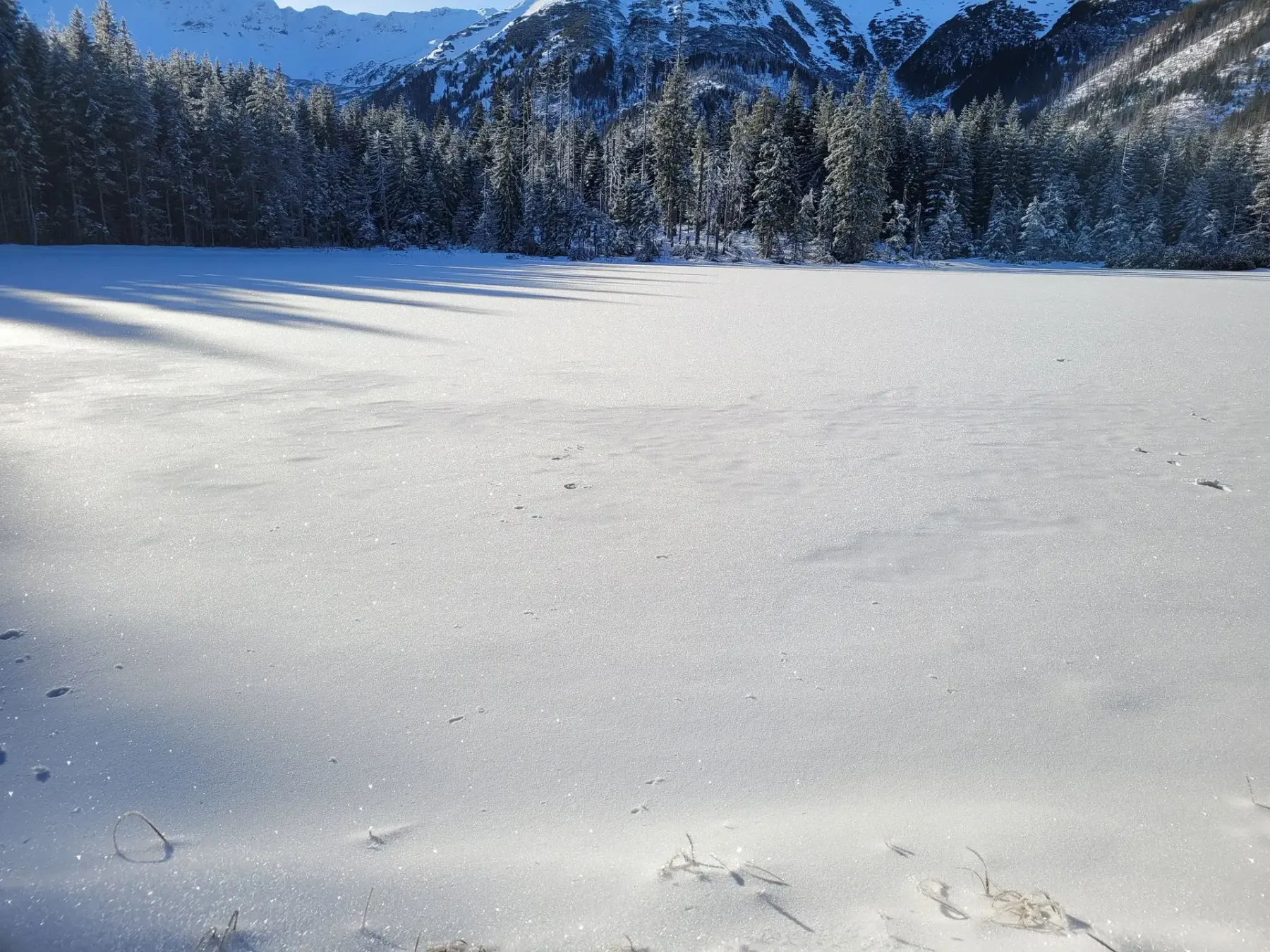
Just before the hut on Hala Ornak, the black trail branches off to the left. About 30 min through the spruce forest and you are at the pond (1227 m). In winter it is frozen, under snow, with a view of the snowy ridges of the Western Tatras. For me, the most beautiful spot of the whole trip.
Two important things:
From Kiry to the pond and back is about 13.5 km and about 4 h of walking. With breaks for photos and tea, plan for half a day.
As of 4 November 2026, according to the TPN trail bulletin:
Closures and conditions change from week to week – always check the current TPN trail bulletin before you go.
In winter the most common problem isn’t snow, it’s time. In December it gets dark around 15:30, and in the valley, between the rock walls, even earlier.
Until 30 November, walking on TPN trails is banned from dusk to dawn. From 1 December the ban applies from 22:00 to 5:00. Either way: start in the morning, plan to be back in Kiry before dark and carry a headlamp. Kiry to Smreczyński Pond and back takes about 4 h – start at 11 and you’ll be walking back in the dark.
We came by our own car and left it at the paid car park in Kiry. On sunny weekends and over Christmas the car parks fill up in the morning, so aim to be there before 9.
Without a car it works too:
Details, prices and all trailhead car parks: parking, buses and getting to the trails in the Tatras. If you’re still choosing where to stay: Kościelisko or Zakopane.
Almost everyone: families, beginners and anyone who wants to see the winter Tatras without entering avalanche terrain. It is not a place for solitude – over Christmas and winter holidays the valley is full of people.
With small children, a sledge is often easier than a pushchair in winter, and you can’t take a pushchair up to Smreczyński Pond anyway. More family ideas: where to go in the Tatras in winter with kids. General rules for winter outings: the Tatras in winter – why your easy summer trail is now a trap.
From Kiry to the Hala Ornak hut about 1.5 h, there and back about 3 h of walking (11 km). With Smreczyński Pond about 4 h (13.5 km). On snow and with breaks, allow more.
Not always, but it’s worth having them in your backpack. The road is often icy in the shade and in the morning after a frost, and the climb to Smreczyński Pond is narrower and steeper.
In November 2026 it is closed (3–30 Nov, TPN bulletin). Outside that period it is usually open – check before you go.
Horse-drawn carriages (in winter often sleighs) go as far as Polana Pisana. The last 25–30 min to the hut and the whole spur to Smreczyński Pond are on foot.
No. Dogs are not allowed in Kościeliska Valley, as on most TPN trails.
No. It is closed from 1 November to 25 April so as not to disturb hibernating bats.
Photos from our December walk: gallery – Kościeliska Valley and Smreczyński Pond.
What about you – Kościeliska Valley in winter or in autumn?
Newsletter
A few times a year: trail conditions, closures, the best time to go and new routes. No weekly spam.
Białego Valley in winter: about 2 h of walking straight from Zakopane, Biały Stream under snow, icy footbridges, microspikes and how to handle the short day.
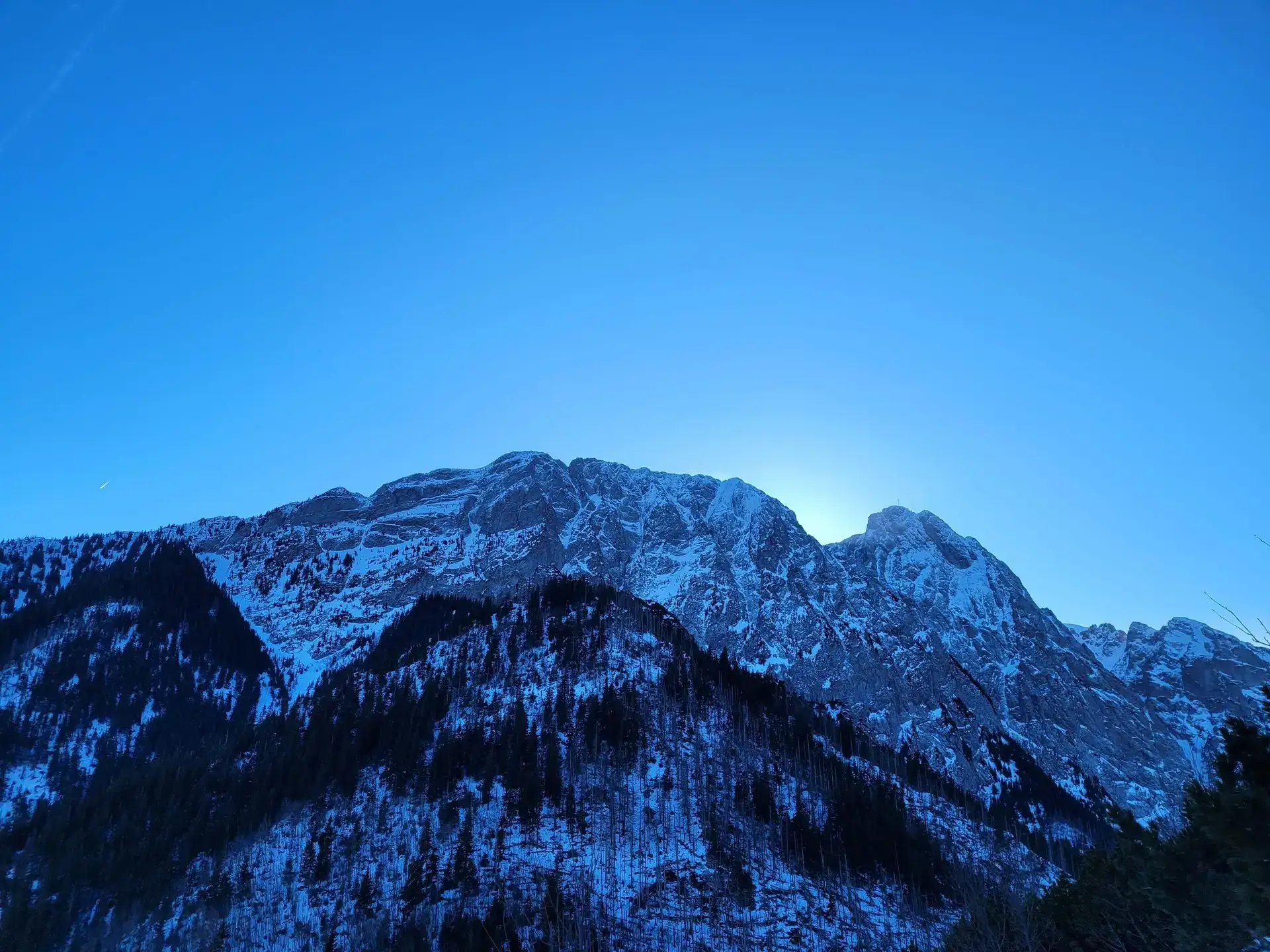
Sarnia Skała in winter: the Strążyska – Sarnia – Białego loop in about 3 h, where it gets icy, whether to take microspikes and how to beat the dark. December photos.
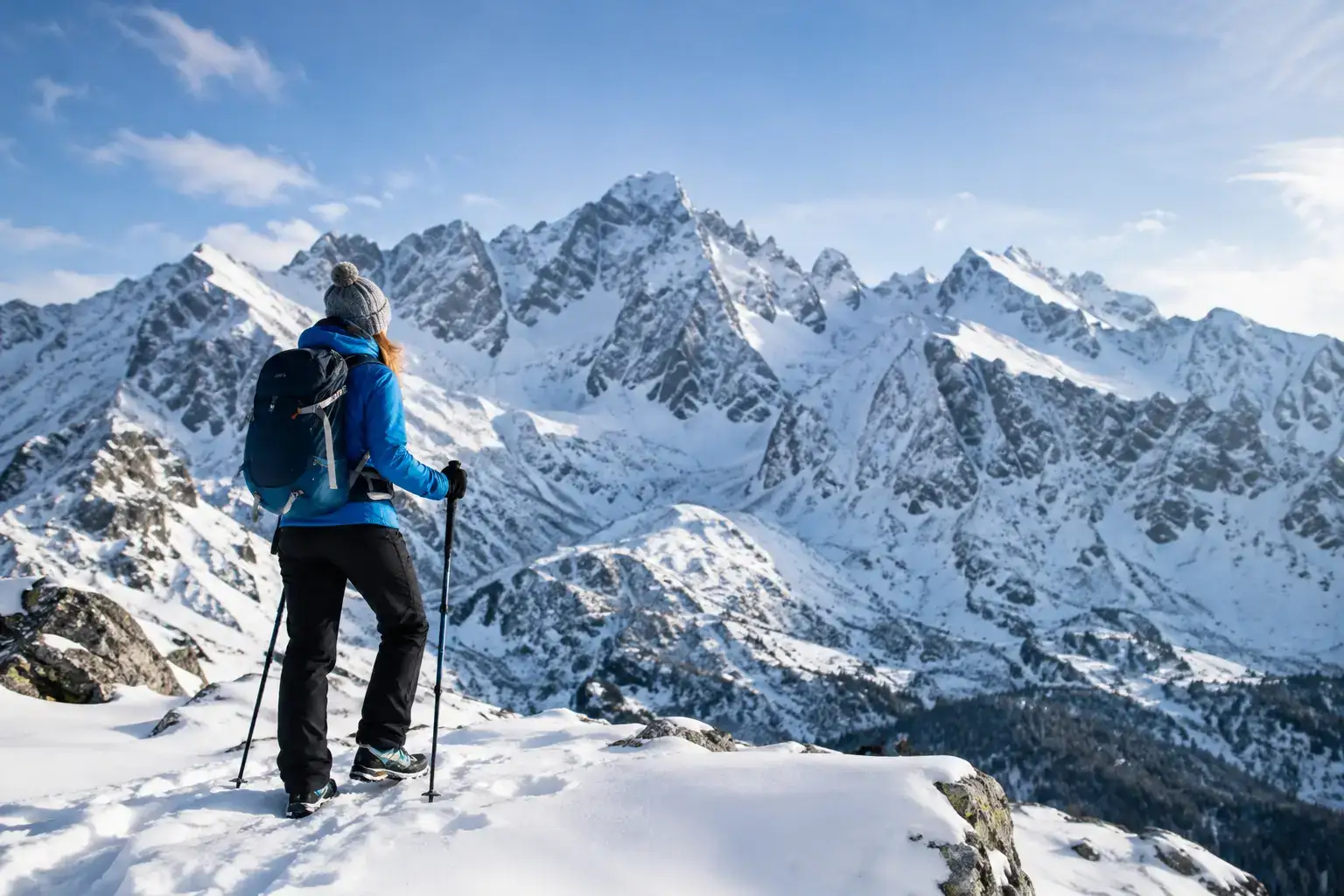
The Tatras in winter without crampons? See which valleys and trails make sense, when to leave it, and how to judge the snow, the ice, the weather and your own boots.
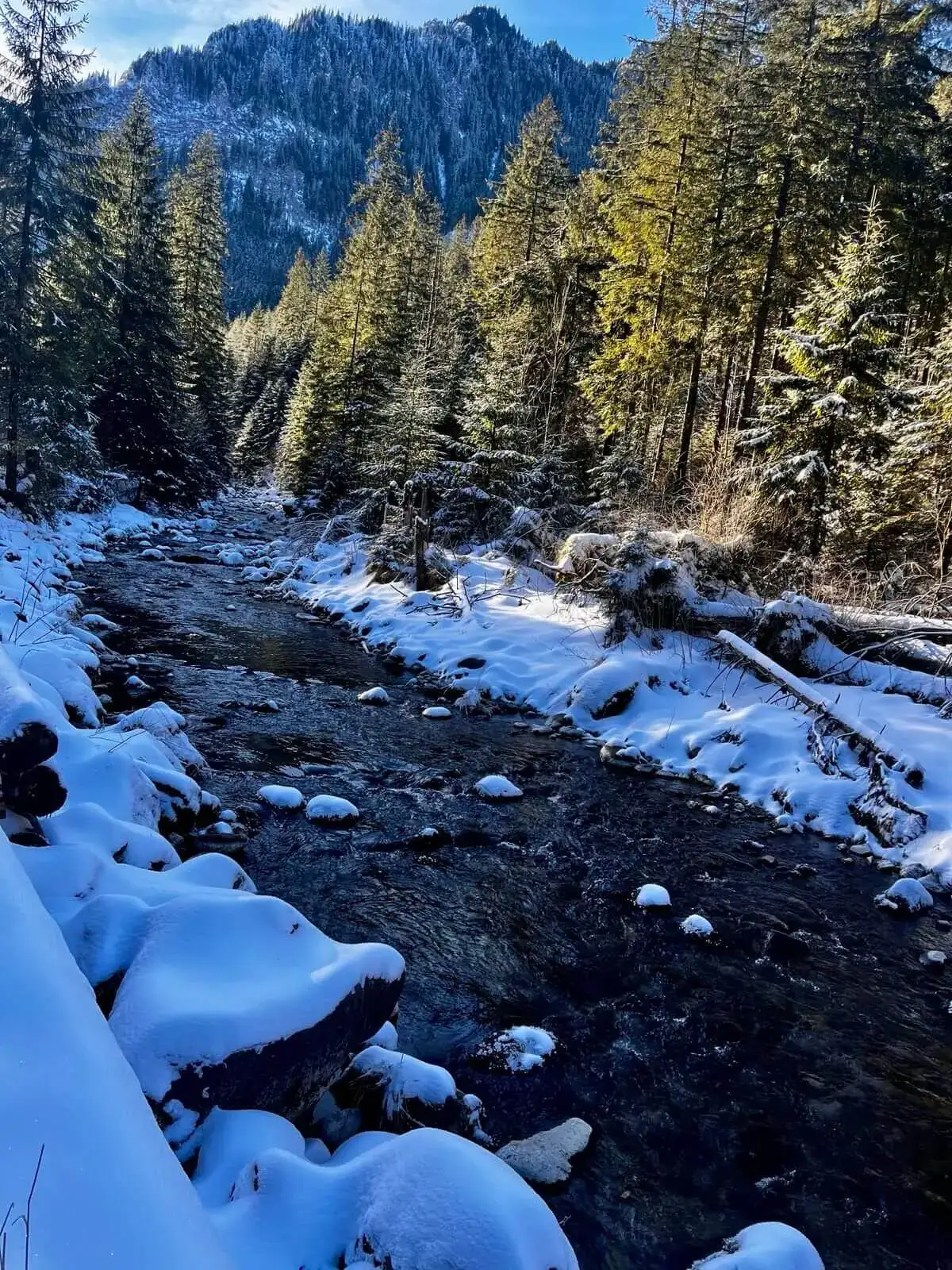
Start: Kiry · via Mroźna and Mylna Caves and Kraków Gorge
Start: Kiry (Kościeliska Valley) · via The mountain hut on Hala Ornak and The viewing platform above the lake
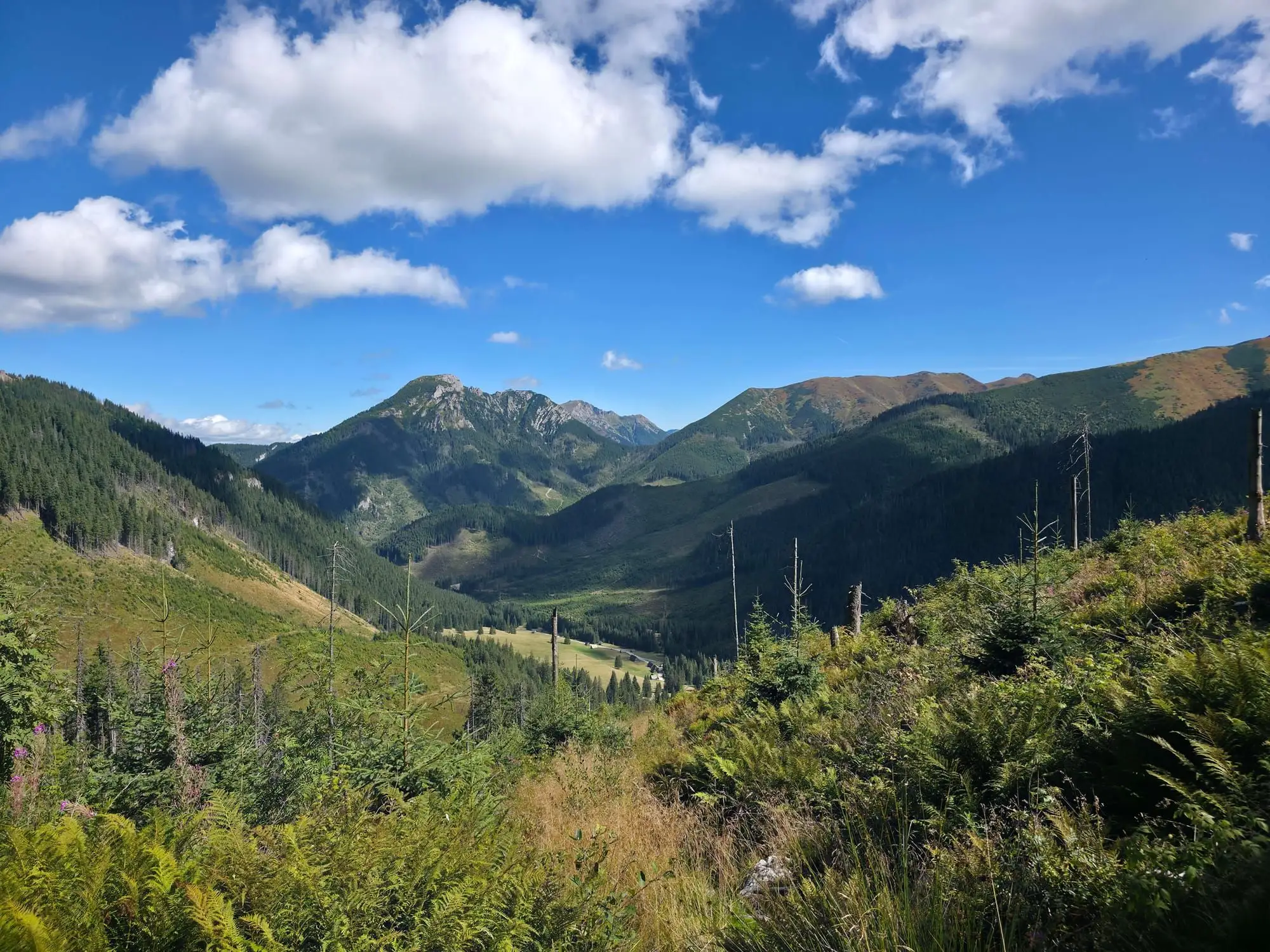
Start: Siwa Polana (Chochołów Valley) · via Panorama of the Slovak Roháče and The mountain hut at Chochołów Glade
These are affiliate links. If you book a stay or a ticket through them, we earn a small commission, for coffee :), at no extra cost to you.