Crampons or microspikes? How to prepare your gear for a winter trip in the Tatras
Winter in the Tatras is a completely different game. Your “summer” kit suddenly stops being enough. Trails that, in August, were a peaceful stroll in December become an icy slope with a 30-degree incline.
The biggest mistake beginners make is confusing terms and buying the wrong equipment. “Will these small rubber boot spikes be enough for Giewont?” – this is the most common question rescue workers (TOPR) hear, and the answer is: absolutely NOT.
Here’s a simple, concrete overview of what to buy, what to use it for on each route, and what to watch out for in stores.
1. For valleys and flat trails: Trekking microspikes
This is the most popular piece of gear in recent years. Trekking microspikes are boot attachments made from a rubber band with chains ending in small, centimeter-long teeth.
What are they for? Walking on compacted, icy snow on flat and gently sloped trails. They’re perfect for the Kościeliska Valley, on the way to Morskie Oko, or on the trail to Rusinowa Polana.
Where you should NOT use them: On steep ascents. The rubber can come off your boot, and the short teeth won’t hold you on hard ice. Microspikes aren’t suitable for higher mountain sections!
Shopping tip: Avoid microspikes from marketplaces for 20 zł (the rubber cracks in the cold after the first hour). Look for models from trusted brands (e.g., Climbing Technology or the Polish VI.6+).
2. For steep summits and hard “concrete”: Basket crampons
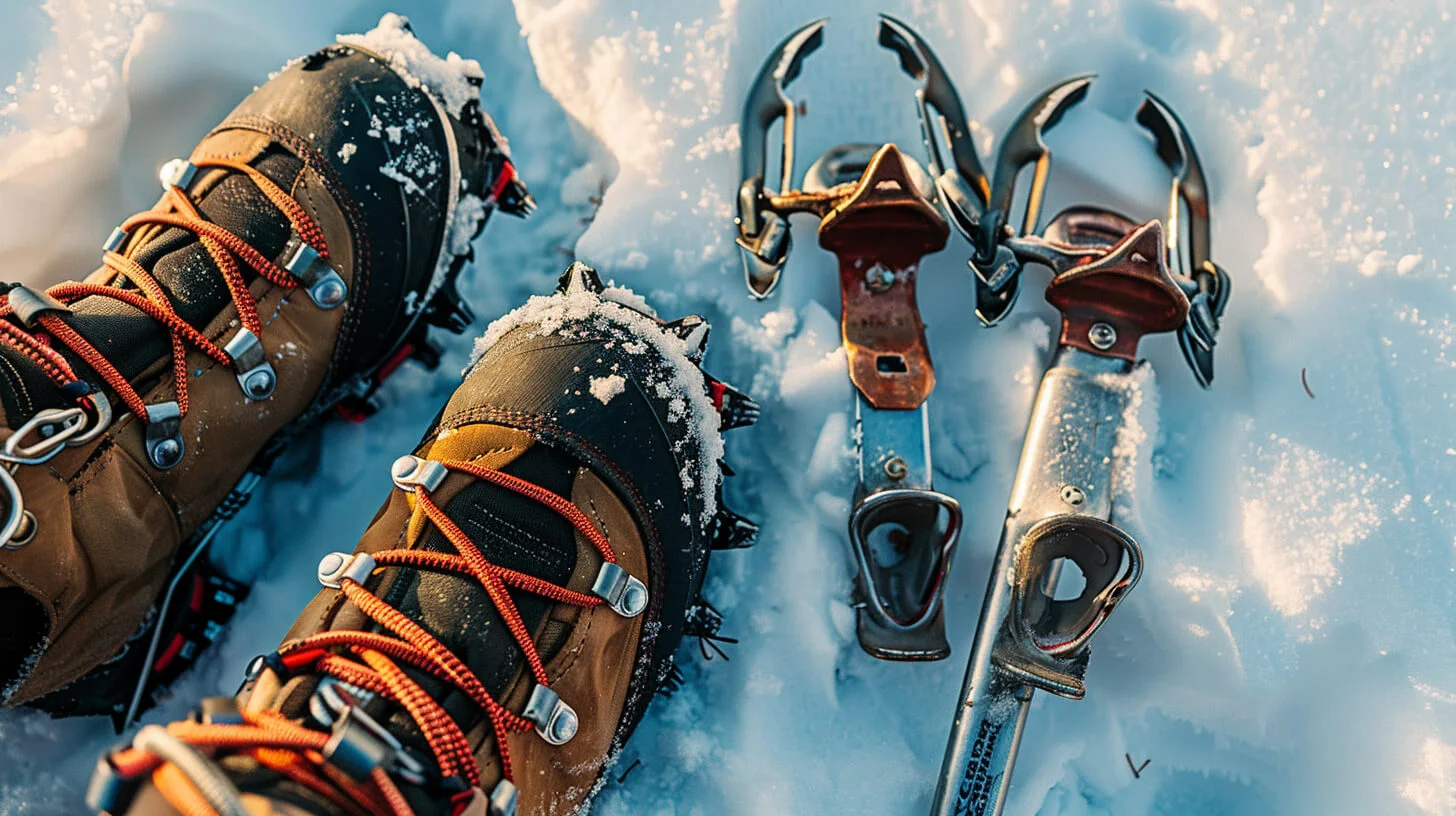
If you’re planning to climb Kasprowy Wierch, Czerwone Wierchy, or any route above the tree line, you need serious equipment. Basket crampons (or semi-automatic/automatic ones) are powerful metal frames with long, sharp teeth—especially the two projecting teeth at the front.
Why are they necessary? Only they can bite deeply into so-called “snow concrete” or ice, giving a stable stance on slopes steeper than 25–30 degrees.
Important: Basket crampons require stiff boots. If you put them on soft, “summer sneakers,” the connecting bar between the crampon baskets can break and the crampon may come off. You need hard winter trekking boots (often with an edge for semi-automatic crampons).
3. Your safety brake: Ice axe
A golden rule of winter climbing goes like this: If you have crampons on your feet, you must have an ice axe in your hand.
Trekking ice axes aren’t (only) for punching into vertical ice. Their main job is to arrest a fall.
If you slip on a steep, icy slope and start sliding downhill, the ice axe is your only chance to stop. But remember: simply owning an ice axe won’t save you. You must know (practice on flat snow!) how to do “ice axe braking” before you ever start picking up speed.
Trekking poles are not an ice axe. A pole cannot brake you!
4. Warmth underneath: Merino wool base layers
Winter outerwear is one thing, but the first layer next to your body is what determines whether you’ll get cold.
When you’re climbing uphill, you sweat a lot. When you reach the summit, the wind cools you down within minutes. Cotton in these conditions will kill you with cold.
Merino thermals (long-sleeve shirt and bottoms/leggings) are the best winter investment. Merino has a great property: it breathes, and—most importantly—it keeps warming even when it’s wet from sweat.
5. Hands and eyes (Beginner mistakes)
In winter, the mountains highlight even the tiniest gear gaps.
Winter gloves: One pair is not enough! Gloves quickly get soaked in snow. Pack at least two pairs. (One lighter pair for approaches, and a second, very warm pair—“mittens”—for breaks/ridges).
Glacier goggles: Snow reflects up to 80% of sunlight. On a sunny day, without filter glasses category 3 or 4 (so-called glacier goggles), after a few hours you risk “snow blindness” (a very painful corneal burn). Regular pharmacy sunglasses may not be enough.
Winter Tatras can be magical and safe—if you treat them with respect and have the right gear. Remember to check the TOPR website before every outing for the current avalanche danger level!

 2026-03-08
 2026-09-18
 2026-08-30
 2026-09-19
 2026-09-17
 2026-09-16
 2026-09-15
 2026-09-14
 2026-09-13
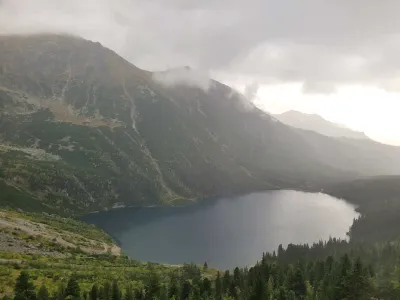 Distance: 19.1 kmDuration: 5 h 54 min
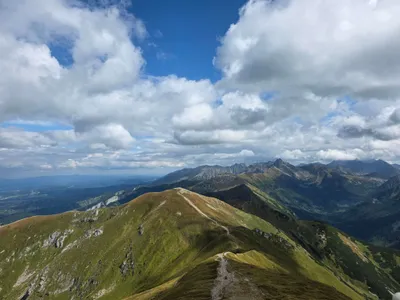 Distance: 15.6 kmDuration: 8 h 27 min
 Distance: 11.1 kmDuration: 2 h 59 min