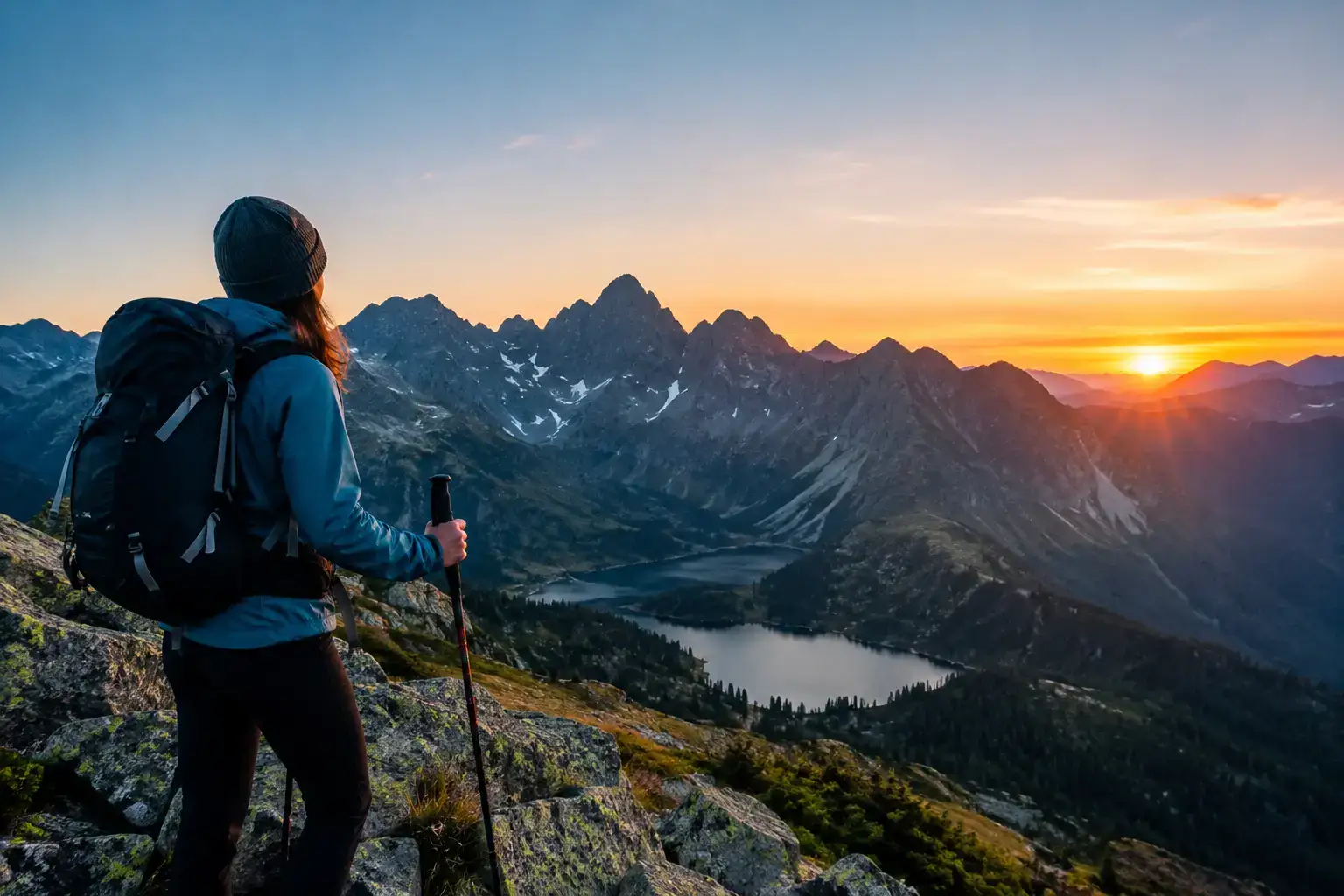
planning
How to plan a pre-dawn start in the Tatras
How to plan a pre-dawn start in the Tatras: the wake-up, the car park, the forecast, the kit and a plan B, so an ambitious route starts without chaos or needless risk.
Halny in the Tatras can close trails and take the confidence out of a step. See how to recognise the danger, change the plan, and stay off the risky ground on a ridge and in the valleys.
Author: Konrad Leśniak8 min read
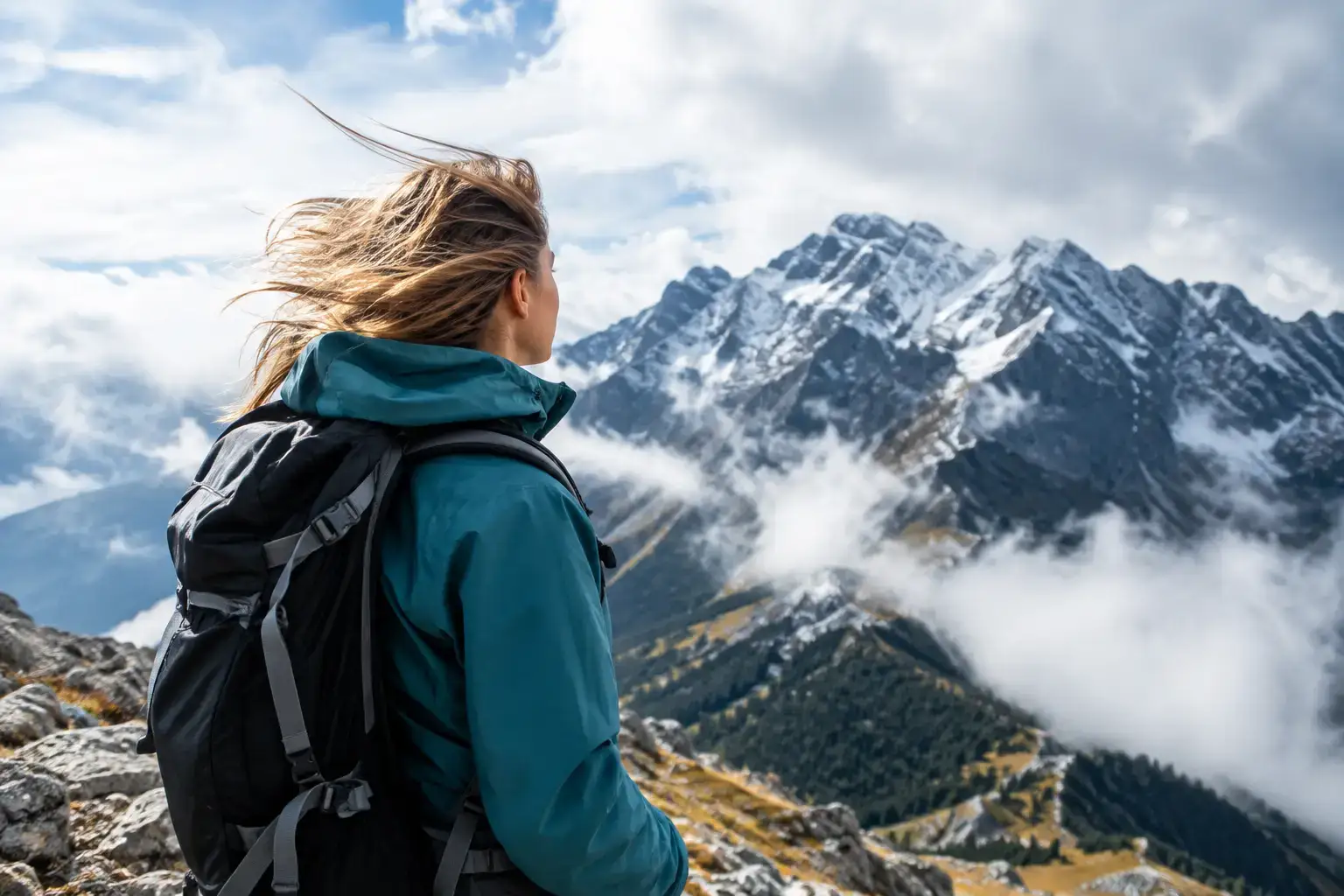
When the roof hums in Zakopane, the shop signs bang, and the trees along Krupówki bend as if they were in a bad disaster film, halny in the Tatras stops being a weather curiosity. For a walker it is a very concrete signal: the ambitious route can wait, and the plan made in the evening over tea has to go in the bin in the morning, with no sentiment. The Tatras will not take offence at a retreat. For ignoring the wind, they can present a much worse bill.
Halny is a warm, dry, gusty foehn wind that blows on the lee side of the mountains. In practice that means the air rises on the Slovak side, cools, and drops its moisture, then falls on the Polish side, warms up, and speeds up. You do not have to remember the whole of the meteorology to make a sensible decision. It is enough to know that halny can appear suddenly, reach very high speeds, and have a completely different face in Zakopane, in a valley, and on an open ridge.
That last point is the one that matters. A light gust in the car park is not permission to go up onto Czerwone Wierchy, Kościelec, or Orla Perć. Higher up the wind gathers force, it hits in bursts, and the ground gives you nowhere to wait it out in peace. On an exposed stretch of trail, even a fit person can lose their balance. If there is exposure, chains, or icy rock beside you, it stops being funny.
The worst thing about halny is how easy it is to dismiss. It does not always rain, it can even be surprisingly warm, and the view of the mountains can look promising. A person sees the sun and thinks: a perfect day. At 1,800 or 2,000 metres they may be fighting for every step.
A gust does not work like a steady resistance while you walk. It comes from the side or from behind, knocks you out of rhythm, and can shift your body at the moment you put a foot on a wet stone. Trekking poles help you keep your balance, but they are not a magic stabiliser. On a steep slope, in the dwarf pine, or on a ridge they can get in the way, if you clutch at them to save the situation instead of dropping lower.
Halny also raises the risk of falling branches and trees. That is not only a problem high up. Valley trails run through forest, and after a strong wind they can be closed for a time, or simply dangerous. Do not step past tape, boards and bans under the slogan “we’ll only nip through quickly”. A tree does not negotiate with your weekend plan.
In halny the weather changes fast. Cloud pours over the passes, visibility can drop in a few minutes, and a strong wind chills you even when the temperature is above zero. In winter you also get wind-drifted snow, hard ice, and avalanches. In summer, sudden storms, snapped branches, and the difficulty of holding a line on open ground.
There is a less spectacular problem too, and it matters: tiredness. Walking into the wind costs more energy, takes longer, and takes your concentration. If the plan was a return before dusk, cutting it fine, halny can turn that into a return in the dark. That is exactly the kind of complication you do not want to add to difficult ground.
There is no single wind speed at which every trip becomes a bad idea. What matters is the ground, the experience of the group, the season, and the goal. A walk in Dolina Chochołowska is a different thing from a climb of Babia Góra, and a different thing again from an exposed ridge in the Tatras. If the forecast promises strong gusts, choose the route conservatively. No show of ambition.
In the morning, check the forecast for the specific height, not only the temperature in Zakopane. Look at the expected average wind speed, the gusts, the precipitation, the visibility, and the notices from the Tatra National Park and the rescue services. Then look out of the window and compare the forecast with what is actually happening. If the wind is already aggressive in town, it will not be gentler on the ridge.
Be especially careful about setting off when the group includes children, someone walking in the mountains for the first time, someone after an injury, or a person who bought their hiking boots the day before. This is not about excluding anyone from the trip. It is about fitting the day to the weakest link, because in the mountains the group comes back together.
Treat these, above all, as reasons to drop a high route:
That last point is entirely enough. You do not need a meteorologist’s diploma to turn back. If your body says it is bad, and your sense says the same, do not wait for a third opinion from a friend who “once walked in worse wind”.
Cross off the open and exposed goals first. Ridges, passes, summits with metal aids, and routes that run for long stretches above the dwarf pine are a poor idea in a strong wind. That applies on the Polish side of the Tatras and on the Slovak side. On the Slovak side, longer valleys and more height to gain make the problem worse, because you will not sort a retreat out in a quarter of an hour.
Do not assume the forest solves it either. In a moderate wind a valley route can be a sensible alternative, but when there are warnings and strong gusts, snapped branches and uprooted trees become the danger. Then you have to respect a closure, or simply drop the walk in the forest.
If the conditions are unpleasant, but there are no warnings and no bans, choose a short route with an easy retreat and no exposure. Set a decision point too. For example: we walk to the hut, we judge the wind, and we come back the same way if it does not ease. This is not timidity. It is ordinary risk management.
In halny, what counts is clothing that works, not clothing that looks good in a photo at the car park. A light windproof or membrane jacket, an insulating layer in the pack, a hat or a headband, gloves, and something for your neck make an enormous difference. Even in summer. The wind takes heat quickly, especially when you stop on a ridge to check the map.
Pack the rucksack so the things you need most are to hand. You do not want to take everything off and hunt for gloves in the gusts. Keep the phone protected, put the paper map in a case, and fasten loose bits of clothing. A hat that blows off the trail is not worth a chase down a steep slope.
It is worth having spare food and a warm drink, but do not treat the kit as an argument for going higher. Good equipment gives you a margin of safety. It does not make you immune to a sensible danger. A jacket that cost a thousand zlotys will not hold you on your feet in a side gust.
Turn back when the wind makes ordinary walking difficult, when the group stops talking because everyone is fighting for balance, or when the person in front of you starts moving nervously and looking for support at every step. Turn back too when the conditions are clearly worse than the forecast. In the mountains you do not score points for sticking to a bad plan.
The retreat has to happen early. Waiting “just as far as the pass” often ends with you coming back through the worst section already tired, and with a wind that has had time to build. The safest moment to change the decision is usually about a quarter of an hour before you start wishing you had changed it sooner.
Halny does not have to spoil a trip to the Tatras. It can simply set a different rhythm for the day: a late breakfast, a calmer route, a museum, the thermal baths, or planning the next outing. The summit will not disappear. You have to come back from the mountains in one piece, and with the wish to come back again next time.
Newsletter
A few times a year: trail conditions, closures, the best time to go and new routes. No weekly spam.
How to plan a pre-dawn start in the Tatras: the wake-up, the car park, the forecast, the kit and a plan B, so an ambitious route starts without chaos or needless risk.
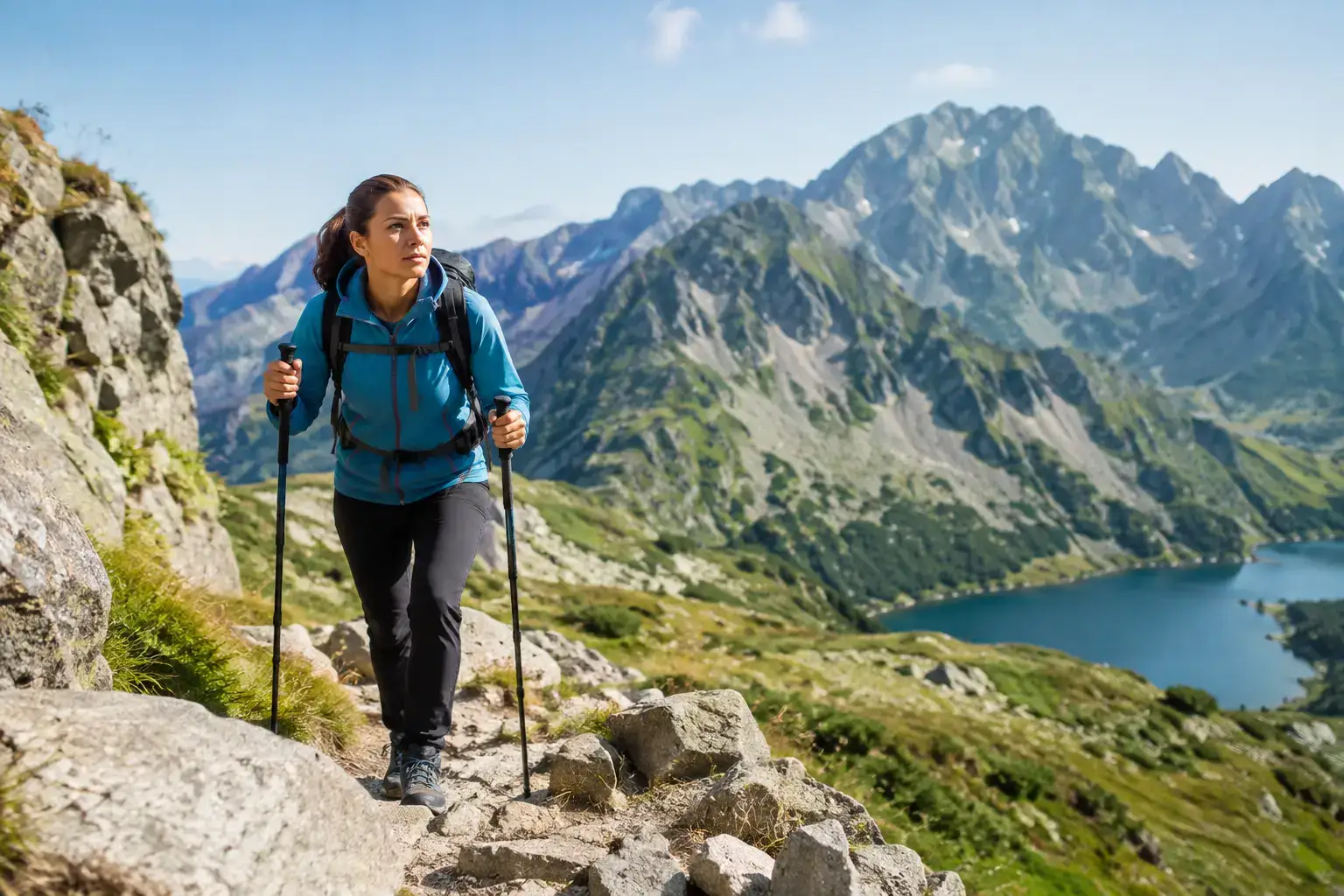
Wielka Świstówka on the route through Kobylarzowy Żleb: the difficulty, the chains, the weather and sensible preparation before heading for Czerwone Wierchy.
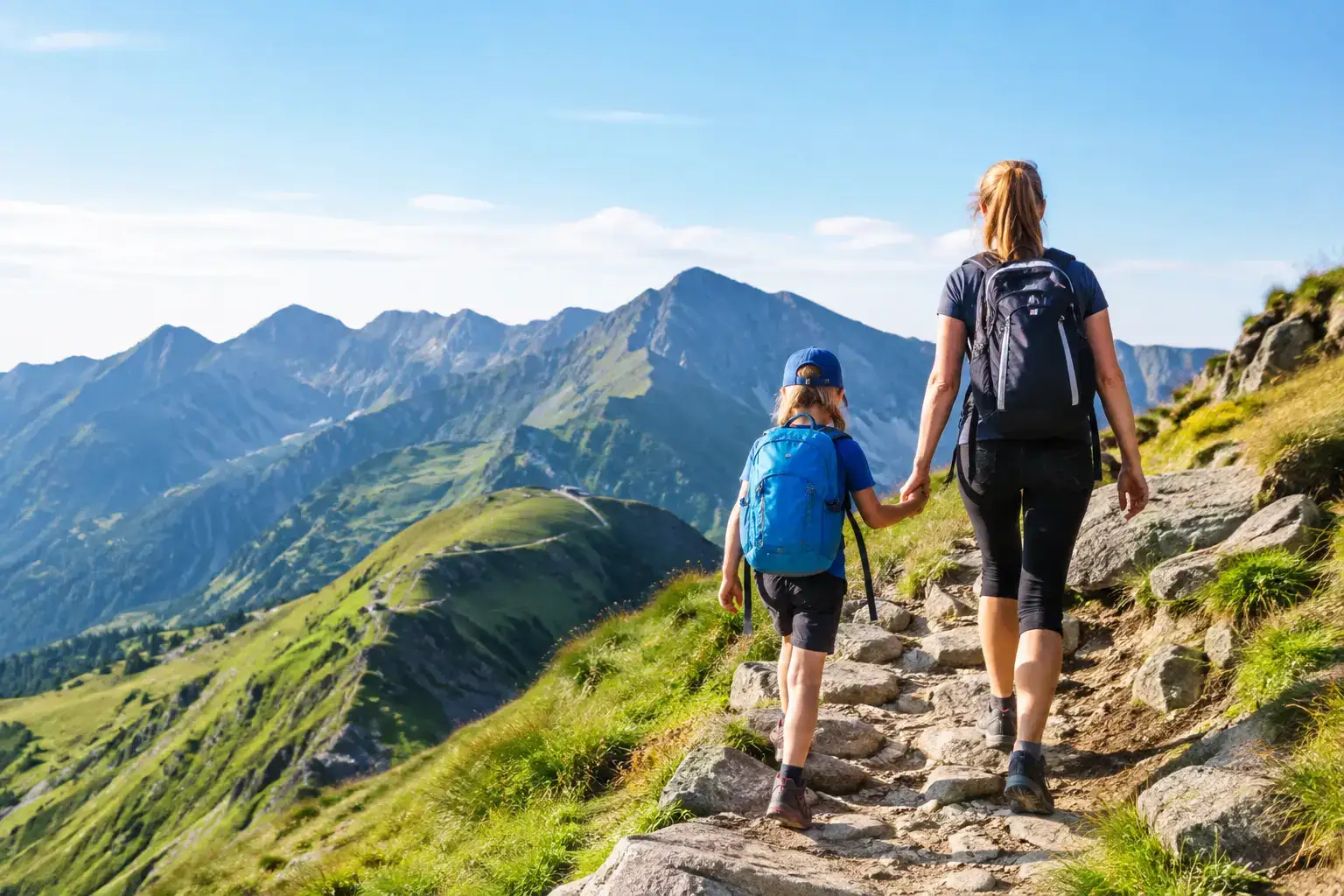
Can children go up Kasprowy Wierch? We look at the cable car, the trails, the weather and the rules, so a family trip does not end in stress in the Tatras in winter.