How to avoid the crowds in the Tatras without getting up in the night
In Dolina Kościeliska at 10:30 it can be more crowded than on Krupówki, only instead of shop windows you have a wall of forest, and instead of a pedestrian crossing — a human snake stretching towards the hut. If you are wondering how to avoid the crowds in the Tatras, you do not need a secret map or a march at three in the morning. You need a few decisions made before you even leave — and a readiness to accept that the most popular name in a search engine does not always mean the best day in the mountains.
A crowd in the Tatras is not only an aesthetic problem. It slows the walk, lengthens stops at the chains, takes away the sense of space, and sometimes complicates safety. On a steep, wet stretch you do not want to squeeze between people who stop exactly where they should not. Especially when the weather starts doing its thing.
Do not fight the crowd on its terms
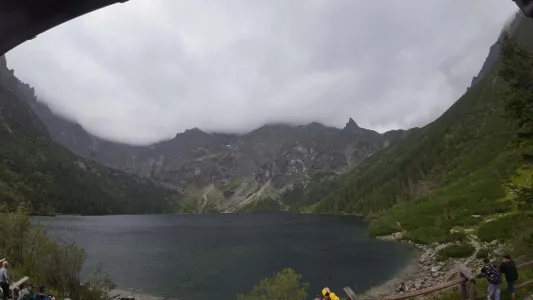
The heaviest traffic concentrates in a few places: on the route to Morskie Oko, in Dolina Kościeliska and Chochołowska, on Kasprowy Wierch, Giewont and on trails starting from Kuźnice. These are great places, but their popularity has a very concrete price. On a July Saturday morning you are not buying silence there — you are buying views in a package with a queue, noise and a slower group pace.
The first rule is simple: do not plan the whole holiday around a list of “10 places you have to see”. Lists like that work as a megaphone for crowds. If everyone wants to climb Giewont, Giewont will not empty just because you also really want to see it.
It is much better to build the trip with three variants: a main trail for good weather, a shorter one for a day with an uncertain forecast, and a calm goal for a weekend or a public holiday. That is not excessive caution. It is a way not to spend half a day in a jam on the road, then in a queue at the entrance, and finally in a queue for the chains.
Pick the day, not only the trail
In the Tatras the date of the outing often matters more than the choice between two similar routes. Saturday, Sunday, a long weekend, the May holiday, a Friday in the holidays and a beautiful day after a run of rain — that is a ready recipe for a crush. Add a sunny forecast and an easy drive from Zakopane, and you can be sure you will not be contemplating the crags alone.
If you can, leave the most popular goals for Tuesday, Wednesday or Thursday. Monday can also be reasonable, though after the weekend some people extend their stay. In season it is worth watching the rhythm of the weather: when the previous day was stormy or very wet, the first stable morning pulls in everyone who “has to make up for it”. Then even a less obvious trail can fill up fast.
That does not mean you have to sit in the guesthouse at the weekend. Just pick a route that does not start at the most besieged car park and does not lead to one obligatory viewpoint. Side valleys, lower forest paths or less advertised crossings on the Slovak side usually give more breathing room than the tourist classics.
Start time makes sense, but do not make a religion of it
The advice “set off very early” is right, but it is often given without an important footnote: get up early only if you can operate safely at that hour. A 5:00 start makes sense for someone who knows the route, has a headlamp, a checked forecast and will not march half-asleep over wet stones.
For many people a realistic compromise is leaving between 6:30 and 7:30. On a longer route that gives you an edge on the main wave, but does not require a night expedition. On popular trails the difference between a 7:00 and a 9:30 start is colossal — the first version means a calmer beginning, the second often a parking drama and a walk in the peloton.
There is a second strategy too: a late start on a short, easy trail. It works well for valley routes, as long as you watch sunset time and do not count on emptiness in a place everyone picks after breakfast. For ambitious high-mountain outings do not treat a late start as a method against crowds. Afternoon storms and time pressure can quickly turn a clever plan into a stupid plan.
How to avoid the crowds in the Tatras? Open the map wider
The simplest way to a quieter day sounds banal: stop looking only at the Polish side of the Tatras. Slovakia gives a huge choice of valleys, passes and summits, and tourist traffic spreads differently there. That does not mean it will be empty everywhere. Popradské Pleso, the Štrbské Pleso area or the most easily reached attractions also pull people in. The difference is the scale of options.
When you pick a Slovak variant, factor in the logistics. Access, parking, any fees, seasonal trail closures and the time to get back are not details. Do not go “quickly” just because you saw a pretty photo of a lake. The route may be quieter, but it still needs preparation, water, a layer for the wind and a time buffer.
On the Polish side you can also step off the main current. Instead of another march along a wide road to the best-known hut, consider forest-belt trails or combining a less popular valley with a pass or a meadow. Not every outing has to end on a summit with a queue for a photo. Sometimes the best part of the day is the forest, the quiet and a view that is not blocked by someone else’s selfie stick.
Do not pick a trail from a photo alone
Quiet trails are sometimes quiet for good reasons. They can be longer, steeper, worse connected or simply less spectacular on social media. And that is a fair deal, as long as you accept it consciously. Do not try to “escape people” onto an exposed ridge, though, when you have zero experience with chains, a fear of heights and boots bought the day before the trip.
Before you decide, check the length of the route, the elevation gain, the expected time, the type of surface and the points where it is hard to turn back. A quieter trail does not automatically mean an easier trail. It can be the opposite: fewer people, more mud, roots, stones and the need to manage your own pace.
For families with children or beginners a better choice is a calm valley or a forest walk than an ambitious goal picked only because “there are no crowds there”. In the mountains the winner is not the person who found the most remote line on the map. It is the person who comes back without an injury, without panic and without the shame of having ignored the conditions.
Weather can scatter people, but it is not an invitation
When the forecast shows rain, many people automatically think: great, it will be empty. Perhaps. But empty Tatras in a downpour are not a reward for being clever. They are simply wet, slippery and much less forgiving of mistakes. A high-mountain outing in heavy rain, storms or a strong wind is not a travel style. It is stupidity dressed in a rain jacket.
On a worse day pick a lower route, a walk in a valley, a rest or another attraction nearby. Leave the high-mountain goal for a stable weather window. That way you avoid not only the crowds, but also a situation in which the whole group nervously checks the sky, because there are still three hours to the car and the thunder is getting closer.
With a good forecast, do not assume it will be perfect either. A warm morning can turn into a baking march, and the wind on the ridge can be completely different from Zakopane. The crowd should not be a more important criterion than safety.
Leave yourself the right to change the plan
The most experienced hikers do not have one plan. They have a plan and a few sensible emergency exits. When the car park is full, the queue at the entrance is absurd and the trail looks like a procession — you do not have to prove that “we will manage anyway”. You can skip it, change valley, go to Slovakia or move the goal to midweek.
That flexibility is what separates a good trip from nervously ticking off attractions. The Tatras will not vanish if you do not climb a specific summit on Saturday at 11:00. And the next time you see a human snake stretching uphill, treat it as information: today the mountains are offering you a different trail.

 2026-09-20
 2026-09-23
 2026-09-22
 2026-09-21
 2026-09-19
 2026-09-18
 2026-09-17
 2026-09-16
 2026-09-15
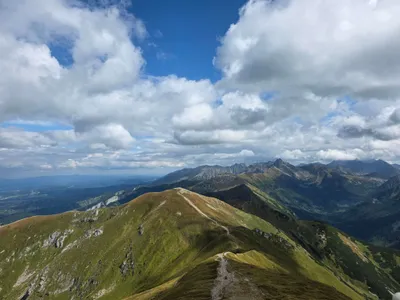 Distance: 18.5 kmDuration: 8 h 09 min
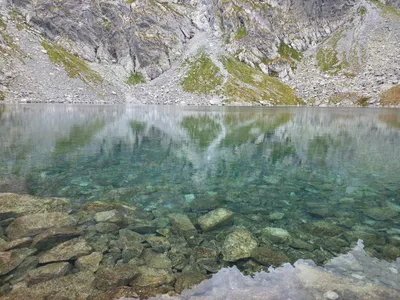 Distance: 24.7 kmDuration: 7 h 38 min
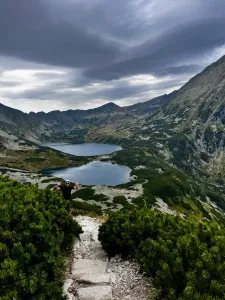 Distance: 16.5 kmDuration: 5 h 45 min
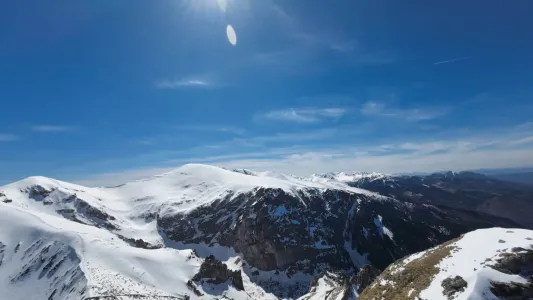 Distance: 6 kmDuration: 3 h 15 min
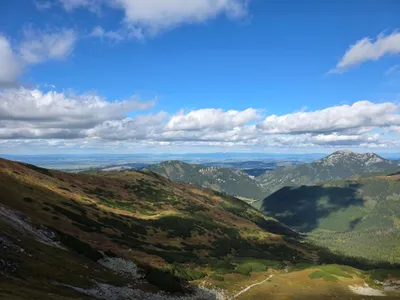 Distance: 18.1 kmDuration: 6 h 50 min