The first proper snow, and the yearly question is back: microspikes or crampons for the Tatras? The answer is not “take something spiky and you will be safe”. Microspikes and crampons do different jobs, need different boots, and leave a completely different margin for error. Putting crampons on soft snow in Dolina Kościeliska is overkill. Walking a hard, steep gully in microspikes alone is simply asking for trouble.
Check the route, the forecast, the temperature of the last few days, and the condition notices first. Then look at your boots and your real skills. The kit should help a sensible decision. It should not turn a risky plan into a plan that “will definitely work”.
Microspikes or crampons for the Tatras - the short answer
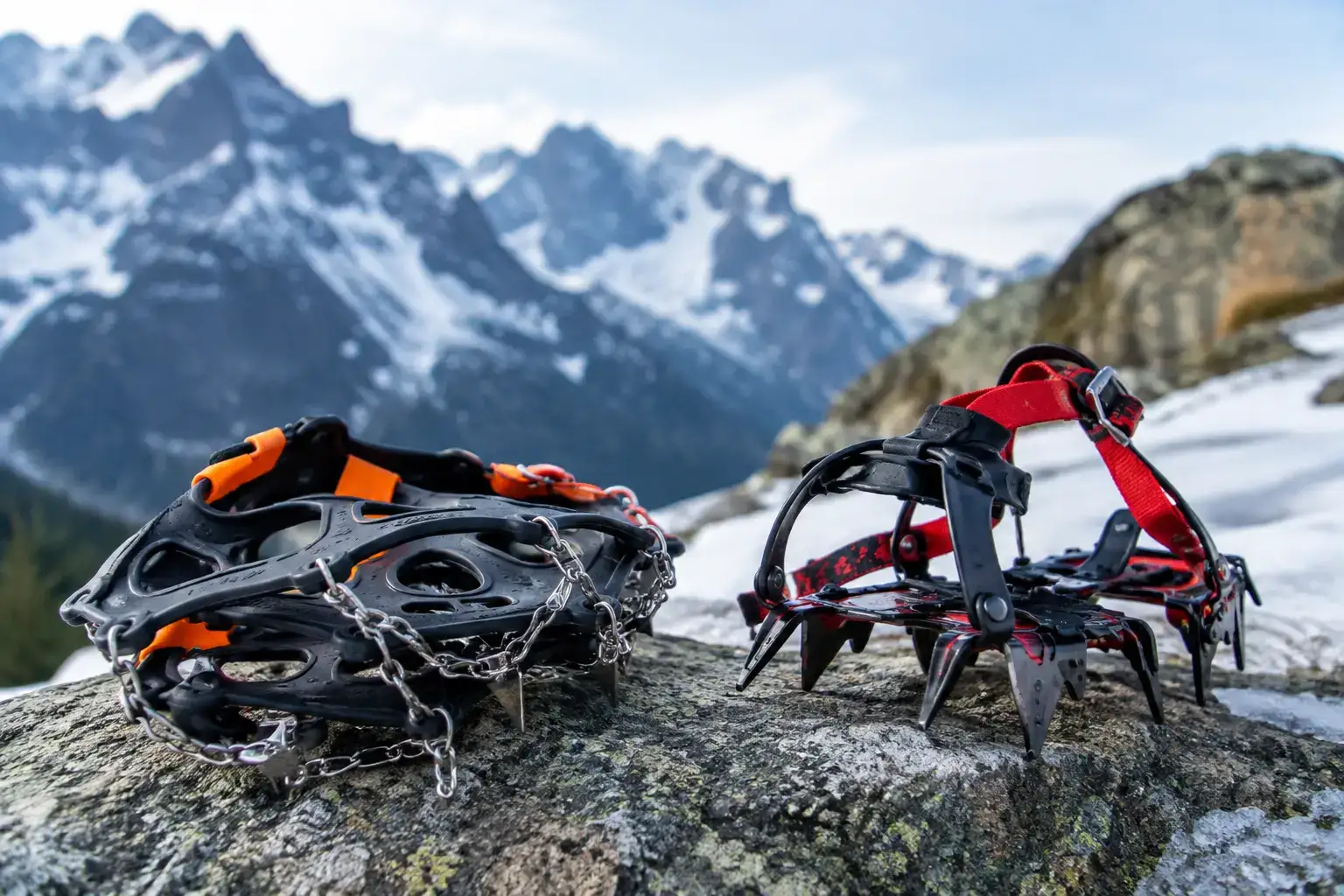
Microspikes are for packed snow, icy paths, frozen mud, and a gentle gradient. They are light, small once packed, and you can put them on most hiking boots quickly. They work well where you want a more confident step, and you are not moving on steep high-mountain ground.
Crampons are a tool for hard snow, ice, and steep climbs, where losing grip can mean a long, uncontrolled slide. They have much longer points, a stiffer build, and they need boots that will hold them steady. In the Tatras they are useful above all above the treeline in winter conditions, on steep climbs, in gullies, and on icy sections.
Between the two there are also anti-slip grips with fine chains or small spikes. For a walk around icy Zakopane they can be excellent. Do not call them crampons, and do not treat them as kit for Orla Perć or a winter ascent of Rysy. The name on the box will not stop a slip.
When microspikes make sense
Microspikes are very practical on valley walks and on popular, well-trodden trails. The winter road to Morskie Oko, the climb to the hut on Hala Ornak, or the path towards Murowaniec can turn into an icy chute. On that ground, microspikes can save the day, the knees, and the mood of the whole group.
Their strong side is convenience. You put them on quickly, stash them in the pack when the snow disappears, and you do not have to carry a heavy set all day. For someone on an easy route in stable conditions, this is usually the best choice.
There is a limit you should not ignore. Microspikes stop making sense when the slope gets steep, the snow is hard as concrete, and there is ice underneath. Short spikes do not give the same confidence as crampons then, and a flexible build can shift on the boot. If you start walking sideways, balancing on your poles like a circus act, or detouring a polished section through the bushes, this is no longer a comfortable trip. It is a sign to turn back or change the plan.
Microspikes do not replace technique
Even good microspikes do not excuse looking at your feet. Place the foot flat, shorten the step, and do not try to make up time with a quick run down the ice. Take particular care on the way down. Most unpleasant falls happen when the goal is already close, and concentration has evaporated with the last tea from the flask.
When to take crampons, not microspikes
Crampons in the Tatras are needed when the route leads into ground with a winter-mountaineering character. That does not have to mean a trip of several days. A steep climb on frozen snow, a hard chute below a pass, or an exposed section where a slip does not end after a few metres of sliding is enough.
Crampons should be matched to your boots. On classic hiking models, strap-on crampons are the usual choice, fitted over the toe and the heel of the boot. That is a sensible solution for many winter outings, but only when the boot is stiff enough, has a solid sole, and holds the ankle well. Semi-automatic and automatic crampons need compatible boots with the right welts. Do not buy them because they look more professional. On boots that do not fit, the only professional-looking thing is the problem.
On steep ground, crampons alone do not settle the matter either. An ice axe helps, and so does knowing how to use it, including a self-arrest after a fall. Trekking poles are excellent in the valley, and they are not a substitute for an ice axe on a hard slope. If you have never practised walking in crampons, putting them on in gloves, and reacting to a slip, do not test that for the first time high in the mountains, in the wind, with a queue of people behind you.
Crampons need space and sense
You walk a little differently in crampons. You set your feet wider, you watch that a point does not catch your trouser leg, and you do not step on your own gaiters. That is a detail, until one leg catches the other on an icy traverse. Then the detail has very real consequences.
Do not put crampons on asphalt, rock, or the metal steps by a mountain hut. You blunt the points, you slip, and you make a noise like a badly tuned tram. Put them on where the snow or ice begins, and take them off before you return to hard ground.
Boots matter more than the marketing on the box
The most common mistake looks like this: someone buys crampons, then tries to fasten them to soft town shoes or light running shoes. Can you? Sometimes. Should you? No. Crampons must not swim on the boot, twist sideways, or fall off on a harder step.
Do a trial at home before you leave. Put both crampons on, walk the stairs or some hard ground, and check the straps and the length of the linking bar. Then pack them so the sharp parts do not cut a jacket, gloves, or a friend’s back. Thin work gloves are worth taking, or use the ones already on your hands. Metal in the frost kills enthusiasm for adjusting straps very quickly.
Conditions change the answer faster than the calendar
The same route in December, February, and April can need completely different kit. After a night frost the snow can be hard and slippery, and after a few hours of sun it turns into wet slush. In spring you can walk mud lower down, a hard crust higher up, and hit ice in a shaded gully. So do not pack from a photo taken a week ago, or from a friend’s account of last season.
Do not check only the temperature in Zakopane. What counts is the height, the wind, how much sun the slope gets, and whether it froze overnight. Plus two degrees in town says little about conditions above 1,800 metres. If the forecast has a strong wind, precipitation, poor visibility, or a sudden thaw, the ambitious goal can wait. The Tatras are under no obligation to fit your weekend.
Avalanches and closed trails are a separate subject
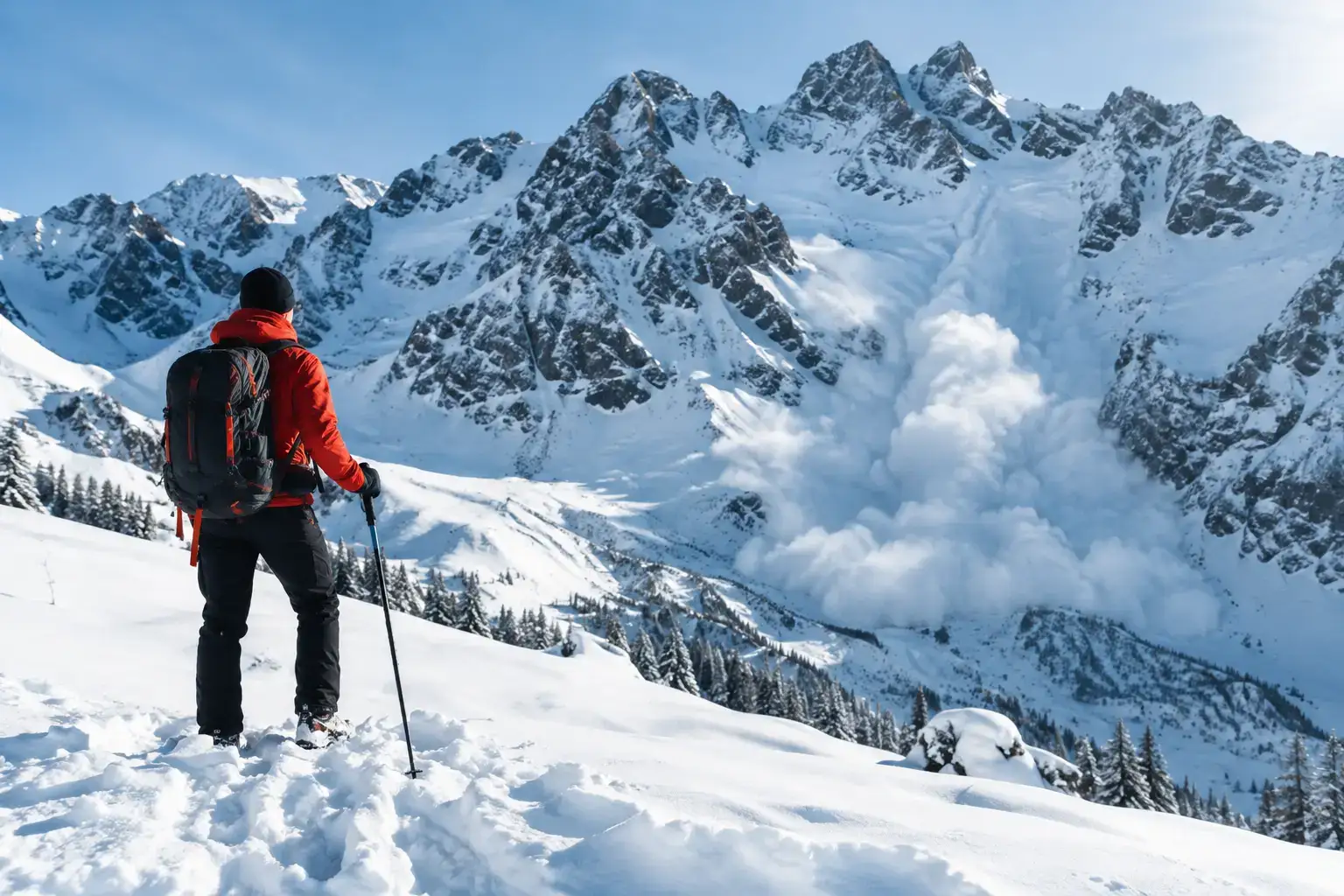
Crampons do not protect you from an avalanche, they do not improve visibility, and they do not open a closed trail. On avalanche-prone ground you need knowledge, a proper plan, and avalanche kit, and above all the skill to judge the situation. A transceiver in the pack is not an insurance policy against bad decisions.
If you are heading in winter beyond easy valley goals, consider a winter course with an instructor. One day of learning to walk in crampons, work with an ice axe, and judge the snow gives more than ten videos watched in the evening from the sofa.
What to check before you leave
Before you close the pack, answer a few questions honestly:
- Do I know the current conditions on this specific route, and not only the general forecast for Zakopane?
- Do my microspikes or crampons fit the boots, and have they been checked before?
- Does the route have steep, icy, or exposed sections where an ice axe will be needed?
- Can I turn back when the conditions turn out worse than I planned?
- Does the whole group have the kit and the skills at a similar level?
That last point matters more than it seems. Do not take a friend out in their first crampons on an ambitious route only because you will “manage somehow”. In the mountains the group moves at the pace and the preparation of the weakest person. That is not embarrassing. It is basic logic.
Good microspikes can turn a slippery walk into a pleasant winter day. Well-chosen crampons can be essential on high-mountain ground. The most valuable piece of kit is still the head that can say: today we turn back and go for a hot tea.