winter7 min read
The Tatras in winter without crampons - which routes to choose?
The Tatras in winter without crampons? See which valleys and trails make sense, when to leave it, and how to judge the snow, the ice, the weather and your own boots.
Night ban in Tatra National Park: 1 Dec to end of Feb 22:00–5:00, 1 Mar to 30 Nov dusk to dawn. Sunrise and sunset table for Zakopane and how to plan your day.
Author: Konrad Leśniak7 min read
Since 1 February 2026 there is no month in which you can legally walk the trails of the Polish Tatras at night. Tatra National Park (TPN) extended the ban to winter, so it now applies all year – just in two different versions. It’s easy to get wrong: in November the ban starts at dusk, while from 1 December it only starts at 22:00.
Below is everything in one place: the dates, sunrise and sunset in Zakopane for every month, and what it means for planning your hike.
💡 In a nutshell – the TPN night ban:
- 1 December – end of February: trails closed 22:00–5:00.
- 1 March – 30 November: trails closed from dusk to dawn.
- 1 March – 15 May: some sections (capercaillie and black grouse mating grounds) closed from dusk to 8:00, e.g. Polana Chochołowska – Bobrowiecki Żleb – Grześ.
- 1 December – 15 May: fully closed sections include Przełęcz w Grzybowcu – Wyżnia Kondracka Przełęcz, Dolina Tomanowa – Chuda Przełączka, and Dolina Pięciu Stawów – Świstówka Roztocka – Morskie Oko.
- Breaking the ban can get you a fine from the park rangers.
A dusk-to-dawn ban has existed in TPN for years – for a long time from 1 April to 30 November, later moved to start on 1 March. In winter (December–February) the trails used to be open around the clock.
From 1 February 2026, TPN closed the trails in winter too, between 22:00 and 5:00. The park explains it as wildlife protection – night is the main activity time for wolves, lynx, bears, red deer and roe deer, and monitoring showed that night hikes, though fewer than daytime ones, disturb them particularly strongly. The second reason is safety: in the dark it’s easier to lose the trail and to have an accident.
The Polish Mountaineering Association (PZA) supported the idea but pointed out that climbers often need to start before dawn or finish after 22:00. If you climb, check the current TPN director’s order – this post is about hikers on marked trails.
Approximate times calculated for Zakopane (local time, including daylight saving). In valleys and on the north side of ridges the sun disappears earlier behind the mountains – it can get dark there up to half an hour before sunset.
| Month (15th day) | Sunrise | Sunset | Trail ban |
|---|---|---|---|
| November | 6:50 | 15:59 | dusk to dawn |
| December | 7:29 | 15:42 | 22:00–5:00 |
| January | 7:31 | 16:09 | 22:00–5:00 |
| February | 6:50 | 16:59 | 22:00–5:00 |
| March | 5:55 | 17:45 | dusk to dawn (+ grouse sections to 8:00) |
| April | 5:50 | 19:32 | dusk to dawn (+ grouse sections to 8:00) |
| May | 4:57 | 20:16 | dusk to dawn (+ grouse sections to 8:00 until 15 May) |
| June | 4:34 | 20:47 | dusk to dawn |
| July | 4:50 | 20:41 | dusk to dawn |
| August | 5:31 | 19:58 | dusk to dawn |
| September | 6:16 | 18:54 | dusk to dawn |
| October | 7:00 | 17:51 | dusk to dawn |
Civil dusk (when it gets properly dark without a headlamp) comes about 30–40 minutes after sunset, and dawn about the same before sunrise. TPN doesn’t give an exact minute, so the safest rule is simple: be on the trail only when it’s light.
November is the trickiest month. The sun sets around 16:00, it’s dark earlier in the valleys, and that’s exactly when the ban starts. For a full-day route you realistically have 8–9 hours of light. Every delay – a traffic jam at Palenica, a queue for tickets, slower pace on ice – eats into a margin you don’t have.
When planning a November hike, work backwards: when you need to be back at the car park, how long the descent takes (longer in winter than in the description), and only then work out your start time.
From 1 December to the end of February the trails are open from 5:00 to 22:00. Formally you can start at 5 and walk back in the dark until 22. In practice, hiking in the dark in winter adds risk: ice, wind-blown tracks, harder navigation and cold that hits faster when you’re tired. An early start with a headlamp makes sense to gain time for a longer route – but plan so that the hardest sections are done in daylight.
In the summer season you can’t legally reach a summit for sunrise, because you’d have to walk before dawn. The same applies to moving between huts. Staying overnight in a hut is fine – the ban concerns moving along the trails, not being in the hut.
In spring (1 March – 15 May), on selected sections where capercaillie and black grouse display, the ban lasts longer – until 8:00. Example: the yellow trail Polana Chochołowska – Bobrowiecki Żleb – Grześ.
These rules apply to Tatra National Park, i.e. the Polish side. On the Slovak side (TANAP) different dates and winter closures apply – trails above the huts are closed from 1 November to 31 May 2027. Before heading to Slovakia, check current TANAP and HZS information.
From 1 December to the end of February, TPN trails are open from 5:00 to 22:00. From 1 March to 30 November – from dawn to dusk.
No. Until 30 November the ban runs from dusk to dawn. In November the sun sets around 16:00, and in the valleys it’s dark even earlier.
From March to November no, because it would require walking before dawn. In winter (1 December – end of February) trails open at 5:00, so a winter sunrise (around 7:30) is within reach – but only in good conditions and with plenty of experience.
The ban applies to moving along the trails. You can sleep in a hut, but you can’t walk to another hut or up a summit at night.
Park rangers can issue a fine; local media have mentioned amounts of several hundred złoty. More important than the fine, though, is that accidents happen more easily on the trail in the dark.
Not the same one. These are Polish TPN rules. In Slovakia, TANAP rules apply, including the winter closure of trails above the huts until 31 May.
Sources: TPN announcements and information (as of November 2026), PAP/TVN24 (1 Feb 2026), Radio Kraków. Sunrise and sunset times calculated for Zakopane (49.30° N, 19.95° E), accurate to within a few minutes.
Newsletter
A few times a year: trail conditions, closures, the best time to go and new routes. No weekly spam.
The Tatras in winter without crampons? See which valleys and trails make sense, when to leave it, and how to judge the snow, the ice, the weather and your own boots.
How to read the avalanche bulletin in the Tatras: what the danger level means, what the text, the aspect and the height add, and why the number is not enough on the ground.
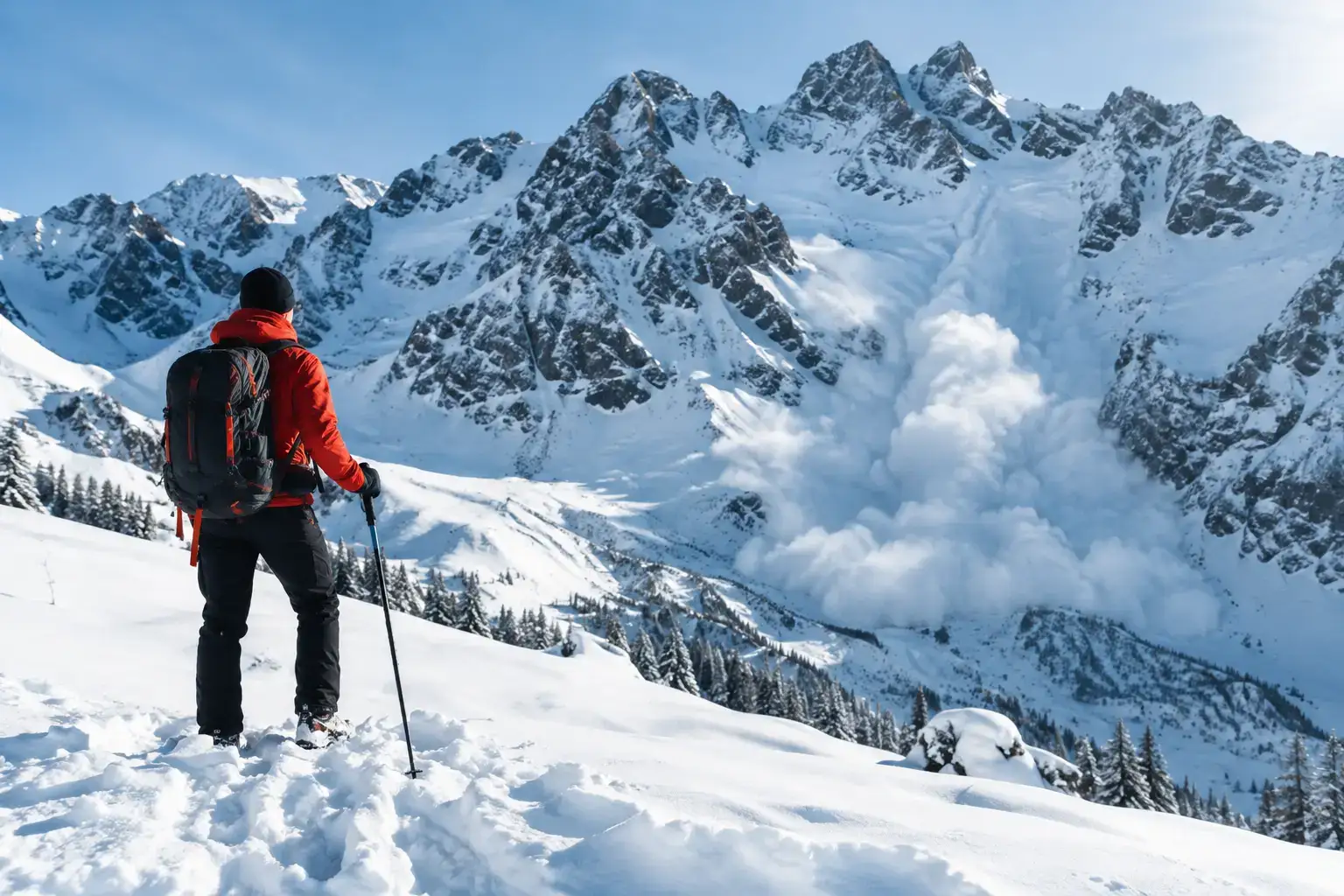
Avalanches in the Tatras do not forgive a rush. Check the bulletin, the weather, the ground and the decisions that help you get back safely from a ski tour or a hike.
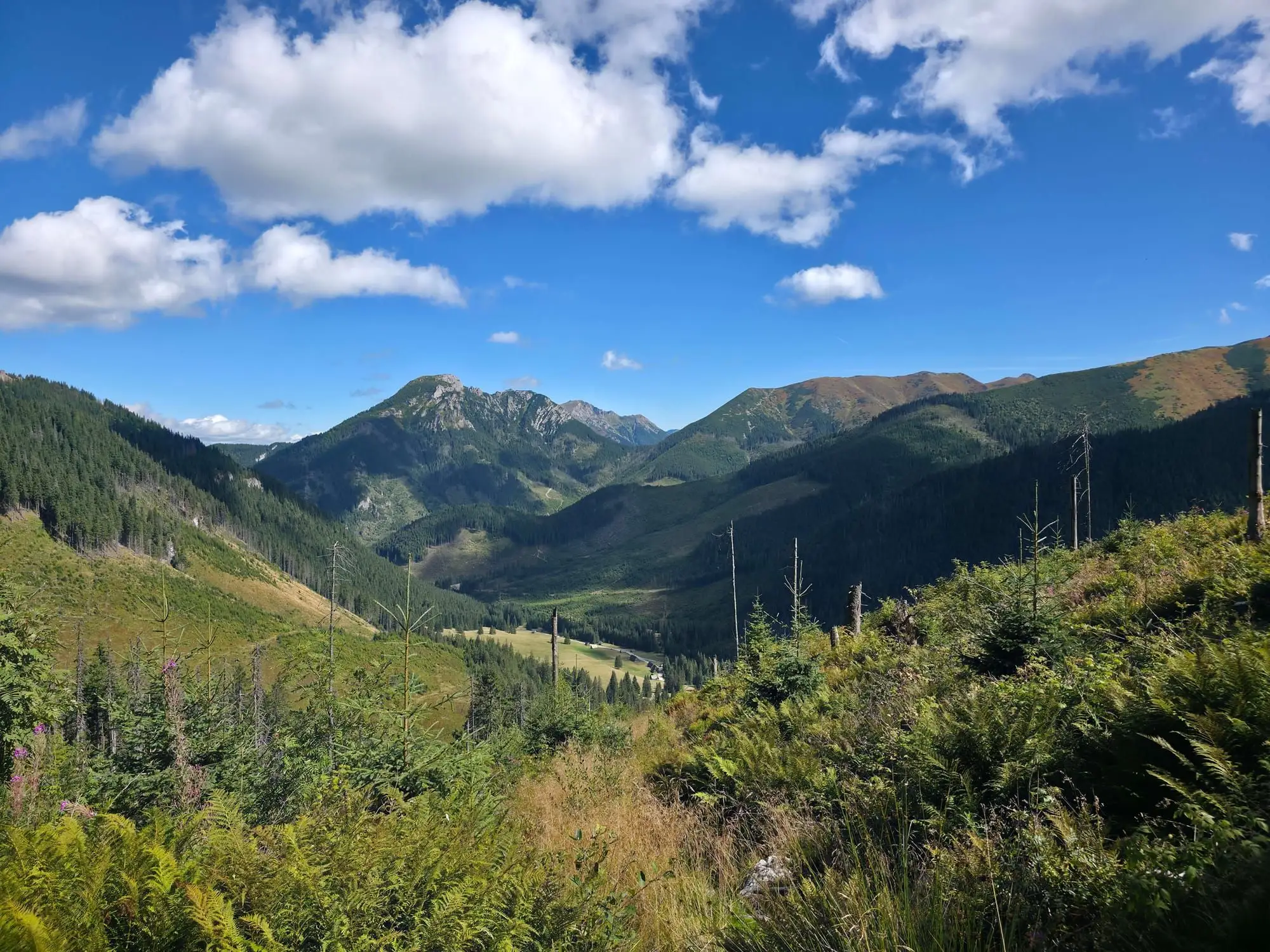
Start: Siwa Polana (Chochołów Valley) · via Panorama of the Slovak Roháče and The mountain hut at Chochołów Glade
Start: Kuźnice · via Murowaniec mountain hut and Czarny Staw Gąsienicowy
Start: Siwa Polana (Chochołów Valley) · via Panorama of Jakubina and Cliffs above Jamnicka Valley
These are affiliate links. If you book a stay or a ticket through them, we earn a small commission, for coffee :), at no extra cost to you.