Czerwone Wierchy have a deceptive kind of difficulty. On the map it is “just” a broad ridge, with no climbing and no chains on most variants. In practice it is a long high-mountain outing, where weaker fitness, wind, or one unsure person in the group can turn a beautiful day into a slow countdown to the descent.
It is a superb trail for the views, but it is not a good place to test whether a friend who “sometimes walks in the woods” likes the mountains. Czerwone Wierchy reward people who are prepared, and they mercilessly expose mistakes in planning. Especially when an ambitious plan meets a summer storm, fog, or a queue on the way down.
Czerwone Wierchy - difficulty depends on the variant
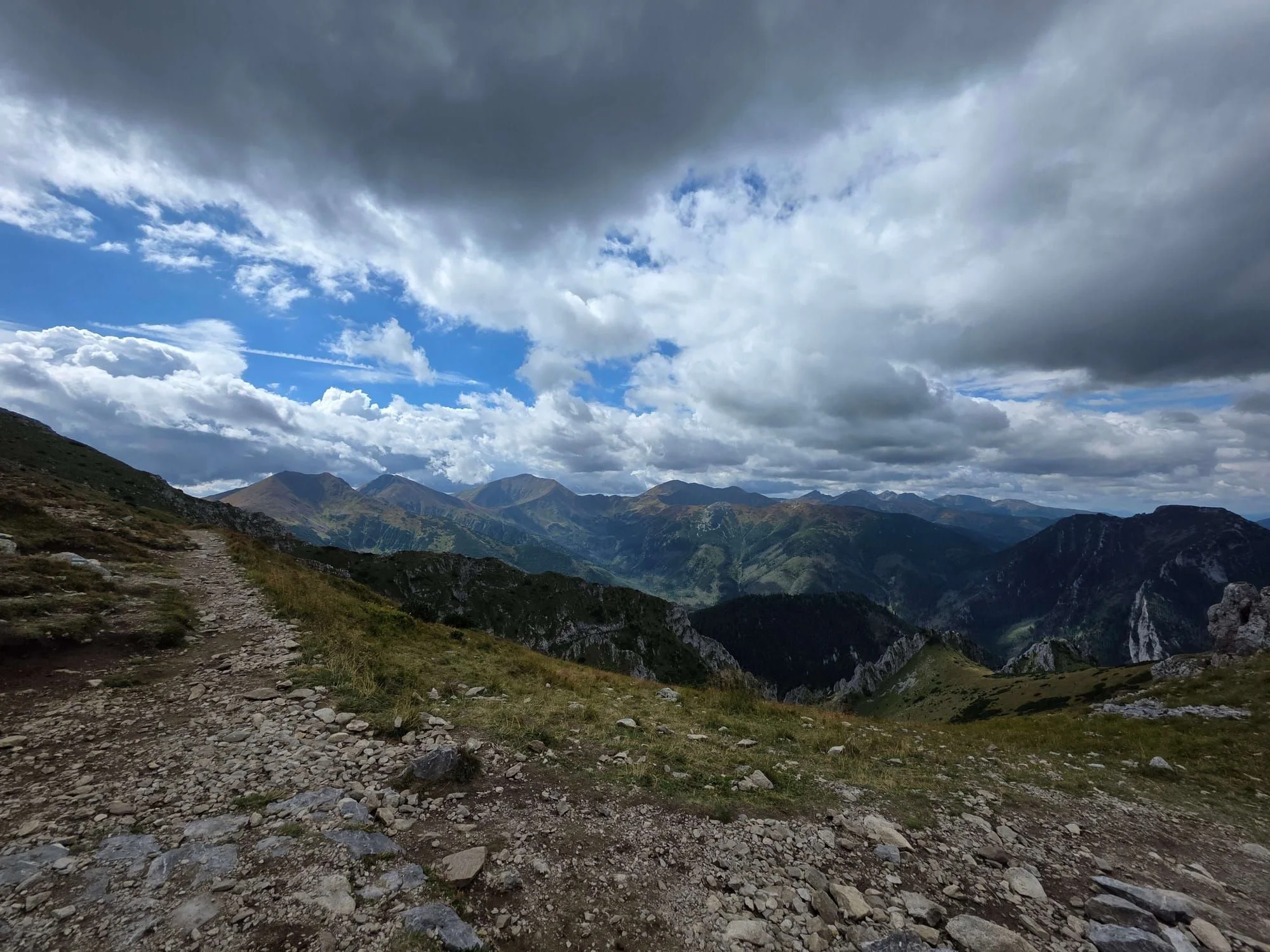
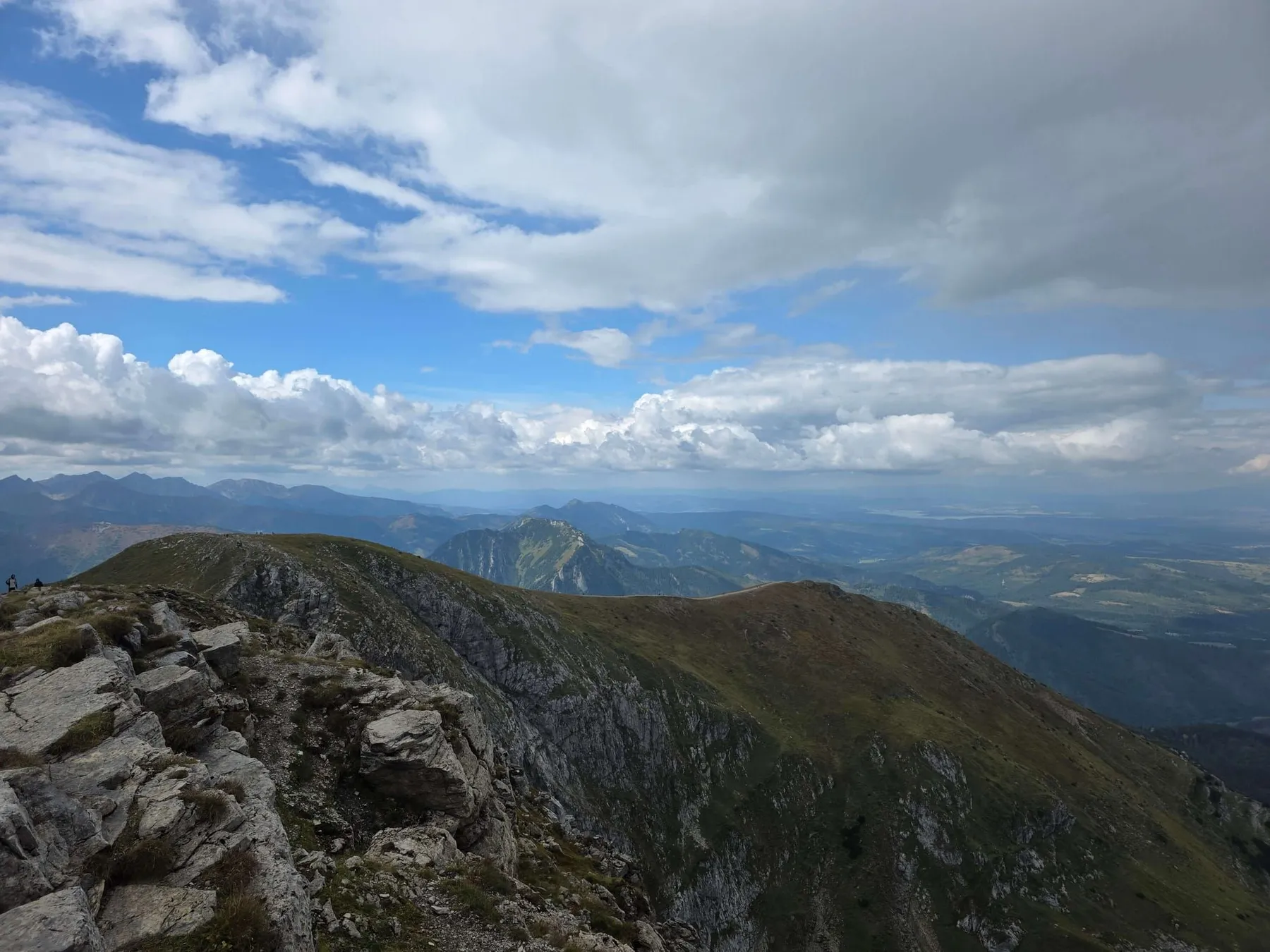
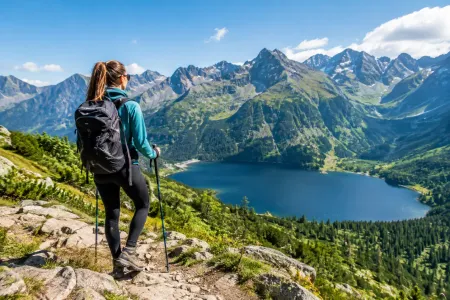
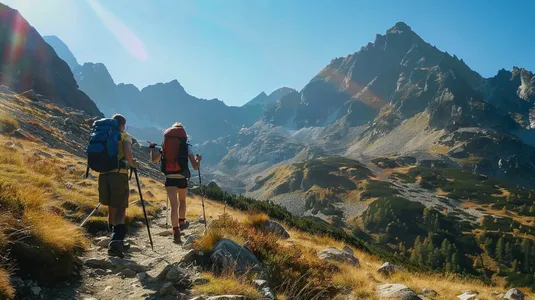
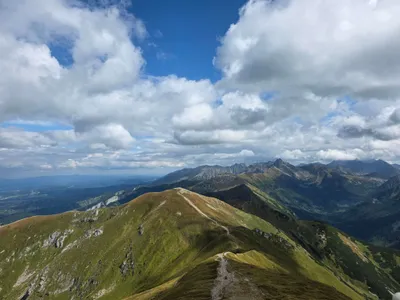
Czerwone Wierchy — the open ridge
Under the name Czerwone Wierchy sit four summits: Ciemniak, Krzesanica, Małołączniak and Kopa Kondracka. Crossing the whole ridge is a goal in itself, but the difficulty is decided more by how you go up and down than by the peaks themselves.
The classic variant from Kiry, over Ciemniak, along the ridge to Kopa Kondracka and down to Kuźnice, usually means about 18-20 km of walking and 7-9 hours on the move. For a fit person, on dry rock and in stable weather, it is a hard but very satisfying full-day trail. For someone without a mountain routine, it is too big an undertaking for a first trip to the Tatras.
From Dolina Małej Łąki, the climb of Małołączniak through Kobylarzowy Żleb can be shorter, but it is more technical. There are fixed protections and places where you have to use your hands. It is not a via ferrata and not a climb, but someone with a strong fear of heights can have a bad day. Worse still, in a crowd the pace is set by a human snake, and on wet rock every nervous yank becomes a stupid idea.
A gentler option is the approach towards Kopa Kondracka from Hala Kondratowa. You still have to gain a lot of height, and then decide: do we turn back, or add more kilometres of ridge? This variant is a good way to get a sensible feel for the terrain, without having to tick off the whole range at any cost.
What actually wears you out on Czerwone Wierchy
The biggest opponent is not technical difficulty, but the sum of the loads. The climb is long, the ridge is wide but exposed, and after many hours the descent can hurt more than the morning gain in height. Knees and calves will feel it most in people who only train on flat walks.
On the ridge there is nowhere to hide from the sun or the wind. In July you can overheat, in October you can get properly cold, and in a sudden weather collapse you can find yourself in cloud a long way from a quick descent. This is terrain where a forecast of “it may rain in the afternoon” should light a warning lamp, not encourage you to pack an umbrella.
It is also worth remembering that a broad ridge does not mean full peace of mind. In many places the slopes drop steeply, and the trail runs close to the edge. There are not usually vertical walls right under your boots, but in fog, a strong wind or ice the sense of exposure grows clearly.
Fitness: a minimum, not a sporting record
You do not have to be a mountain runner to walk Czerwone Wierchy. You do have to be able to go uphill for several hours, keep a pace, and keep a reserve for the descent. If after 800-1,000 m of ascent on an easy trail you have had enough, the full ridge will probably not be a pleasure.
A good test before a day like this is longer Tatras valley walks with a clear climb, for example routes to mountain huts or onto easier forest-belt summits. It is not about collecting kilometres. It is about checking how you feel after five hours on the move, whether you eat and drink regularly, and whether your shoes are still comfortable when your feet start to swell.
If you are going with a group, the plan is built around the weakest person. That is not a matter of politeness, it is safety. A fast friend can wait on the summit, but they cannot speed up someone else’s knees, dehydration, or fear after walking into cloud.
Technique and exposure: where you need a sure step
On the ordinary summer ridge variant you do not need climbing gear. You do need stable shoes with a good sole, the ability to walk over uneven rock, and a sensible pace. City shoes with a smooth tread are a poor joke here, especially on the descent over wet slabs.
Kobylarzowy Żleb needs more calm. The chain is there to help you keep your balance, not to haul your whole body when your legs are not doing the work. Before you go up, it is worth asking yourself honestly: in a similar place, can I plant a foot high, hold on, and move on without panic? If the answer is “I do not know”, pick a simpler variant.
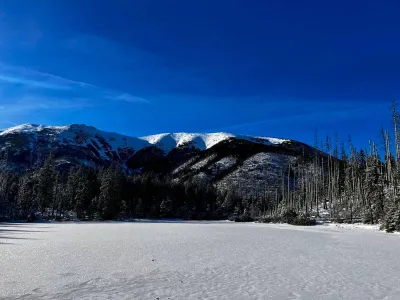
In winter, in spring, and with the first snow, the assessment changes completely. A summer trail may then need crampons, an ice axe, the ability to self-arrest, and real experience in avalanche terrain. Brown grass under a thin layer of snow looks innocent only until there is ice underneath. Do not treat photos from the internet as confirmation of conditions - they may be a week old, and in the Tatras a week is sometimes another season.
Weather can raise the grade by two classes
Czerwone Wierchy are excellent in a stable high and terrible on a stormy afternoon. The long ridge gives views of half the Tatras, but it also leaves you open to wind, lightning and getting lost in fog. When the forecasts show storms from midday, do not “try to make it”. Set off very early with a shorter plan, or skip the ridge.
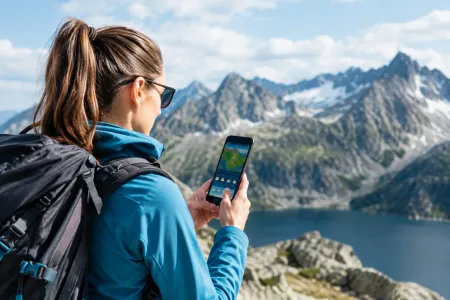
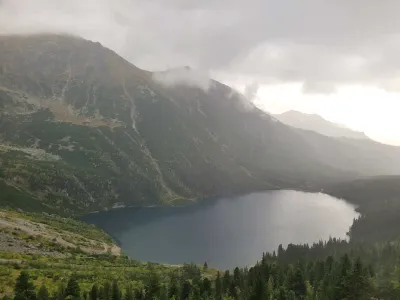
Fog is less spectacular than lightning, but it can be just as much of a problem. The trail on the crest is usually clear, but in poor visibility it is easy to lose your bearings, and cold and wind drain strength faster. An offline map, a charged phone, and the skill to use them are essential kit, not a gadget for obsessives.
The backpack should also get a warm layer, a rain jacket, spare water, food and a head torch. In summer a head torch can seem like overkill, until the group gets stuck on a long descent after a late start. On Czerwone Wierchy the time margin disappears faster than it seems.
Who this is a good goal for, and who should wait
The full crossing will be a good choice for a hiker who already has a few long mountain days in their legs, does not panic in open space, and can turn back without drama. It is also a great goal for a fit couple or group, provided everyone has similar ability. One person set on a fast pace and another fighting for every step is a recipe for conflict and unnecessary risk.
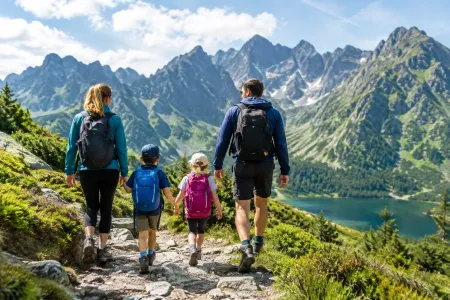
People recovering from injury, complete beginners, those who react badly to exposure, and families with children who are not used to walking for hours should wait. A child who bravely climbed Gubałówka does not automatically get a pass for Krzesanica. It is better to build experience in stages than to stage a mountain endurance exam.
There is no shame in going only as far as Kopa Kondracka, turning back before the weather worsens, or shortening the plan. The summits are not going anywhere. Fatigue, a storm and ambition, on the other hand, are very good at taking the joy out of a trail.
If in the morning you feel the weather is uncertain and the group’s form leaves question marks, pick a shorter goal and save Czerwone Wierchy for a day when everything lines up. The view from the ridge tastes best when you still have the strength to look at it, and are not just dreaming about the end of the descent.

 2026-09-18
 2026-08-02
 2026-09-14
 2026-09-19
 2026-09-16
 2026-09-15
 2026-09-13
 2026-09-10
 2026-08-30
 Distance: 19.1 kmDuration: 5 h 54 min
 Distance: 15.6 kmDuration: 8 h 27 min
 Distance: 11.1 kmDuration: 2 h 59 min