Accommodation in Zakopane near the trails - where to sleep?
The first alarm at 5:30 only makes sense if, after leaving your stay, you are not then stuck for another 40 minutes in a traffic jam to Kuźnice. Accommodation in Zakopane near the trails does not have to mean a guesthouse right by the forest. In the Tatras, more important than a straight-line distance are: the entrance to a specific trail, morning transport, parking, and whether after 20 kilometres of walking you still have the strength to walk uphill back to the apartment.
Zakopane is a great base, but it can also be a logistical minefield. In summer and on long weekends you can crawl through town at the pace of a tourist in flip-flops on the way up to Morskie Oko. So pick your stay around the hiking plan, not around a photo of a balcony with a view of Giewont.
Accommodation in Zakopane near the trails: pick a direction first
Before you book, answer one question honestly: which two or three outings are the real priority? Do not put five big trails into four days, because the weather and your form will quickly test that enthusiasm. One day there may be a storm, the next your legs will refuse to cooperate, and on the third a queue for the cable car can take the humour out of the trip.
Kuźnice and around Rondo Jana Pawła II
This is the most convenient part of town for people aiming at Kasprowy Wierch, Hala Gąsienicowa, Murowaniec, Czarny Staw Gąsienicowy, Boczań, Skupniów Upłaz or Dolina Jaworzynki. Staying near Kuźnice lets you walk out early on foot, instead of counting on a bus or hunting for a parking space that may already be gone by 7:30.
There is a price. Literally - this location usually costs more - and in practice: after an ambitious day you come back to a busy, touristy part of Zakopane. If you want restaurants, shops and easy access to the centre, it is a sensible compromise. If you dream of quiet, the city noise can effectively remind you that you are not sleeping in a shepherd’s hut.
An important point: being close to Kuźnice does not automatically make a trail easy. The climb to Kasprowy or heading onto Orla Perć is still a serious mountain plan, not a stroll along Krupówki. A stay can save time, but it will not replace fitness, a forecast and common sense.
Jaszczurówka, Olcza and Cyrhla
The north-eastern edges of Zakopane work well for people who prefer a quieter base and plan trails from Wierch Poroniec, Palenica Białczańska or Toporowa Cyrhla. It is also a decent choice when you want a quick drive towards Bukowina Tatrzańska, Łysa Polana and the Slovak side of the Tatras.
Cyrhla is especially convenient for heading up Kopieniec Wielki and for less crowded approaches towards Hala Gąsienicowa. Let us not kid ourselves, though: “close to the trail” here often means “further from evening pizza and a shop”. Check the slope of the walk up to the building, especially in winter. A wheeled suitcase on an icy, steep drive is a poor warm-up for a holiday.
Krzeptówki and the west side of Zakopane
If your plan includes Dolina Strążyska, Mała Łąka, Dolina Kościeliska, Chochołowska or a climb of Czerwone Wierchy, look at Krzeptówki, Skibówki and the area around Droga pod Reglami. You get a more convenient start onto the western trails and usually a quieter evening than in the tight centre.
This is a good base for families and people who do not intend to gain height every day. Dolina Strążyska, Sarnia Skała or a walk along Droga pod Reglami can fill a day when the weather window is short. But if the next morning you want to head for Morskie Oko, the location stops being so helpful - you face a drive through town and on towards Palenica.
The centre - convenient, but not always mountain-ready
A stay in the centre of Zakopane is practical for people without a car, arriving by train, or wanting buses in different directions. You have shops, pharmacies, food and transport to hand. That is a real advantage, especially when the weather kills a high-mountain plan and you have to invent an alternative fast.
The downside is the time it takes to walk or drive to most trailheads. The centre works as a universal base for a mixed holiday, not as a choice for someone who wants to walk straight into the hills at dawn every day. In season there is also noise. If after a mountain day you need sleep, read reviews of the specific room, not only of the whole place.
What to check before you book a stay
The line “10 minutes from the trail” can be a creative form of literature. Sometimes it means 10 minutes by car with no traffic, sometimes it means walking into the woods, from which there is still half an hour left to the real trail. Instead of believing the advert, check the walking route on a map and set a departure time similar to the hour you will actually leave for the mountains.
Before you pay a deposit, look at four things:
whether parking is guaranteed for every room, and not “subject to availability”;
whether you can reach the nearest stop or trailhead without marching along the verge of a busy road;
whether you can dry shoes, a jacket and a backpack after a wet day;
whether breakfast is available early enough, or you will get food to take with you.
The last point sounds trivial until you are standing at 6:20 in front of a closed dining room with a plan to climb Rysy. On a long trail a sensible start is worth more than a big breakfast at 8:30. It is also worth asking about a late return and a place to leave wet gear. In small guesthouses the owners are often more flexible about this than big apartment blocks, but do not assume that without asking.
Car, buses or your own legs?
A car gives freedom, but in Zakopane it easily turns into a parking problem. At popular trailheads spaces vanish fast, and coming back in the afternoon does not automatically mean an easy drive out. If you choose a stay for the trails, do not look only at the kilometres to the car park. Judge whether you can set off on foot or take a bus with no changes.
For trails from Kuźnice, a stay that lets you walk there is often best. For Dolina Kościeliska and Chochołowska it is worth considering the west of town or nearby villages if you do not care about evening Zakopane. And for Morskie Oko, Dolina Pięciu Stawów and trips to Slovakia, a well-placed base on the road towards Bukowina can save a lot of nerves.
If you are travelling without a car, check connections after 18:00 as well. Mountain outings do not always finish on schedule. A change in weather, a slower friend, or a queue on a harder section can push the return back. Do not plan the day so tightly that the last bus is the only rescue option.
Close to the trail does not mean close to the goal
This is a mistake beginners make regularly. A stay at the entrance to Dolina Kościeliska does not make Czerwone Wierchy a short outing. Likewise, a room in Kuźnice does not turn Świnica into a spontaneous afternoon destination. The Tatras count climbing time, ascent, exposure, conditions and the pace of the weakest person in the group.
A good stay should give you energy and a logistical buffer, not excuse an overloaded plan. If the forecast shows storms from midday, use being close to the trail for a very early start, or pick a valley. The high parts of the mountains in a downpour and thunderstorms are not “an adventure”. They are stupidity, for which you sometimes pay far more than a wasted holiday day.
The best base is the one from which you set off in the morning without a nervous sprint, and in the evening have somewhere to rest, dry your gear and change the plan when the Tatras say “no”. Choose a stay around your actual trails, leave a time margin, and remember: the view from the window is nice, but a morning start without traffic jams is often much more valuable in Zakopane.

 2026-08-20
 2026-08-02
 2026-07-13
 2026-09-18
 2026-09-17
 2026-09-16
 2026-09-15
 2026-09-14
 2026-09-13
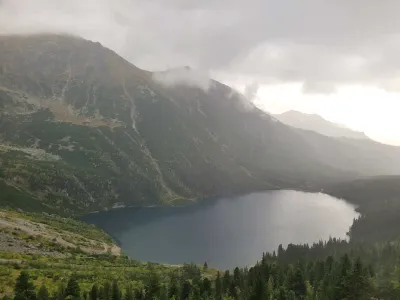 Distance: 19.1 kmDuration: 5 h 54 min
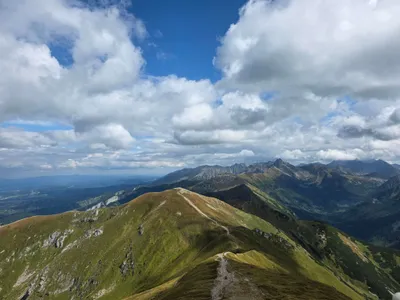 Distance: 15.6 kmDuration: 8 h 27 min
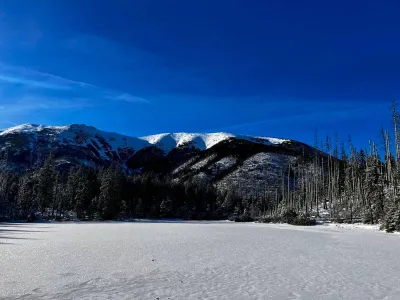 Distance: 11.1 kmDuration: 2 h 59 min