Is Orla Perć hard? Yes — and it is not only about the famous ladder or a few stretches with chains. The difficulty of this route comes from the mix of exposure, length, the need for constant focus, and weather that in the High Tatras can turn an ambitious plan into a very bad idea in a few minutes. This is not a walk for every fit hiker. It is a full-day mountain job for someone who knows how they react to a drop under their feet and does not turn tiredness into bravado.
What does the difficulty of Orla Perć really mean?
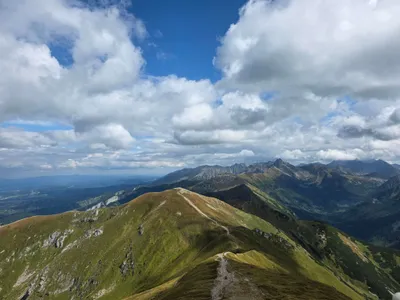
Orla Perć is a demanding ridge trail running between Zawrat and Krzyżne. On the map it can look like another ambitious Tatra route. On the ground it quickly shows why it has a reputation as one of the hardest marked paths in Poland.
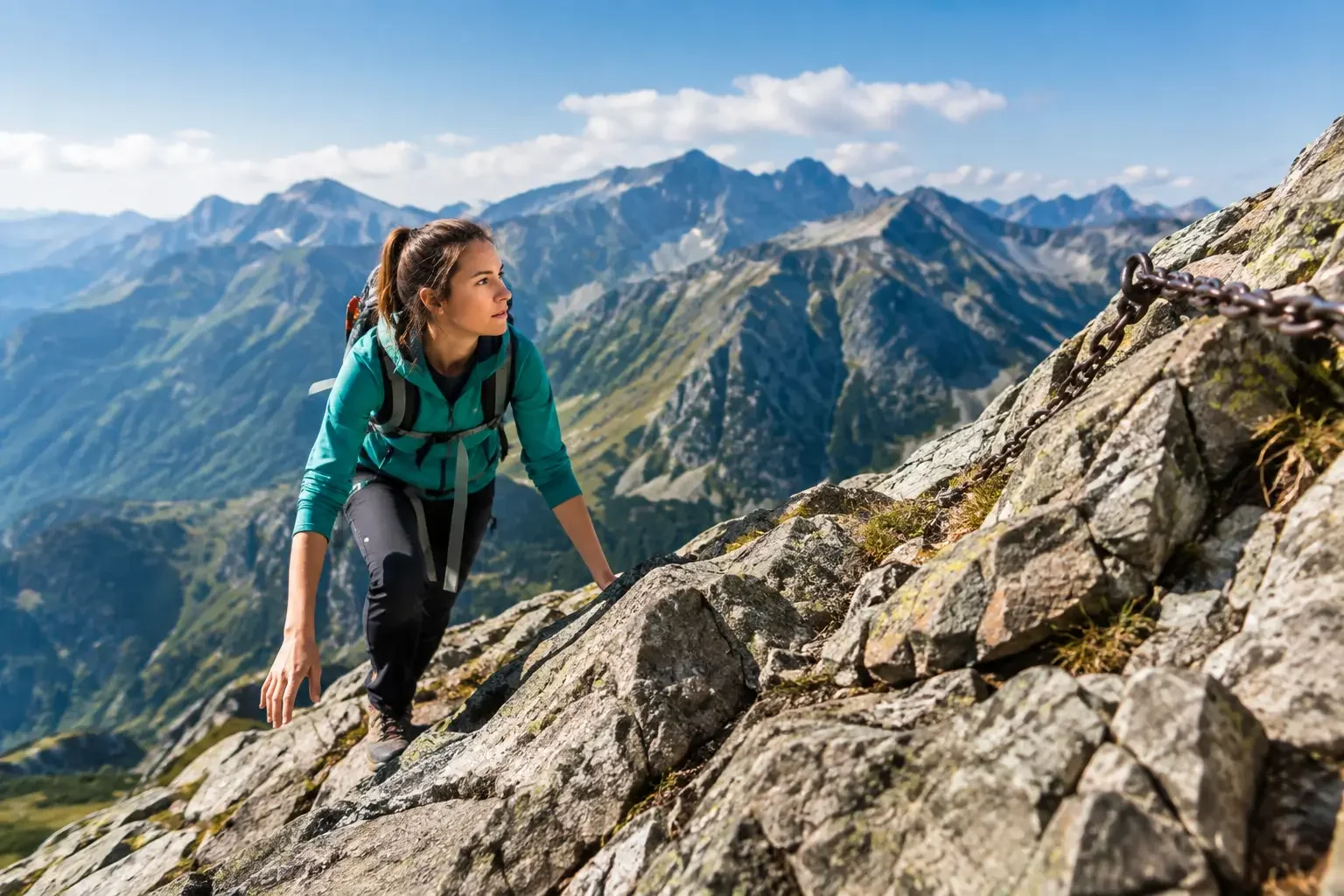
You do not need climbing skills or a rope here. You do need sure footing, working hands and a head that does not refuse to cooperate when both sides of the path get very steep. On many stretches you move over rock and use chains, staples and ladders. In places the terrain means a high step, lowering yourself down the rock, or squeezing through a narrow gap when there is a real void under you.
The key point: the difficulty is not one place to tick off. Orla Perć wears you down for many hours. Even if you get through the first protected climb without trouble, after a few more hours tired legs and hands may have another opinion. And the nearest easy descent is usually not close then.
Exposure is a bigger test than the chains
A chain on its own does not make a trail extreme. In the Tatras you will meet one on other popular routes too. On Orla Perć the difference is the scale and continuity of the exposure. There are places where the chain helps in vertical or steep terrain, and under your feet you have little more than rock and air.
If on Giewont, Rysy or Kościelec you feel clear discomfort, Orla Perć is unlikely to cure it. It will be longer, more demanding mentally and less forgiving of a moment of panic. Someone who clings to the chain, blocks the passage, quickly loses strength and stops controlling their feet puts at risk not only themselves. On a narrow ridge a human snake often forms behind them.
Fitness has to work at the end of the day as well
A full crossing of Orla Perć is not a sensible goal for a first ambitious day in the Tatras. The ridge section alone usually takes many hours, and you still have to get to Zawrat and descend from the Krzyżne area, or the other way around. The time of the outing depends on the variant, pace, queues at hard spots and conditions, but you have to look at a full day very honestly.
Do not plan this by your pace on a flat route or memories of Dolina Kościeliska. Before Orla Perć it is worth having several long outings with a lot of climbing behind you, ideally on rocky ground. Good fitness here means the ability to place your feet safely after eight or nine hours, not only a fast ascent at the start of the day.
Orla Perć - is it hard for beginners?
For a beginner hiker the answer is: usually too hard. And there is no shame in that. A beginner can be in excellent shape and still have no familiarity with exposure, moving on wet rock or passing other people on a protected stretch. The gym, running and cycling give a strong base, but they do not teach staying calm above a drop.
If you are still building Tatra experience, start with trails that let you get used to height and rocky ground without hours of pressure. A good stage is often a climb of Szpiglasowy Wierch, Kościelec or Rysy in stable conditions, if their level matches your current ability. This is not about ticking a prestige ladder. It is about checking whether in harder terrain you still make calm decisions.
The full Orla Perć can be a good goal for a fit hiker with High Tatras experience. It does not have to be a must for anyone. There are plenty of views, satisfaction and ambitious trails in the Tatras off this ridge as well.
When does Orla Perć become really dangerous?
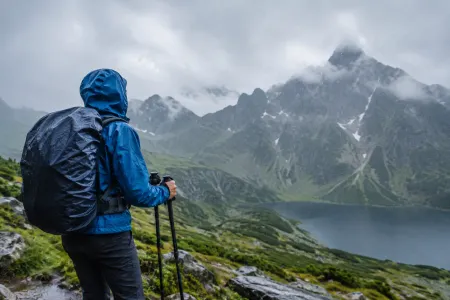
On dry rock, with good visibility and little traffic, the difficulty of Orla Perć is still high, but the conditions favour a safe crossing. In the rain, after a night frost, in a strong wind or in fog the situation changes radically. Wet rock is slippery, metal protections can be treacherous, and the visibility you need to read the terrain disappears.
A storm is not a variant to wait out under a chain. The ridge is exposed, and metal fittings and the proximity of the summits are not a place where you want to negotiate with lightning. If the forecast shows a risk of storms from midday, setting off at 9:00 in the hope that “we will somehow make it” is a plan based on luck.
It is also worth remembering snow and ice. In the in-between seasons Orla Perć can require winter gear and the skill to use it. Tourist microspikes bought at the car-park till do not turn an icy ridge into an easy trail. Without winter experience, pick a lower route then or skip the outing.
Before you go, check the current state of the trails, Tatra National Park notices and the forecast for the high parts of the mountains, not for the centre of Zakopane. Sun on Krupówki says nothing certain about what is happening below Zawrat.
Direction of travel matters
On Orla Perć there are one-way restrictions on selected sections, so the plan has to follow the current organisation of the trail. Most hikers cross the ridge from Zawrat towards Krzyżne, which lets you move with the logic of the markings and the flow of other people. The specific rules can change, so do not go from memory based on a report from a few years ago.
Choosing a shorter variant is not a failure. The Zawrat–Kozia Przełęcz stretch or an outing around Kozi Wierch can give strong impressions, but they still need a sensible descent plan. On routes like these, “we will see along the way” often means you only make the decision when you are already tired and far from an easy retreat.
How to prepare without pretending to be a Himalayan climber
The base is shoes with a sticky sole that you know from longer outings. New, stiff boots tested for the first time on Orla Perć are a classic way to get blisters and a bad mood before the hardest stretch. Light gloves for the chains help, though they will not replace technique or caution. The backpack should be as light as possible and well fitted — a big, swinging load gets in the way when squeezing through and throws off your balance.
Take water and food, an extra clothing layer, a charged phone and a paper map or an offline map. A helmet is not compulsory, but it makes sense, especially in heavy traffic and with a risk of falling stones. Do not count on turning back quickly when it gets crowded or the weather starts to turn.
The best preparation starts the evening before you go, though. Check the route, the time to get there, the descent, an exit variant and the hour of the forecast weather breakdown. Also agree a simple rule in the group: anyone can say “I am not going further” without an argument and without jibes. That kind of message saves the day more often than the most expensive jacket.
If you look at Orla Perć with a mix of excitement and sensible respect, that is good. Pick a stable day, set off early, do not race the clock and leave ambition in the car park when the conditions stop being good. The Tatras are not going anywhere, and coming back from an outing with a sense of unfinished business is far better than coming back in a helicopter.

 2026-08-30
 2026-08-02
 2026-01-04
 2026-09-24
 2026-09-23
 2026-09-21
 2026-09-20
 2026-09-19
 2026-09-18
 Distance: 18.5 kmDuration: 8 h 09 min
 Distance: 24.7 kmDuration: 7 h 38 min
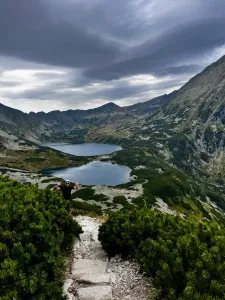 Distance: 16.5 kmDuration: 5 h 45 min
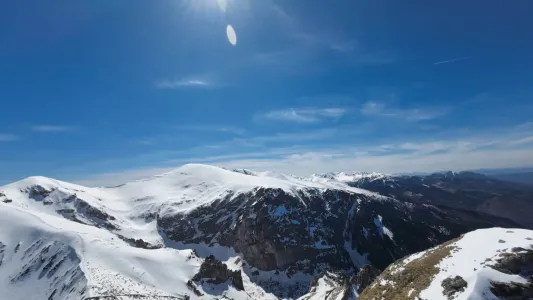 Distance: 6 kmDuration: 3 h 15 min
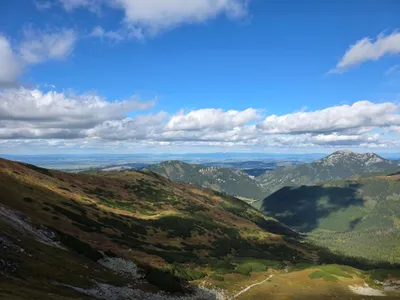 Distance: 18.1 kmDuration: 6 h 50 min