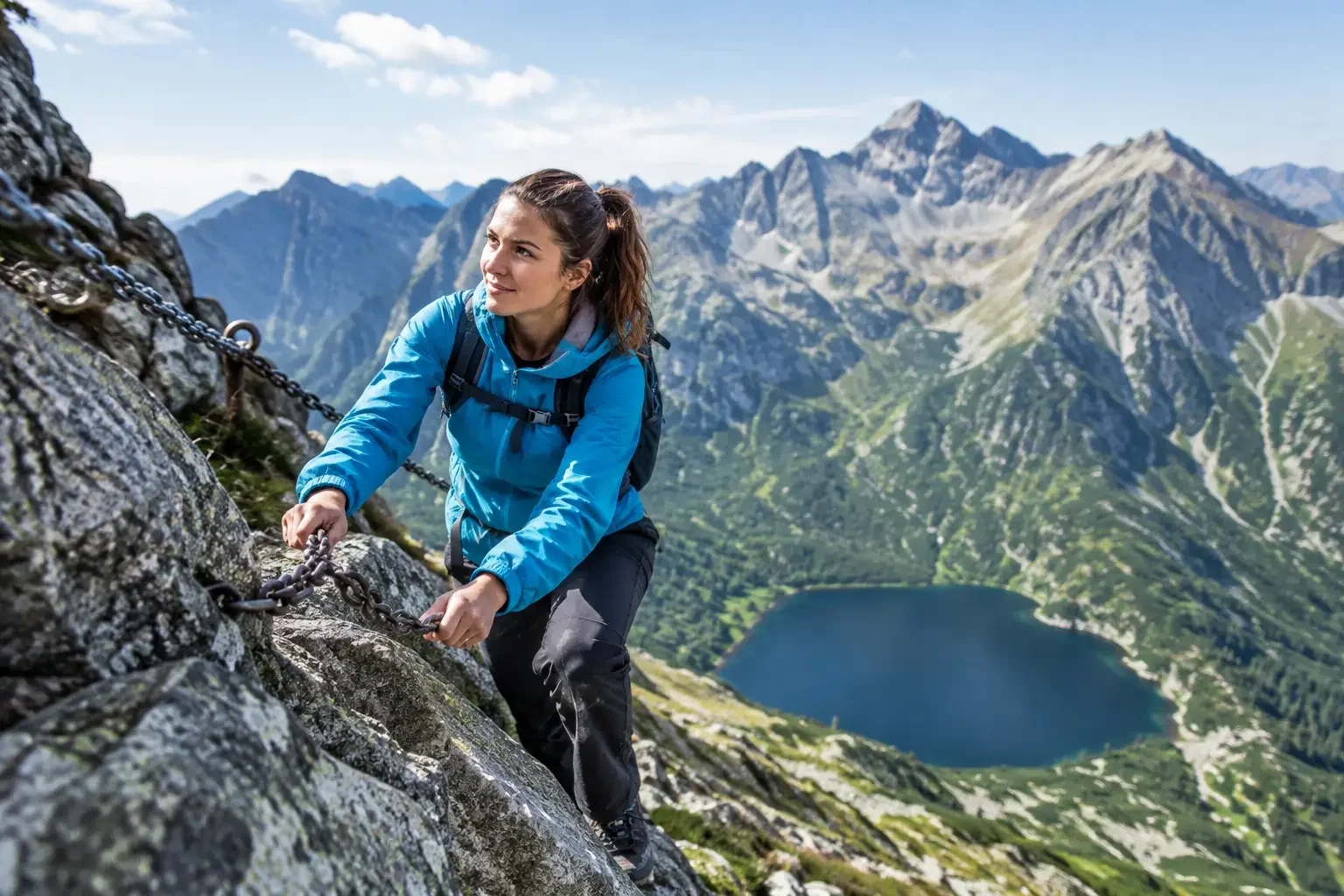
You are standing under a slab of rock, a metal chain above you, and someone already waiting behind. That is the moment when chains in the Tatras for beginners stop being a curiosity from a trip report and start requiring a calm head, a sure step, and a sensible decision. You do not have to be a climber. You do have to know why you are there, and when to tell yourself: not today.
A chain is not an attraction in itself, and it is not a badge of mountain courage. It is protection fixed where the trail crosses a steep, slippery, or exposed piece of rock. It is there to help you keep your balance. It does not turn difficult ground into a stroll down Krupówki, and it will not save you from a slip if you are walking in the rain, in a panic, or in shoes with a smooth sole.
Chains in the Tatras for beginners: an honest check first
The important question is not “can I grab the chain?”. Most healthy people can. The question is whether you can walk uphill for several hours, stay focused once you are tired, not freeze with fear above a drop, and get back safely when conditions turn.
A first meeting with chains makes sense if you have already walked a few longer Tatra routes without trouble over fitness, route-finding, or pace. Valleys, approaches to the huts, Kasprowy Wierch from Hala Gąsienicowa, or Czerwone Wierchy in good weather build a base. They do not teach you rock technique. If your legs are cotton wool after three hours of walking, picking a route with exposure is not an ambitious plan. It is adding risk to tiredness.
Fear of heights is a separate matter. Not everyone has it, but many people discover it only when they have to put a foot on a narrow ledge with a lot of air beside them. There is no shame in that. The shame would be dragging on a partner who is shaking, crying, or no longer reacting clearly, because “we have already come this far”. The mountains do not award points for ignoring your own limits.
What difficulty with chains actually means
Chains are often short, but a section can be demanding for several reasons at once. The rock can be wet and polished by thousands of boots. There can be a crowd. Above or below there can be exposure: ground where a mistake does not end in an ordinary bruise.
Direction matters too. Something you climb with reasonable confidence can look much more serious on the way down. Downhill you see the steps less well, it is easier to lock your knees, and the reflex is to hang from your arms. Read the route description to the end. “There are chains” is not enough. Check exactly where they are, whether you use them going up or down, how long the whole day is, and where you can turn back.
Szpiglasowa Przełęcz can be a reasonable first serious contact with fixed aids, but only for a fit person used to a full day’s walk, in stable conditions. It is not a plan for the first day in Zakopane after an overnight journey. Giewont, on the other hand, tempts you because the town is close, and in season it can turn into a human snake. Queues, nervous overtaking, and people stopping in the worst possible place take away its whole pretend “easy” character.
Rysy, Orla Perć, Kościelec, or the approaches to more exposed Slovak passes are not a training ground for someone who is only finding out whether chains suit them. A summit photo does not show shaking legs, an afternoon storm, or a jam in which you have nowhere to turn around.
How to walk a section with chains
Before you step on, stop for a moment and look at the rock, not only at the chain. Find the next footholds with your eyes. The chain is support for your balance, not a rope you hang your whole weight from. If you haul yourself up on your arms, you lose strength quickly, and your legs, which are much stronger, stop doing the work they should.
Go slowly and keep three points of contact: two feet and one hand, or two hands and one stable foot. Before you shift your weight, check that the sole is actually on rock, not on grit, wet moss, or a loose stone. Do not grab the chain far ahead of you just because it looks more secure. It is often better to hold it closer to your body and make a shorter, controlled move.
Do not try to do several things at once. Do not adjust your pack in the middle of a hard section, do not pull out your phone, and do not explain to the person behind you where to put their foot. Get to a safer place first. The photo can wait. Gravity will not.
If you are with someone less experienced, keep a gap. Do not stand one person directly under another, especially in a gully or under a steep wall. A kicked stone, a slipped boot, or a nervous swing of a pack is enough for one person’s problem to become the whole group’s.
Gear that helps, and gadgets that only pretend to
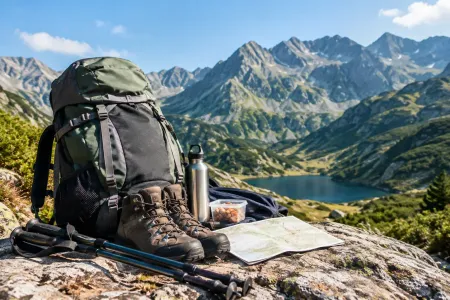
What matters most is a pair of hiking boots with a grippy sole, chosen to fit. They do not have to be armoured and heavy, but they should be broken in, stable, and hold the foot. Trainers that are fine on a dry pavement can be a disaster on wet limestone or granite.
Gloves can make the grip more comfortable, especially when the chain is cold, wet, or the metal rubs your hands. Thin work gloves or cycling gloves are enough, as long as they do not kill the feel. They are not compulsory, and they do not replace technique. Plenty of people walk the chains with bare hands and no trouble.
A helmet, harness, and via ferrata lanyard are not standard kit on waymarked Tatra trails with chains. Do not buy them in the belief that a set of metal will automatically make you safe. On a normal trail there are often no anchors where you could use them sensibly, and fumbling with the gear only slows you and everyone else. If you want via ferrata, learn the rules separately, on a route built for it.
Do take a rain jacket, a warm layer, water, food, and a charged phone with an offline map. That sounds obvious, until you are under a pass, the wind has taken the warmth, cloud is on the ridge, and the car is still several hours away.
Weather and crowds can cancel a good plan
Dry rock, clear views, and a quiet morning are the conditions in which a beginner has the best chance of concentrating on the moves. Rain changes the game at once. Wet chains are slippery, the rock loses grip, and the cold takes the strength out of your hands. Going high in a downpour only because the bed is already paid for is not toughness. It is a bad idea.
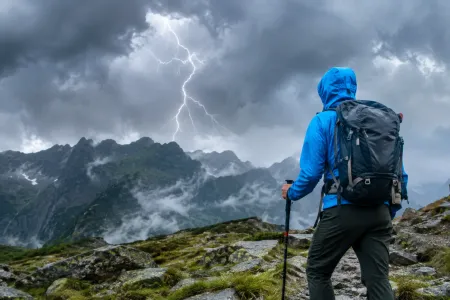
Take a storm forecast even more seriously. A chain is metal, but even without one, ridges, passes, and open slopes are a terrible place in a thunderstorm. Plan so that the hardest section is in the morning, not at the hour when the forecast starts flashing lightning. If the weather speeds up, do not try to speed up on slippery rock. Turn back.
In season, start early. Not only for the quiet and the light over the tarns. An early start gives you spare time, a smaller crowd, and a calm way to retreat. When a few dozen people are waiting in front of the chains, do not push through and do not climb onto someone’s pack. Wait, or leave it. That particular summit is not going anywhere, and you are not a part on a production line for collecting peaks.
When to turn back without an argument
Turning back is the right decision when the rock is wet, visibility drops badly, you hear thunder, someone in the group is clearly panicking, or you can feel you do not have the strength for a safe descent. The same applies when a jam on the trail eats the time you need to be down before dark.
Do not wait until the situation is unmistakably bad. By then the choice is often made for you. The best moment to turn around is usually a little earlier than ambition suggests. The Tatras will be here tomorrow, next month, and next year. Come back from your first meeting with the chains with a sense of control, not with a story whose main point is that “it somehow worked out”.

 2026-09-22
 2026-10-03
 2026-10-02
 2026-10-01
 2026-09-30
 2026-09-28
 2026-09-27
 2026-09-26
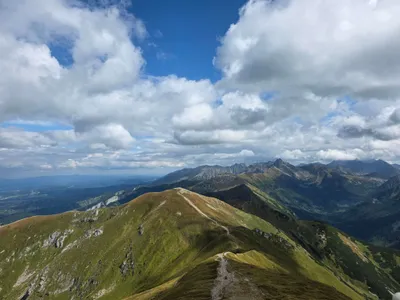 Distance: 18.5 kmDuration: 8 h 09 min
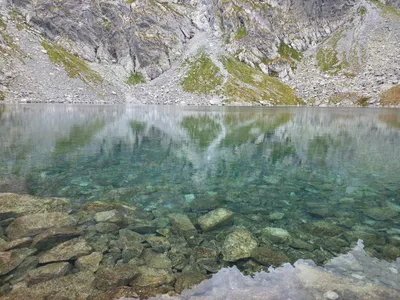 Distance: 24.7 kmDuration: 7 h 38 min
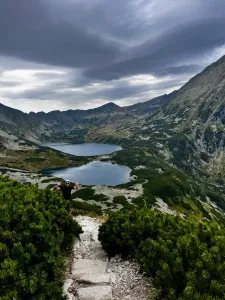 Distance: 16.5 kmDuration: 5 h 45 min
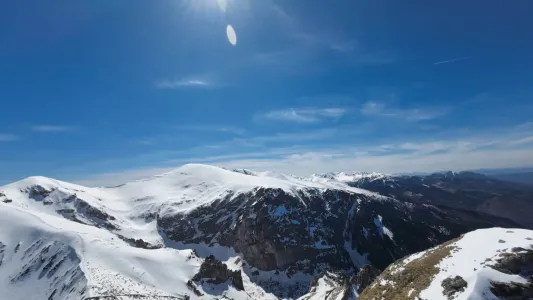 Distance: 6 kmDuration: 3 h 15 min
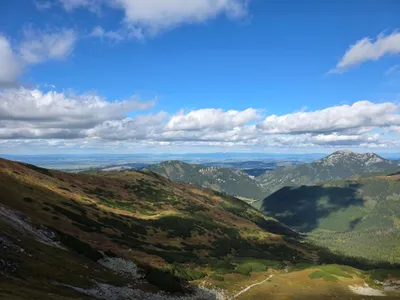 Distance: 18.1 kmDuration: 6 h 50 min