gear
How to choose trekking poles for the Tatras?
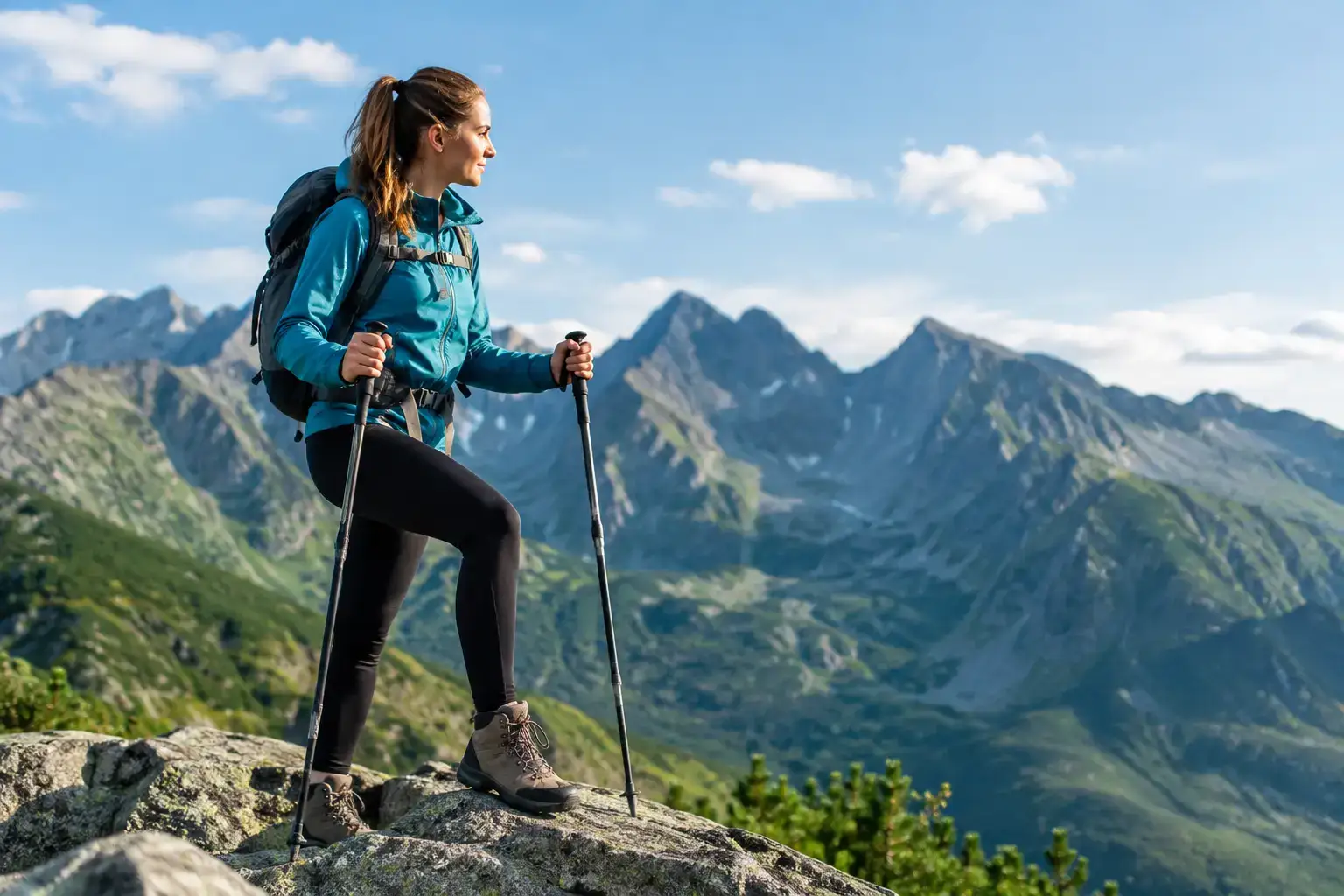
How to choose trekking poles for the Tatras? Check the length, the material, the lock and the tips before a valley, a pass, or a wet descent.
Do you need a helmet in the Tatras? See which trails it protects your head on, when it is a sensible choice, and why it does not replace judging the conditions before you leave.
Author: Konrad Leśniak7 min read
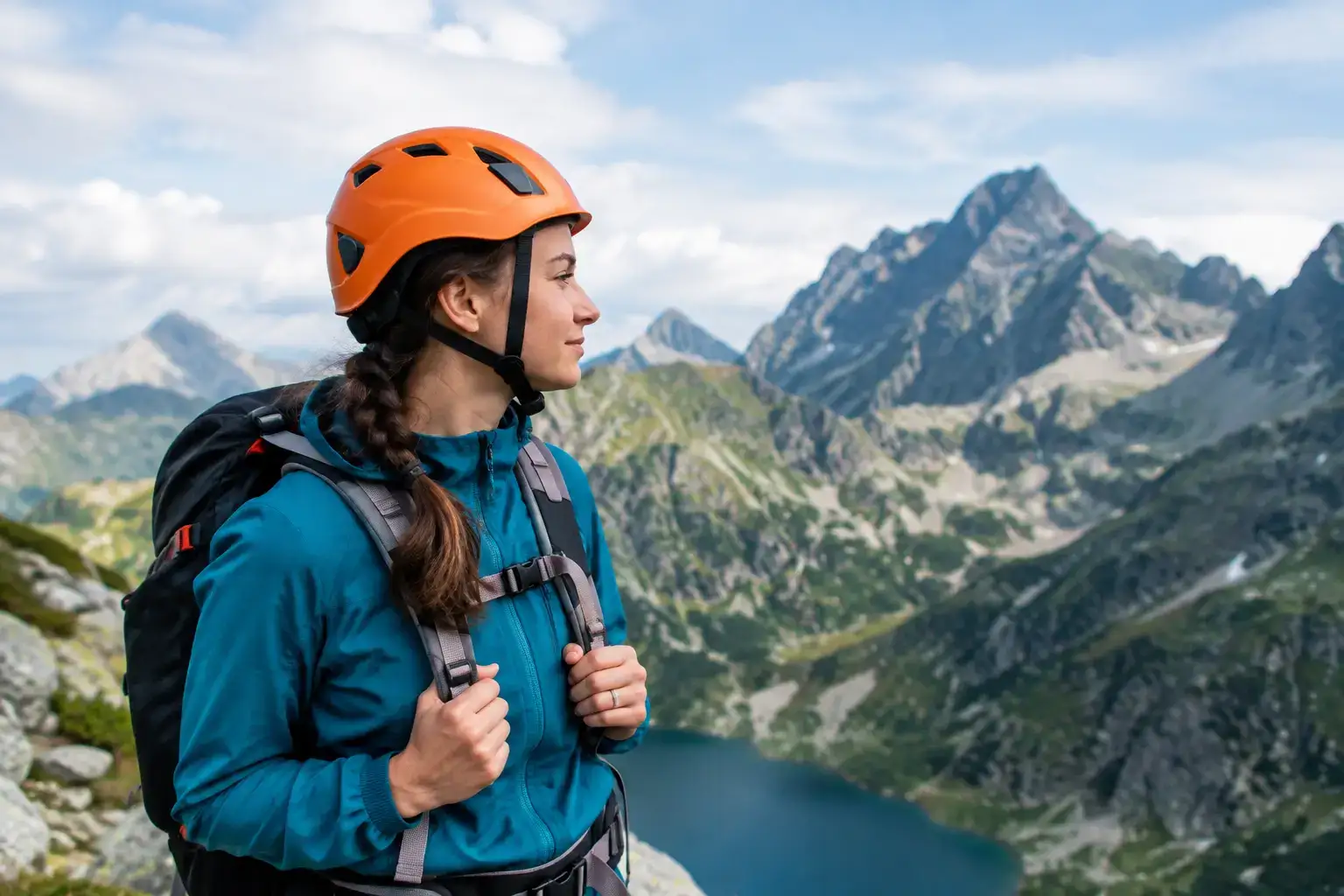
On the trail below Czarny Staw you see a group in helmets, and suddenly the question appears: do you need a helmet too? The answer is neither “always” nor “never”. In the Tatras a helmet is not a compulsory extra in every pack, but on some routes it is one of the most sensible kilograms you will carry. Especially when people are walking above you, the ground is loose, and the group’s imagination stops at a photo with the chains.
On ordinary waymarked walking trails in the Polish Tatras there is no general duty to walk in a helmet. You will not get a fine for going without one into Dolina Pięciu Stawów, up Giewont, or even onto Orla Perć. That is a weak basis for a decision. The lack of a legal order only means that judging the risk stays on your side.
Climbing, and trips off ordinary walking ground, look different. There a helmet is part of the basic kit, like a harness, a rope, and the skill to use them. Do not turn a trip from Zakopane to Rysy into an alpine expedition. A walking helmet makes sense when it protects you from a specific danger, not when it is meant to look professional in the car park at Palenica Białczańska.
On popular Tatra routes the greatest danger is usually not your own fall from a height. A helmet gives no magic protection from that. The problem is stones knocked down by other walkers, scree that shifts, hitting your head on rock when you stumble, and situations where the group moves tightly on steep ground.
A helmet is worth serious thought on Orla Perć, on the climb of Kościelec, on Świnica, on Rysy from the Polish and the Slovak side, and on the steep, rocky sections of the Roháče. That includes routes with artificial aids, such as Czerwona Ławka or Przełęcz pod Chłopkiem on the Slovak side. Chains are not an automatic signal to “put a helmet on”, but they often come with steepness, loose stones, and people moving above you.
A particularly good moment to put a helmet on is the seasonal crush. In July and August a human snake can form on the climbs. One person shifts a stone with a foot, the next instinctively grabs the chain, and you are standing a few metres lower with your head exactly in the line of flight. That is not theory from a safety course. It is a very ordinary picture from the crowded Tatras.
Do not assume a well-known route always needs the same kit. The climb of Kościelec on a dry, quiet day with little traffic can be much less exposed to falling stones than the same section after overnight rain, at the weekend, and behind a group walking on each other’s heels.
Look up, not only at your feet. If a steep gully runs above you, someone is climbing on loose rock, or every few minutes you hear the characteristic knock of stones, the argument for a helmet becomes strong. When you are walking a wide, stable path through a valley, wearing one for eight hours can simply be unnecessary weight.
The worst version of preparation goes: “I have a helmet, so I can go”. You cannot. A helmet does not improve the grip of your sole, it will not teach you how to use your feet on rock, and it will not stop a storm. It will not make wet chains stop being slippery, or the exposure less stressful.
If someone in the group is about to enter a hard section for the first time, do not hand them a combat mission titled Orla Perć. It is better to choose a route matched to their experience, the conditions, and the time. In the mountains, most of the good decisions are made before you leave the accommodation, not under the first chain.
A helmet does not give you the right to walk under falling stones either. If on a steep section you see someone above you struggling with the descent, or kicking down small fragments, step out of the line if the ground allows it, and do not walk under their feet. Sometimes the safest decision is to wait a minute. The Tatras are not going anywhere, though the queue for the chains will probably have time to grow.
For demanding trails, choose a light climbing or mountain helmet with the right certificate. A cycling helmet, a ski helmet, or a building-site helmet is not a substitute. Each of them was designed for different impacts, different loads, and different conditions of use.
The fit matters most. The helmet should sit steadily on your head, not slide over your eyes, and not fly about when you shake it. Check the adjustment at home, not in the morning in the car park when everyone is already waiting. Fasten the strap under your chin. A helmet hanging on the pack protects you about as well as a first-aid kit left in the car.
Do not go by weight alone. A very light model is comfortable, but if it fits badly you will soon be adjusting it, taking it off, and putting it in the pack. Try it on with a hat or a headband too, if that is what you walk in on colder days. A high-mountain morning can be cold even in the middle of summer.
If the route has one hard, rocky section, you do not have to march in a helmet from hut to hut. Clip it securely to the pack, or stow it so it does not bang on the rock and catch on branches. Put it on before you enter ground exposed to falling stones, not only when you hear the first whistle overhead.
In a group, agree a simple rule: on steep climbs and in gullies you walk with gaps, you do not force your way past, and you do not stand under another person without a reason. These solutions are free, and they can cut the risk more than buying the most expensive kit.
For a child, a helmet can be a sensible extra even on a route that seems easy to an adult, if there are rocks, tight passages, and people overhead. Children are shorter, they lose concentration faster, and they trip on uneven ground more often. Again: a helmet does not turn a hard route into a family stroll.
Beginner adults can benefit from a helmet on an exposed, rocky trail too, provided the choice of route is not beyond them. If someone is afraid of heights, has trouble with balance, or has never moved on wet rock, do not solve that with kit. Choose a calmer goal and build experience step by step.
On valley walks, easy routes to the huts, and wide paths with no danger of falling stones, a helmet is usually not needed. Dolina Kościeliska, Dolina Chochołowska, the road to Morskie Oko, and most gentle climbs do not require extra kit only because you are going to the Tatras.
It is also worth counting the weight and the volume of the pack honestly. If you have a plan for an easy route, and you take a helmet “just in case”, but because of that you leave out a waterproof jacket, a warm layer, or spare water, the priorities are the wrong way round. The weather, navigation, and the right boots more often decide a safe return than a helmet used once a season.
Before you leave, look at the line of the route, the hard places, the forecast, and the number of people who may be on the trail. If the ground promises rock, loose stone, and movement overhead, take a helmet without a great philosophy. And when the conditions are uncertain, do not try to make up courage with kit. A sensible retreat still looks better than a report from a rescue.
Newsletter
A few times a year: trail conditions, closures, the best time to go and new routes. No weekly spam.
How to choose trekking poles for the Tatras? Check the length, the material, the lock and the tips before a valley, a pass, or a wet descent.
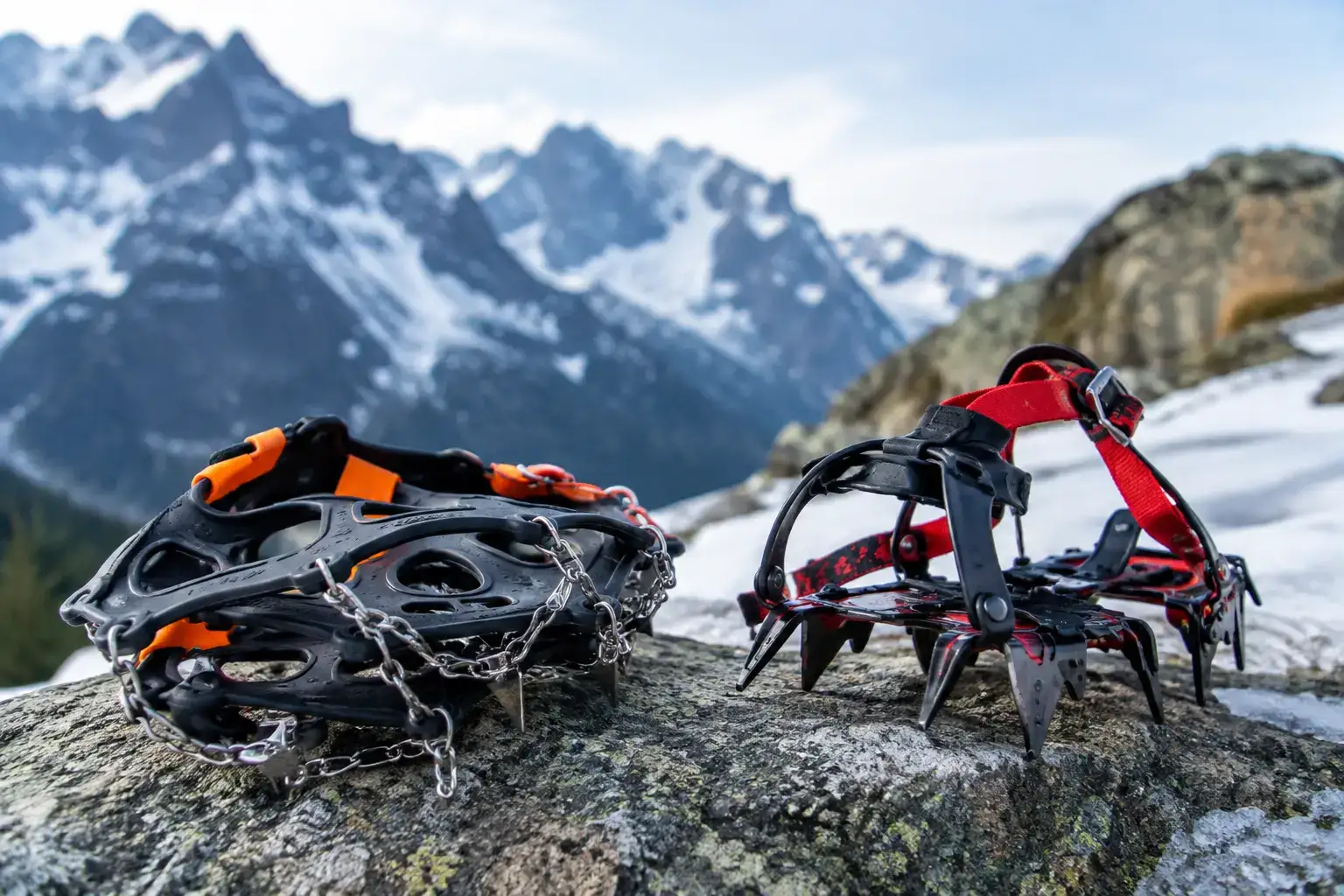
Microspikes or crampons for the Tatras? Match the kit to the snow, the ice and the route. Check the fit on your boots, and the moment to turn back without hesitation.
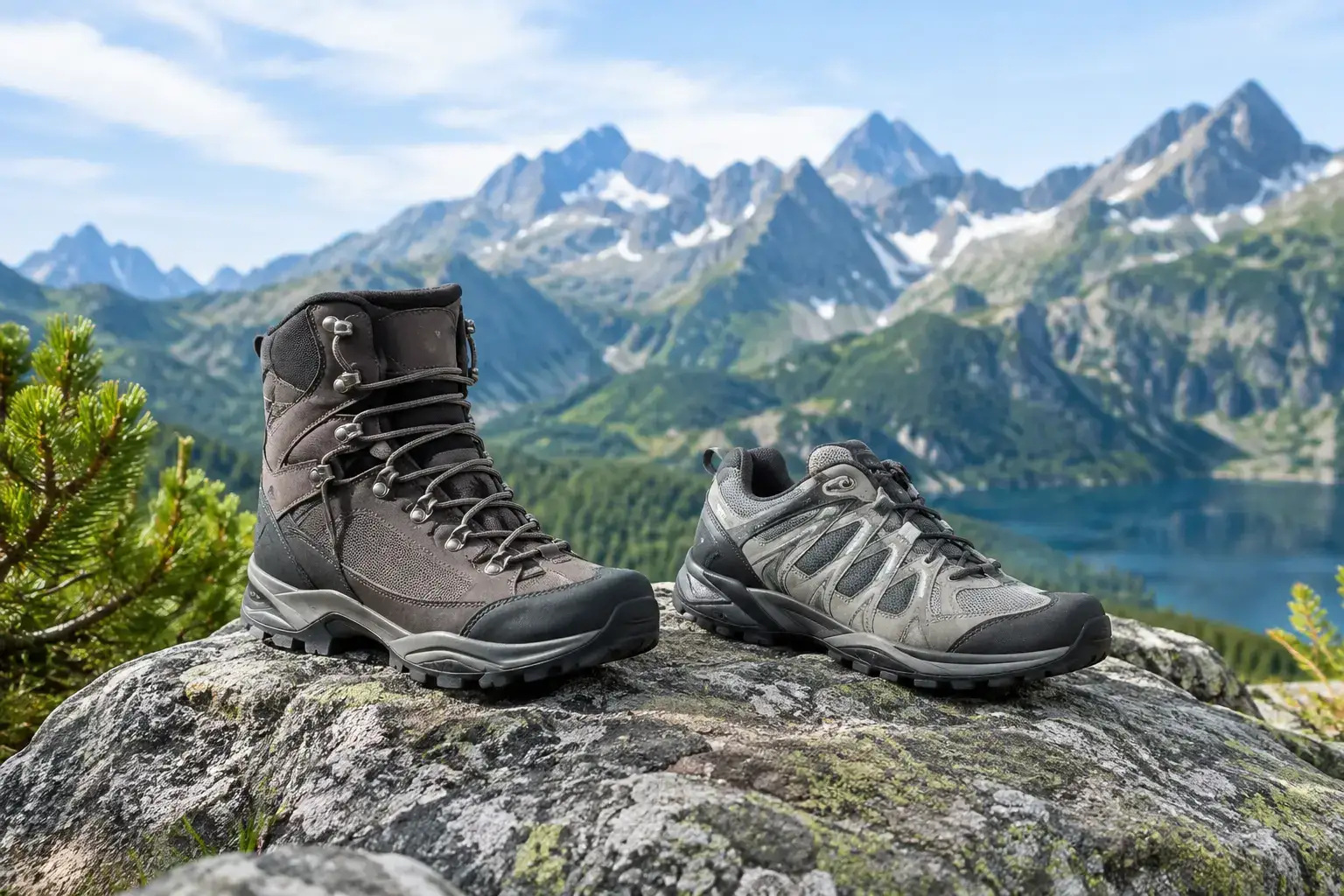
High boots or low shoes for the Tatras? See when the ankle needs support, and when a lighter shoe makes more sense on a Tatra trail.