Busy Zakopane: Buses, traffic jams, and hidden stops. How to get around?
You arrive in Zakopane, drink coffee in the morning and decide: “Alright, we’re going to Kuźnice”. You type “Kuźnice” into Google Maps, get into the car… and at the Jana Paweł II Roundabout you find out that driving is still banned, and the nearby parking lots are already full.
Instead of destroying your nerves at 8 a.m., it’s better to park your car right away under your guesthouse. Zakopane’s shuttle communication is its own little ecosystem — it can be chaotic, but once you learn the rules, it’s reliable.
Here’s your “user manual” for Zakopane shuttles.
1. Where is the “Main Station”?
In Zakopane, the station has been under constant renovation for years. Currently (as of 2024/2025), the main command centre for transport is the Communication Centre, located right next to the PKP station (Chramcówki Street).
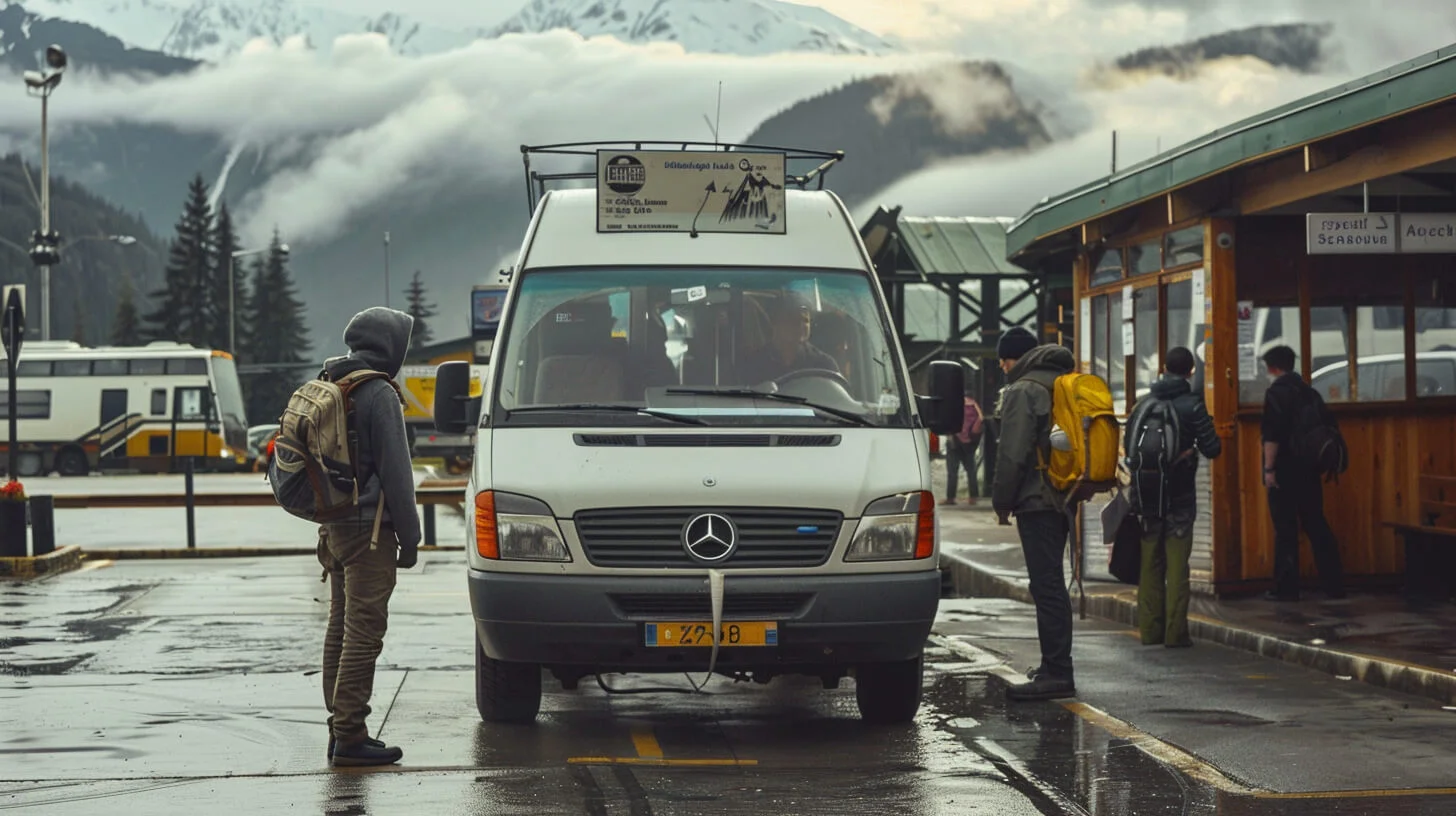
From there, 90% of shuttles head to the most popular valleys. You’ll find convenient digital boards there, but the truth is: you’ll get your direction fastest by reading the cardboard signs behind car windows.
Kuźnice are the most popular hub in the Tatras. This is where you start for Giewont, Hala Gąsienicowa, and — into a line.
You can’t drive there in a private car. (Road access is banned!).
Where do you catch the shuttle? From the station (about 10–15 minutes by ride) or around the Jana Paweł II Roundabout.
Shuttles run literally every few minutes, using the “when it’s full, it leaves” system.
If you stay in the centre (Krupówki), it’s often faster and easier to walk to Kuźnice (about 30–40 minutes along a nice avenue) than to hunt down the stop.
Shuttles mostly depart from stand No. 1 at the station.
The trip takes about 40–50 minutes.
Watch out for the return! If you’re heading back from a long hike (for example from Rysy) around 21:00, you might have trouble finding a return shuttle from Palenica (often the last departures are around 20:00, depending on the month). Then the only rescue is a taxi… or hitchhiking.
These shuttles go through the centre first, and then turn towards Kościeliska.
If you want to go further, towards the Chochołowska Valley, make sure with the driver whether they actually continue there — not every run ends at Siwa Polana.
5. Golden rules of shuttle culture
To avoid stress, remember these three simple rules:
Cash is king: It’s the 21st century, but in Zakopane the shuttle driver’s payment terminal usually breaks more often than it works. Have some exact change (tickets typically cost a few to a dozen or so złotys). With a 200 zł banknote, the driver will look at you and you’ll be basically thrown out the door.
“When it fills up, we go”: Treat timetables at stops as a loose suggestion. The driver leaves once all seats are taken. If you’re first, you may have to wait a bit. If you’re last — you leave immediately.
Return after dark: avoid this scenario. After 7:00 p.m., transport starts disappearing fast. Always have the phone number of a local taxi company saved in your phone — for the “dark hour”.
Giving up your car in Zakopane is one of the best things you can do for your nerves. Traffic jams can be monstrous here, and parking is expensive. By shuttle you’ll get right under the trail, jump out, forget the hassle, and enjoy the mountains!

 2026-09-27
 2026-09-23
 2026-09-28
 2026-09-26
 2026-09-25
 2026-09-24
 2026-09-22
 2026-09-21
 Distance: 18.5 kmDuration: 8 h 09 min
 Distance: 24.7 kmDuration: 7 h 38 min
 Distance: 16.5 kmDuration: 5 h 45 min
 Distance: 6 kmDuration: 3 h 15 min
 Distance: 18.1 kmDuration: 6 h 50 min